
İlk fasikülü 1977’de yayımlanan ve Eski Uygurcanın neredeyse Thesaurus’u niteliğinde olan Uigurisches Wörterbuch 1998’de yayımlanan 6. ve son fasikülüyle yeni bir proje çerçevesinde, farklı bir sistemle yayımlanmak üzere yayımını durdurdu. İlk altı fasikülde 446 sayfa içerisinde aile başlayan Eski Uygurca kelimelerin tamamı ile ä – ärŋäk arasındaki kelimeler yer verilmişti: Klaus Röhrborn, 1977-1998: Uigurisches Wörterbuch. Sprachmaterial der vorislamischen türkischen Texte aus Zentralasien, 1-6, Wiesbaden. (1. resim) Uygurca Sözlük, 2010 yılında, yeni bir sistemle, yeni yayınları, çalışmaları da ele alarak, sadece a ve ä ile başlayan fiilleri kapsayacak şekilde yayımlandı. 214 sayfalık sözlükte (+ CIV giriş ve kaynakça) yaklaşık olarak 180 kelime ele alınmıştır: Röhrborn, Klaus 2010a: Uigurisches Wörterbuch. Neubearbeitung. I. Verben. Bd. 1: ab- – äzüglä-. Stuttgart (2. resim) 2010 yılında çıkan fiiller cildinde yer alan maddelere çevrimiçi olarak ulaşılabilir: Klaus Röhrborn, Uigurisches Wörterbuch. Sprachmaterial der vorislamischen türkischen Texte aus Zentralasien. II: Nomina – Pronomina – Partikeln. Teil 1: a – asvık. Neubearbeitung. Stuttgart, 2015. XXVI, 307 S. Kartoniert ISBN 978-3-515-11006-8. (2. resim) Bu ayın ortasında (Eski) Uygurca Sözlük’ün “isimler” cildinin ilk bölümü de yayımlandı. Daha evvel “fiiller” cildinin ilk bölümü yayımlanmıştı (2010). Tabii bu yayınlar 1997’de başlayıp 1998’de sonlanan altı fasiküllük Uygurca Sözlük’ün fiil ve isim olarak ikiye ayrılmış, yenilenmiş şeklidir. Bu son iki yayın, maddebaşlarının Almanca karşılıklarının yanı sıra Türkçe karşılıklarını da içerir. Bu ay ortasında, yeni çıkmış olan isim cildinde a’dan asure’ye kadar 555 maddebaşı ele alınır. Bundan başka yanlış okunmuş ya da başka maddelerle birleştirilen şekiller de vardır. Yeni çıkan isim cildi için şu adreslere bakılabilir: http://www.steiner-verlag.de/uploads/tx_crondavtitel/datei-datei/9783515110068_i.pdf http://www.steiner-verlag.de/uploads/tx_crondavtitel/datei-datei/9783515110068_p.pdf |
Jahr: 2015

İSTİKLAL MARŞI
Awtori Mehmet Akif Ersoy
Korkma! Sönmez bu şafaklarda yüzen al sancak,
Sönmeden yurdumun üstünde tüten en son ocak.
O benim milletimin yıldızıdır, parlayacak;
O benimdir, o benim milletimindir ancak.
Çatma, kurban olayım, çehreni ey nazlı hilal!
Kahraman ırkıma bir gül; ne bu şiddet, bu celal?
Sana olmaz dökülen kanlarımız sonra helal…
Hakkıdır, Hakk’a tapan milletimin istiklal.
Ben ezelden beridir hür yaşadım, hür yaşarım,
Hangi çılgın bana zincir vuracakmış? Şaşarım.
Kükremiş sel gibiyim, bendimi çiğner, aşarım,
Yırtarım dağları, enginlere sığmam, taşarım.
Garbın afakını sarmışsa çelik zırhlı duvar,
Benim iman dolu göğsüm gibi serhaddim var.
Ulusun, korkma! Nasıl böyle bir imanı boğar,
“Medeniyet” dediğin tek dişi kalmış canavar?
Arkadaş! Yurduma alçakları uğratma sakın,
Siper et gövdeni, dursun bu hayâsızca akın.
Doğacaktır sana vadettiği günler Hakk’ın,
Kim bilir, belki yarın belki yarından da yakın.
Bastığın yerleri “toprak” diyerek geçme, tanı,
Düşün altındaki binlerce kefensiz yatanı.
Sen şehit oğlusun, incitme, yazıktır atanı,
Verme, dünyaları alsan da bu cennet vatanı.
Kim bu cennet vatanın uğruna olmaz ki feda?
Şüheda fışkıracak, toprağı sıksan şüheda.
Canı, cananı, bütün varımı alsın da Hüda,
Etmesin tek vatanımdan beni dünyada cüda.
Ruhumun senden İlahî, şudur ancak emeli:
Değmesin mabedimin göğsüne namahrem eli.
Bu ezanlar, ki şehadetleri dinin temeli,
Ebedî, yurdumun üstünde benim inlemeli.
O zaman vecdile bin secde eder, varsa taşım,
Her cerihamdan, İlahî, boşanıp kanlı yaşım,
Fışkırır ruhumücerret gibi yerden naaşım,
O zaman yükselerek arşa değer belki başım.
Dalgalan sen de şafaklar gibi ey şanlı hilal!
Olsun artık dökülen kanlarımın hepsi helal.
Ebediyen sana yok, ırkıma yok izmihlal.
Hakkıdır, hür yaşamış bayrağımın hürriyet;
Hakkıdır, Hakk’a tapan milletimin istiklal.
http://tdk.gov.tr/index.php?option=com_content&view=frontpage&Itemid=1
Artistic change is never more accelerated than when people are trying to stop it
Thomas Crow reflects on the difficulties of political and artistic restoration
| 17 April 2015

Théodore Géricault’s The Raft of the Medusa (1818-19)
This year’s A.W. Mellon Lectures at the National Gallery of Art in Washington, DC, which are being delivered by the art historian Thomas Crow, focus on European art after the fall of Napoleon. The six talks, which are bundled together with the title “Restoration as Event and Idea: Art in Europe 1814-1820,” trace the work of artists like Jacques-Louis David, Francisco Goya, and Théodore Géricault following France’s ruinous invasion of Russia in 1812 and Napoleon’s subsequent ouster as the Emperor of France.
“There are periods where you can see change clearly because a set of arrangements has been unsettled by an external force, so that existing conventions are scrambled,” Crow says. “But they can never go back together again as they were, so that nothing is completely restored.”
The below excerpt is adapted from Crow’s third lecture, “Cut Loose, 1815-1817: Napoleon returns, David Crosses Borders, and Géricault Wanders Outcast Rome,” which was delivered on 29 March.
A livestream of the final two talks, which will be delivered at 2PM on 19 and 26 April, can be found here. Audio and video of Crow’s previous four talks are also available.

“There are periods where you can see change clearly because a set of arrangements has been unsettled by an external force, so that existing conventions are scrambled,” Crow says. “But they can never go back together again as they were, so that nothing is completely restored.”
The below excerpt is adapted from Crow’s third lecture, “Cut Loose, 1815-1817: Napoleon returns, David Crosses Borders, and Géricault Wanders Outcast Rome,” which was delivered on 29 March.
A livestream of the final two talks, which will be delivered at 2PM on 19 and 26 April, can be found here. Audio and video of Crow’s previous four talks are also available.
Plate 67 from Antoine-Jean-Baptiste Thomas’s, One year in Rome and its surroundings: collection of lithographic drawings representing the dress, the customs and the civil and religious ceremonies of the Roman estates and generally all the remarkable things one sees there over the course of a year (1823). Image: Getty Research Institute
Re-installing the old regime
It is 1816, the year after the Battle of Waterloo, and the restored Bourbon monarchy of Louis XVII has set about effacing, as far as possible, the changes wrought by the French Revolution and Empire. In the fine arts, a prime instrument for instilling established norms had traditionally been the annual student competition for the Grand Prix. Its winner was awarded three years of study at the French Academy in Rome, and the competition that year, at a time of political regression, came with an extra measure of normative discipline. As was customary, the finalists took a single subject into their solitary chambers to produce their finished paintings in just seventy-one days. The story chosen for 1816—Oenone Refusing Aid to Paris, an episode from the saga of the Trojan War, but from an esoteric, non-Homeric source—featured a main actor wearing a Phrygian cap (a symbol of Republican radicalism) fatally punished for past betrayals. In this account of the city’s fall, the mortally wounded Paris is forced to turn for aid to his spurned first wife, the nymph Oenone of Mount Ida—which she indignantly refuses.
In the eyes of posterity, far and away the best-known entrant into the competition was Théodore Géricault. But the wayward former cavalryman enjoyed no influential senior sponsor or record of dutiful apprenticeship and was duly eliminated in an early round. The winner anointed to carry the great tradition forward was Antoine-Jean Baptiste Thomas. The fact that Thomas is now lost to the annals of French painting, while Géricault shines as one of its brightest lights, carries a lesson: the surest way to accelerate artistic change is the official attempt to stop it.
Géricault had staked a claim to possessing everything he needed to gain the Grand Prix. In September 1816, he took himself off to Rome on his own account, something the wealth of his Norman family permitted him to do. He threw himself into recording the exemplars of classical sculpture and architecture that an academic prizewinner was expected to master.
Thomas, on the other hand, promptly went his own way in Rome, minimally observant of expected training protocols. He aimed, instead, to thoroughly chronicle the local colour of the city for a travelogue-style set of documentary prints depicting the dress and customs of Roman estates. Taking the liberty of leaving Rome for Paris after only one year of his allotted three, he began labouring on his ambitious compendium, which was finally published in 1823.
Given that Thomas was the first winner of the Grand Prix under the restored monarchy, one could say that his impudent indifference to high-minded, disinterested ideals signaled the first un-making of re-established norms. Géricault came from relative wealth; by the habits of polite society and an officer’s temperament, he would have given little thought to Thomas’s expedient calculation. While residual bad feeling from the Grand Prix competition might also have distanced him from Thomas in the years after 1816, the opposite appears to have been the case: Géricault followed Thomas’s sketches with parallel studies of his own—scores of them—depicting many of the same street scenes, characters, and events that Thomas came to include in his 1823 album.
The parallels are at times so strong that one envisions the artists working in tandem at least some of time. In his compendium, Thomas included scenes of herdsmen from the campagna in Rome driving their maddened cattle though the storied Porta del Popolo, the main northern entrance into the city and the central thoroughfare of the Via del Corso. He also recorded the nearby bullfights, then held inside the Mausoleum of Augustus. One powerfully-imagined vignette in a bullfight print by Thomas records a bullfighter single-handedly wrestling a beast to the ground, a spectacle later transmuted by Géricault into perhaps the most astonishing and consummate works of his Roman sojourn: Homme nu terrassant un taureau, 1817.
Two ways to see Théodore Géricault’s drawing Homme nu terrassant un taureau (1817)
Géricault’s all-but-invisible work
Géricault’s ink drawing channels ancient representations of the Persian cult deity Mithras slaying a bull, a sacrificial effigy-type imported to ancient Rome by returning soldiers. But contemporary life is just as present. The entire sheet overlays antiquity with the animal torments of both the market slaughterhouse and the bullfighting arena through an internal system of transformations in scale, orientation, and position. But it is only when the viewer engages with the drawing physically as well as visually that these intricacies reveal themselves.
Turning the sheet upside-down brings into focus two vignettes that transform the great central man-animal emblem into the middle point of a temporal sequence: to the left, the athlete first sizes the horn of the beast; to the right, he pins its head to the earth. Despite the 180-degree reversal in orientation, there is a strong arc that launches from the bull’s turned head at the lower left through the large central motif, then falls, like the defeated animal, to the ground in the lower right.
Perhaps last to come into view, at bottom center, rendered in distinctly and intentionally fainter lines, is a purely animal combat between two bulls—the flourish of the tail to the right could never be surpassed. That passage links the bolder vignettes into a complete cycle whereby the human conquest begins and ends in the animal drive for domination.
The nudity of the main figure—for it is plainly the same actor in each image—combined with a placeless background renders the scene abstract and apparently timeless. But turning the sheet back to its upright orientation reveals that the ground beneath the struggling man and animal is not so solid. Underneath a series of summary horizontal lines, an orderly, even stately linear procession proceeds from right to left, one that is distinct from the agonistic combat above. Herdsmen with their pikes and broad-brimmed hats take the lead and the rear of their placid steers. The coordination between this lower band and the forms above is subtle and comprehensive: it seals a circular pact between ancient and modern prototypes.
The sheet is thus no exercise in improvisation. It represents the consummate realization of a profound artistic idea: any painting that the artist might have made later would have been a compromised dilution of the clarity and complexity achieved by this tour-de-force constellation of motifs. It was here, for a brief moment in 1817, that the classical legacy, entrusted in error by the Grand Prix jury to the brash Thomas, could still generate great art. In the confused and contradictory circumstances of the conservative Bourbon Restoration, however, the intelligence of Géricault’s drawing—with its ingenious internal strategies of orientation and its combination of ancient and modern motifs—remained all but invisible.
Günter Wilhelm Grass und Europäischer Literature

Herzischlichen beileid für die wellt dem Leterature!
Günter Wilhelm Grass[1][2] (* 16. Oktober 1927 in Danzig–Langfuhr, Freie Stadt Danzig, als Günter Wilhelm Graß; †13. April 2015 in Lübeck) war ein deutscher Schriftsteller, Bildhauer, Maler und Grafiker. Grass war seit 1957 Mitglied derGruppe 47 und wurde mit seinem Romandebüt Die Blechtrommel 1959 mit einem Schlag zu einem zentralen und international berühmten Autor der deutschen Nachkriegsliteratur. Seine Bücher wurden in zahlreiche Sprachen übersetzt. Im Jahr 1999 erhielt er den Nobelpreis für Literatur.
Herkunft und Familie
Günter Grass war der Sohn eines protestantischen Lebensmittelhändlers und einer Katholikin kaschubischer Abstammung und verbrachte seine Kindheit in Danzig in einfachen Verhältnissen. Die Eltern betrieben ein Kolonialwarengeschäft im Danziger Stadtteil Langfuhr (heute: Wrzeszcz). Die kleine Zweizimmerwohnung hatte kein eigenes Bad.
Durch seine katholische Mutter geprägt, war Grass als Jugendlicher unter anderem als Messdiener tätig. Später geriet er unter den Einfluss der NS-Ideologie, obwohl er nach eigenen Angaben von der Hitlerjugend nicht begeistert war.[3]
Kindheit und Jugend
Ein Teil von Günter Grass’ Kriegsgefangenenakte
Im Zweiten Weltkrieg meldete er sich mit 15 Jahren – nach eigenen Angaben, um aus der familiären Enge zu entkommen – freiwillig zur Wehrmacht.[4][5] Nach dem Einsatz als Luftwaffenhelfer und der Ableistung des Reichsarbeitsdienstes wurde er am 10. November 1944 im Alter von 17 Jahren zur 10. SS-Panzer-Division „Frundsberg“ der Waffen-SS einberufen.[6]
Nach einer Verwundung am 20. April 1945 bei Spremberg wurde Grass am 8. Mai 1945 bei Marienbad gefangen genommen und war bis zum 24. April 1946 in US-amerikanischer Kriegsgefangenschaft. Grass behauptete, als Gefangener in Bad Aibling Joseph Ratzinger getroffen zu haben.[7][8][9][10] Grass gab sich bei seiner Gefangennahme den Amerikanern gegenüber als Angehöriger der Waffen-SS zu erkennen, verschwieg dies jedoch in seinen bis 2006 veröffentlichten Biografien. Dort hieß es stets, er sei 1944 Flakhelfer geworden und danach als Panzersoldat in die Wehrmacht einberufen worden. In seinem autobiografischen Werk Beim Häuten der Zwiebel aus dem Jahr 2006 gab Grass bekannt, dass er sich freiwillig zur Wehrmacht gemeldet und daraufhin im Alter von 17 Jahren zur Waffen-SS eingezogen worden sei.[11][12]
Seit Oktober 2014 zeigt das Lübecker Günter-Grass-Haus ein neues Dauerausstellungsmodul: „Grass als Soldat“. In einer Multimedia-Installation lassen sich unter anderem die Marschroute jener SS-Panzerdivision, der Grass angehörte, abrufen sowie seine Kriegsgefangenenakte und Fotografien des Jugendlichen 1944 in Uniform des Reichsarbeitsdienstes. Eine Vitrine zeigt Seiten des Originalmanuskripts von Beim Häuten der Zwiebel, sie verdeutlichen den Schreibprozess. Tagebuchnotizen von Klaus Wagenbach aus dem Jahr 1963 belegen, dass Grass ihm damals von seiner Mitgliedschaft in der Waffen-SS erzählt hatte.[13]
Ausbildung und Beziehungen
In den Jahren 1947/1948 absolvierte er ein Praktikum bei einem Steinmetz in Düsseldorf. Danach studierte er von 1948 bis 1952 an der Kunstakademie DüsseldorfGrafik und Bildhauerei. Seinen Lebensunterhalt verdiente er zusammen mit dem später bekannt gewordenen Maler Herbert Zangs als Türsteher im Lokal Csikós auf der Andreasstraße in der Düsseldorfer Altstadt. Später verewigte er Herbert Zangs, der wie Grass im Krieg Soldat war, als eigenwilligen Maler Lankes in der Blechtrommel. Das Studium setzte er von 1953 bis 1956 an der Hochschule für Bildende Künste in Berlin als Schüler des Bildhauers Karl Hartung fort. Danach lebte er bis 1959 in Paris. 1960 zog er erneut nach Berlin-Friedenau, wo er bis 1972 wohnte. Von 1972 bis 1987 lebte er in Wewelsfleth in Schleswig-Holstein.
1954 heiratete Grass die Schweizer Ballettstudentin Anna Margareta Schwarz, aus der Ehe gingen vier Kinder hervor. Die Zeit von Anfang 1956 bis Anfang 1960 verbrachte er mit Anna Schwarz in Paris und zeitweise auch in Wettingen[14] in der Schweiz, wo auch das Manuskript für Die Blechtrommel entstand. 1957 wurden dort die Zwillinge Franz und Raoul geboren. 1961, nach der Rückkehr nach Berlin, folgte die Tochter Laura, 1965 wurde der Sohn Bruno geboren. 1972 trennten sich Günter und Anna Grass. Die Schauspielerin Helene Grass, geboren 1974, ist die gemeinsame Tochter mit der Architektin und Malerin Veronika Schröter (1939-2012), mit der Grass in den 1970er-Jahren eine mehrjährige Beziehung hatte. 1979 wurde Nele Krüger, Grass’ Tochter mit der Lektorin Ingrid Krüger, geboren. Im selben Jahr heiratete er in zweiter Ehe die Organistin Ute Grunert, die selbst zwei Söhne in die Ehe mitbrachte. In dem autobiographischen RomanDie Box lässt Grass seine sechs leiblichen Kinder und die Söhne von Ute Grunert als „seine acht Kinder“ auftreten.[15][16]
Von August 1986 bis Januar 1987 lebte Günter Grass zusammen mit Ute Grunert in Indien, meist in Kalkutta.
Schaffenszeit und politische Aktivitäten
In den Jahren 1956/57 begann Grass neben ersten Ausstellungen von Plastiken und Graphiken in Stuttgart und Berlin schriftstellerisch tätig zu werden. 1956 debütierte er als Lyriker, 1957 als Dramatiker und Librettist von Balletten.[17] Bis 1958 entstanden vor allem Kurzprosa, Gedichte und Theaterstücke, die Grass dem poetischen oder absurden Theater zuordnet.
Mit seinem ersten Roman Die Blechtrommel gelang 1959 dem damals 31-jährigen der literarische Durchbruch. Der Entwicklungsroman, der später auch von Regisseur Volker Schlöndorff erfolgreich verfilmt wurde, repräsentiert ein Stück deutscher Zeitgeschichte: er umspannt die fünf Jahrzehnte von 1899 bis in die Anfänge der Bundesrepublik. In seinem Werk thematisiert er auch die kollektive Verdrängung der Zeit während des Dritten Reiches durch die deutsche Bevölkerung. Grass ging es dabei auch um eine Kritik an der mangelnden Aufarbeitung dieser Zeit.[18]
In der Wohnung von Grass’ Nachbarn und Freund Uwe Johnson in Berlin-Friedenau, der sich zu jener Zeit in New York aufhielt, zogen am 19. Februar 1967 die Mitglieder der zum Jahresanfang gegründeten Kommune I ein. Es war Johnsons West-Berliner Atelier- und Arbeitswohnung, die er neben seiner eigentlichen Wohnung in der Stierstraße 3 unterhielt und während seines Auslandsaufenthaltes an Ulrich Enzensberger untervermietet hatte. Johnson erfuhr davon erst aus der Zeitung. In der Wohnung wurde das „Pudding-Attentat“ auf US-Vizepräsident Hubert H. Humphrey geplant. Es flog auf, führte aber zu ausführlicher Medienberichterstattung. Auf Bitte Johnsons, der zu der Zeit nicht in Deutschland weilte, ließ Günter Grass die Wohnung von der Polizei räumen.
Nach einer Lesung von Grass auf dem Evangelischen Kirchentag 1969 in Stuttgart nahm sich ein ehemaliges SS-Mitglied mit Zyankali das Leben. Den Vater der späteren Journalistin und Politologin Ute Scheub hat Grass im Tagebuch einer Schnecke in der Figur des „Manfred Augst“ geschildert.[19][20]
Im November 1971 nahm Grass an einer Woche der Deutschen Kultur in Tel Aviv teil und wurde von der israelischen Ministerpräsidentin Golda Meir zu einem Gespräch empfangen.[21]
Grass, Bundeskanzler Willy Brandtund dessen Frau Rut, 1970
Grass unterstützte oft die SPD in den Wahlkämpfen und wurde 1982 deren Mitglied.
1965 veröffentlichte er das Taschenbuch dich singe ich demokratie – loblied auf willy;[22] Willy Brandt hatte er 1961 kennengelernt. Dann rief er mit anderen das „Wahlkontor deutscher Schriftsteller“ ins Leben.[23] Er war enttäuscht, als Willy Brandt ihn nach seinem Wahlsieg nicht mit einer Aufgabe betraute.[24]
1974 trat Grass aus Protest gegen die Haltung der Bischöfe in der Frage des Abtreibungsrechts und der geforderten Abschaffung des § 218 aus der Kirche aus.[25]
Mit seinen Ansichten eckte er unter anderem innerhalb der SPD oftmals an. So sprach er sich im Februar 1990 gegen dieDeutsche Wiedervereinigung und für eine Konföderation beider deutscher Staaten aus, um dem Osten die Möglichkeit zu geben, „sich wirtschaftlich und demokratisch [zu] festigen“.[26] 1992 kündigte Grass aus Protest gegen denAsylkompromiss[27] seine SPD-Mitgliedschaft wieder auf. Gleichwohl war er auch danach politisch tätig und setzte sich für die Ideen der Sozialdemokraten ein: 2005 unterstützte er die schleswig-holsteinische Ministerpräsidentin Heide Simonis in ihrem Wahlkampf und warb für die Wiedereinführung einer Vermögenssteuer für Besserverdienende.
Als Mitgründer des Verbandes deutscher Schriftsteller (VS), heute in ver.di, gehörte Grass zu den Kritikern der Verbandspolitik, die seiner Meinung nach unter Vorsitz von Bernt Engelmann gegen osteuropäische Diktaturen oft allzu duldsam war. Auf der Bundesdelegiertenkonferenz in Hamburg (24. bis 26. September 1987) ließ er sich in den Bundesvorstand wählen, trat aber auf dem Kongress in Stuttgart 1988 mit dem gesamten Vorstand zurück, weil eine Diskussion über Alternativen zum Beitritt des Verbandes in die IG Medien – Grass hatte eine eigene Autorengewerkschaft unter dem Dach des DGB vorgeschlagen – ausblieb. Mit ihm verließen die VS-Bundesvorsitzende Anna Jonas und rund 50 weitere Autorinnen und Autoren den Verband.[28][29]
Seit 1968 war Grass Mitglied des PEN-Zentrums Deutschland, dessen Ehrenpräsident er seit 2009 war.
Eine Zusammenarbeit mit dem Jazzmusiker Günter Sommer ab 1985 brachte mehrere Tonträger hervor, auf denen der Schriftsteller zu Perkussionsmusik von Sommer aus seinen Werken liest.
Tadeusz Różewicz und Grass, 2006
Günter Grass war offizieller Unterstützer der Aktion 1:1. des LSVD, die sich für gleiche Rechte und Pflichten bei einerLebenspartnerschaft einsetzt.[30]
1997 gründete Grass die Otto-Pankok-Stiftung zu Ehren seines ehemaligen Lehrers und als Engagement zu Gunsten derSinti und Roma.
Grass war 1996 Mitunterzeichner der Frankfurter Erklärung zur Rechtschreibreform. Auch in neueren Werken verwendete Grass weiterhin die traditionelle Rechtschreibung. 1999 erhielt Günter Grass im Alter von 72 Jahren den Nobelpreis für Literatur für sein Lebenswerk. 2005 gründete er den Autorenzirkel Lübeck 05.
Grass engagierte sich außerdem gegen Atomkraft, z. B. bei einer Lesung vor dem Kernkraftwerk Krümmel im April 2011.[31]
Günter Grass lebte bis zu seinem Tod in Behlendorf im Kreis Herzogtum Lauenburg in der Nähe der Kreisstadt Ratzeburgund etwa 25 Kilometer südlich von Lübeck. In Lübeck befindet sich das Günter-Grass-Haus mit dem überwiegenden Teil seiner literarischen und künstlerischen Originalwerke.
Grass starb am 13. April 2015 im Alter von 87 Jahren in einem Lübecker Krankenhaus an den Folgen einer Infektion.[32][33]
Schreiben gegen das Vergessen
Als Intention der Werke Grass’ ist das „Schreiben gegen das Vergessen“ auszumachen. Seine Werke thematisieren den Nationalsozialismus bzw. handeln vor dessen Hintergrund. Auch die Werke Grass’, die in der Nachkriegszeit spielen (beispielsweise Im Krebsgang, 2002), behandeln die Thematik des Vergessens und die der Schuld. Laut Begründungsschrift des Komitees für seinen Nobelpreis wurde er dafür geehrt, dass er „in munterschwarzen Fabeln das vergessene Gesicht der Geschichte gezeichnet hat.“[34]
Erzählende Werke
Der Roman Die Blechtrommel (1959) ist in einer sehr bildlichen Sprache geschrieben. Er handelt von dem infantilen Sonderling Oskar Matzerath, der von seiner „Kinderperspektive“ aus die Erwachsenenwelt beschreibt und dank seiner Blechtrommel auch über Ereignisse berichten kann, an denen er nicht unmittelbar beteiligt war, wie zum Beispiel die Geburt seiner Mutter. Mit der Blechtrommel, in der Grass erstmals historische Ereignisse mit seiner surreal-grotesken Bildersprache konfrontierte, hatte er seinen Stil gefunden. Als einer der ersten deutschsprachigen Schriftsteller stellte er sich den Ereignissen des Zweiten Weltkrieges und entschied sich bewusst für die gegenständliche Beschreibung des historischen Zusammenhangs. Auch die Kaschubei fand durch dieses Werk Aufnahme in die Weltliteratur.
Für den Roman erhielt Grass, nach Lesung aus dem noch unveröffentlichten Manuskript, 1958 den Preis der Gruppe 47, deren Mitglied er seit 1957 war. 1960 wollte die Jury des Bremer Literaturpreises Grass für die Blechtrommel prämieren, was aber vom Bremer Senat verhindert wurde. In diesem und dem folgenden Jahr wurde der Preis nicht verliehen. Die Blechtrommel wurde 1979 von Volker Schlöndorff verfilmt.
Sein ebenfalls im Danzig des Zweiten Weltkrieges spielendes zweites Buch Katz und Maus, in dem er die Geschichte des Jungen Joachim Mahlke erzählt, wurde dagegen zunächst Anlass eines Skandals. Hauptsächlich wegen einer „Onanierszene“ beantragte der hessische Minister für Arbeit, Volkswohlfahrt und Gesundheitswesen 1961 bei der Bundesprüfstelle, die Novelle wegen unsittlichen Inhalts zu indizieren. Auf Protest der Öffentlichkeit und anderer Schriftsteller wurde der Antrag allerdings wieder zurückgezogen. Zwei Jahre später erschien Hundejahre, das letzte Werk der Danziger Trilogie.
Mit Die Plebejer proben den Aufstand erschien 1966 ein weiteres Drama von Grass, das sein bekanntestes Theaterstück wurde. Es thematisiert den Arbeiteraufstand vom 17. Juni 1953 in der DDR und die Rolle der marxistischen Intellektuellen. Die Hauptfigur des „Chefs“ ist mit zahlreichen Zügen von Bertolt Brecht ausgestattet. Gegen eine Deutung, die das Drama auf ein Anti-Brecht-Stück reduziert, hat sich Grass jedoch stets verwahrt. 1968 veröffentlichte Grass das Buch Briefe über die Grenze, ein Dialog zwischen dem tschechischen Schriftsteller Pavel Kohout und Grass zum Thema „Prager Frühling“.
1969 erschien Grass’ Roman örtlich betäubt. Hierin verteilte der Autor seine eigene (anarchistische und sozialdemokratische) politische Einstellung auf verschiedene Personen, im Mittelpunkt ein Zahnarzt, die sich mit aktuellen Problemen auseinandersetzen. Es war das erste Mal, dass Grass über ein aktuelles Thema schrieb (Studentenbewegung). Andere Bücher hatten immer einen starken Vergangenheitsbezug. In den USA wurde das Buch euphorisch aufgenommen, während sich in Deutschland die Kritiker eher zurückhielten.[35] Nach dem Erscheinen der Erzählung Aus dem Tagebuch einer Schnecke (1972), welche den Bundestagswahlkampf 1969 beschreibt, zog Grass sich vorübergehend aus dem politischen Leben zurück.
1977 wurde Grass’ Roman Der Butt veröffentlicht, der seinen internationalen Ruf als Epiker untermauerte. Zwei Jahre später brachte Grass die Erzählung Das Treffen in Telgte heraus. Einige Poeten der Barockzeit treffen sich dort im Jahr 1647 während der Verhandlungen zum Westfälischen Frieden. Das Treffen verläuft weitgehend nach den Gepflogenheiten der 300 Jahre später von Hans Werner Richter ins Leben gerufenen Gruppe 47. Die Erzählung ist Richter gewidmet. Der erste Satz von Der Butt („Ilsebill salzte nach.“) wurde 2007 von einer Prominenten-Jury zum schönsten ersten Satz der deutschsprachigen Literatur gewählt.
Eine Asienreise inspirierte Grass 1980 zu Kopfgeburten oder Die Deutschen sterben aus, einem erzählenden Werk, welches unter anderem damalige politische Ereignisse behandelt. Acht Jahre später folgte das Prosawerk Die Rättin, das 1997 verfilmt wurde und ein apokalyptisches Feature über den Selbstmord der Menschheit zeichnet. 1992 erschien die Erzählung Unkenrufe, die Grass’ Bemühen um die Versöhnung der Deutschen mit sich und den östlichen Nachbarn zeigt.
Sein bisher letzter Roman, Ein weites Feld, erschien 1995. Er spielt in Berlin zwischen Mauerbau und Wiedervereinigung und ist ein Panorama deutscher Geschichte von der Revolution von 1848 bis zur Gegenwart. Eine bis heute nicht nachlassende Langzeitwirkung entfaltete der Roman durch den zum geflügelten Wort gewordenen Satz über die DDR: „Wir lebten in einer kommoden Diktatur“. Für dieses heftig umstrittene, politisch orientierte Buch erhielt Grass den Hans-Fallada-Preis. Der Protagonist des Romans, Fonty, ist an das Alter Ego von Theodor Fontane angelehnt und schlägt so den Bogen vom 19. Jahrhundert bis heute. Das Buch wurde in der Öffentlichkeit stark diskutiert, was unter anderem dazu führte, dass bereits nach acht Wochen die fünfte Auflage in Druck ging.
2002 erschien die Novelle Im Krebsgang, die den Untergang des mit Flüchtlingen besetzten Schiffs Wilhelm Gustloff am Ende des Zweiten Weltkrieges behandelt. Ein Jahr später erschien Letzte Tänze, eine Sammlung vorwiegend erotisch geprägter Gedichte und Zeichnungen.
Beim Häuten der Zwiebel, ein autobiografisch geprägtes Buch ohne explizite Gattungsbezeichnung, erschien im August 2006. In diesem Erinnerungsbuch „häutete“ sich der Autor, indem er Schichten seiner Jugenderinnerungen freilegte. Beim Freilegen einer dieser „Häute“ sorgte Grass damit für Aufsehen, dass er nach über 60 Jahren bekannt gab, im Herbst 1944 als 17-jähriger zur Waffen-SS eingezogen worden zu sein.[36] Dieser Umstand wurde der Öffentlichkeit jedoch schon kurz vor Erscheinen des Buches durch ein Interview bekannt, das Grass der Frankfurter Allgemeinen Zeitung gab.[37][4]
Lyrische Werke
Neben seinen Romanen schrieb Grass auch einige Gedichtbände, die er mit eigenen Bildern und Zeichnungen ergänzte. Später erklärte er, am meisten liege ihm die Lyrik, von der er eigentlich komme. Sie erschien ihm als die Form des Schreibens, die am klarsten und deutlichsten sei und mit der er sich selber am besten in Frage stellen und ausmessen könne. Sein literarischer Werdegang begann im Frühjahr 1955, als er Gedichte an einen Lyrikwettbewerb des Süddeutschen Rundfunks schickte und dort auf Anhieb den dritten Preis gewann. Von der Preisverleihung zurückgekehrt, fand er ein Telegramm von Hans Werner Richter vor, mit dem er zur Tagung der Gruppe 47 in Berlin eingeladen wurde. Seine Lesung weckte das Interesse Walter Höllerers. In der Folge veröffentlichte der Luchterhand-Verlag 1956 sein erstes Buch.[38]
Die Vorzüge der Windhühner verkaufte sich in den ersten Jahren zwar nur 700 mal, doch beurteilten Kritiker das Buch recht positiv als einen „Weg zur realistischen Darstellung des Alltags“.
Im 1960 erschienenen Gleisdreieck geht er auf die damals gerade erschienene Blechtrommel ein. Neben große und düstere Kohlezeichnungen gesellen sich 55 Gedichte, die sehr stark die Wirklichkeit einbeziehen oder Gegenstände beschreiben. Er erzählt von Berlin.
Im nächsten Lyrikband, Ausgefragt von 1967, bezieht sich Grass besonders auf zwei Dinge: Biographisches und Politisches. Er dichtet über persönliche Erfahrungen und verarbeitet den 1965er Wahlkampf, in dem er für die SPD und Willy Brandt eintrat.
Neben einigen weniger eminenten Werken (zum Beispiel Liebe geprüft) und einigen Sammelbänden, erschien 1983 Ach Butt, dein Märchen geht böse aus. In diesem Werk wurden überwiegend die Gedichte aus den Romanen Der Butt und Die Rättin zusammengetragen. Inhaltlich beschreiben sie zum Teil detailliert Nahrungsmittel oder den Kot (als menschliches Endprodukt).
Grass’ Gedichte sind realistisch geprägt, aber oft mit typisch scharfer Ironie gewürzt, wie auch sein kürzestes Gedicht Glück:
Ein leerer Autobus
stürzt durch die ausgesternte Nacht.
Vielleicht singt sein Chauffeur
und ist glücklich dabei.
(Ironisches Schlüsselwort des Gedichtes ist das Wort Vielleicht. In dem Verbinden eines sinnlosen Geschehens mit einem Glücksgefühl des an diesem Geschehen Beteiligten verweist es auf religiöse, metaphysische Spekulationen, bei welchen trotz eines sinnlosen Erdendaseins auf ein jenseitiges Glück spekuliert wird.[39])
Im Jahr 2012 veröffentlichte Grass in verschiedenen Tageszeitungen die politischen Gedichte Was gesagt werden muss und Europas Schande.[40][41]
Günter Grass erhielt im Jahr 1999 den Nobelpreis für Literatur, weil er – so die Begründung der Jury – „in munterschwarzen Fabeln das vergessene Gesicht der Geschichte gezeichnet hat“ (“[he is the author] whose frolicsome black fables portray the forgotten face of history”). Darüber hinaus hat Grass noch etliche Auszeichnungen erhalten, von denen im Folgenden einige genannt werden.
1958 erhielt Grass den Förderpreis des Kulturkreises der deutschen Wirtschaft im BDI e.V.,[87] 1965 wurde ihm der Georg-Büchner-Preis verliehen, „für sein Werk in Lyrik und Prosa, worin er kühn, weitausgreifend und kritisch das Leben unserer Zeit darstellt und gestaltet.“ 1967 wurde er mit der Carl-von-Ossietzky-Medaille ausgezeichnet, 1968 mit dem Fontane-Preis. 1969 erhielt er den Theodor-Heuss-Preis. 1994 verlieh ihm die Bayerische Akademie der Schönen Künste ihrenGroßen Literaturpreis. 1995 wurde Grass mit der Hermann-Kesten-Medaille ausgezeichnet, im Jahr darauf mit demThomas-Mann-Preis der Stadt Lübeck, dem Samuel-Bogumil-Linde-Preis und 1996 auch mit dem Hans-Fallada-Preis. 1999 ehrte ihn Spanien mit dem Prinz-von-Asturien-Preis für Geisteswissenschaften und Literatur.
Günter Grass ist Ehrendoktor des Kenyon College (1965), der Harvard University (1976), der Adam-Mickiewicz-Universität Posen (1990), der Universität Danzig (1993), der Universität Lübeck (2003)[88] und der Freien Universität Berlin (2005).
2006 wurde ihm der Internationale Brückepreis verliehen, dessen Annahme er jedoch ablehnte, weil CDU-Kommunalpolitiker die Entscheidung der unabhängigen deutsch-polnischen Jury infrage stellten. Auch die Annahme des Antonio-Feltrinelli-Preises 1982 hatte er abgelehnt.
Grass ist seit 1993 Ehrenbürger seiner Geburtsstadt Danzig und Ehrendoktor der dortigen Universität. 2007 erhielt er den Ernst-Toller-Preis.
Die 1960 vorgesehene Ehrung mit dem Bremer Literaturpreis scheiterte am Widerspruch des Bremer Senats. Im selben Jahr erhielt er jedoch den Deutschen Kritikerpreis.
Der deutsche Astronom Freimut Börngen schlug für seinen 1989 entdeckten Asteroid den Namen (11496) Grass vor.
2009 wurde in seiner Geburtsstadt Danzig ein Günter-Grass-Museum eröffnet.
2012 wurde Grass von der dänischen Europäischen Bewegung (Europabevægelsen) mit dem Ehrentitel „Europäer des Jahres 2012“ ausgezeichnet. Gewürdigt wurden unter anderem seine europapolitischen Debattenbeiträge.[89]
2013 erhielt Günter Grass gemeinsam mit seiner Ehefrau Ute die Auszeichnung „Schleswig-Holsteinischer Meilenstein“ des Verbandes Deutscher Sinti und Roma e. V. – Landesverband Schleswig-Holstein für sein jahrelanges Engagement für die Minderheit der Sinti und Roma.[90]
Laut eigener Aussage sollte Grass in den 1970er-Jahren das Bundesverdienstkreuz erhalten. Er lehnte jedoch mit dem Hinweis ab, dass er Bürger einerHansestadt sei. Der wahre Grund sei jedoch gewesen, dass auch viele ehemalige Nationalsozialisten den Orden bekommen hatten.[91]
Romane, Novellen und Erzählungen
Günter Grass’ Unterschrift
- Danziger Trilogie
- Die Blechtrommel. Roman. Luchterhand, Neuwied 1959.
- Katz und Maus. Novelle. Luchterhand, Neuwied 1961.
- Hundejahre. Roman. Luchterhand, Neuwied 1963.
- örtlich betäubt. Roman. Luchterhand, Darmstadt und Neuwied 1969.
- Aus dem Tagebuch einer Schnecke. Roman. Luchterhand, Darmstadt und Neuwied 1972.
- Der Butt. Roman. Luchterhand, Darmstadt und Neuwied 1977.
- Das Treffen in Telgte. Erzählung. Luchterhand, Darmstadt und Neuwied 1979.
- Kopfgeburten oder Die Deutschen sterben aus. Erzählung. Luchterhand, Darmstadt und Neuwied 1980.
- Die Rättin. Roman. Luchterhand. Darmstadt und Neuwied 1986.
- Unkenrufe. Erzählung. Steidl, Göttingen 1992.
- Ein weites Feld. Roman. Steidl, Göttingen 1995.
- Mein Jahrhundert. Roman. Steidl, Göttingen 1999.
- Im Krebsgang. Novelle. Steidl, Göttingen 2002.
- Beim Häuten der Zwiebel. Erinnerungen. Steidl, Göttingen 2006.
- Die Box. Roman. Steidl, Göttingen 2008.
- Unterwegs von Deutschland nach Deutschland. Tagebuch 1990. Steidl, Göttingen 2009.
- Grimms Wörter. Eine Liebeserklärung. Steidl, Göttingen 2010, ISBN 978-3-86930-155-6.
Dramen
- Die bösen Köche. Ein Drama. 1956.
- Hochwasser. Ein Stück in zwei Akten. 1957.
- Onkel, Onkel. Ein Spiel in vier Akten. 1958.
- Noch zehn Minuten bis Buffalo. Ein Spiel in einem Akt. 1958.
- Die Plebejer proben den Aufstand. Ein deutsches Trauerspiel. 1966.
Lyrik
- Die Vorzüge der Windhühner. 1956.
- Gleisdreieck. 1960.
- Ausgefragt. 1967.
- Gesammelte Gedichte. 1971.
- Letzte Tänze. 2003.
- Lyrische Beute. 2004.
- Dummer August. 2007.
- Was gesagt werden muss. Einzelveröffentlichung, 2012.
- Europas Schande. Einzelveröffentlichung, 2012.[92]
- Eintagsfliegen. 2012.
- Poesiealbum 302. Märkischer Verlag, Wilhelmshorst 2012, ISBN 978-3-943708-02-8.
Grafik, Skulpturen, Plastiken
Der Butt, Plastik von Günter Grass
- Der Butt. Plastik im Hafen von Sonderburg, Dänemark.
- Zeichnungen und Schreiben. Das bildnerische Werk des Schriftstellers Günter Grass. Band I: Zeichnungen und Texte 1954–1977. Hrsg. von Anselm Dreher. Darmstadt/Neuwied 1982
- Zeichnungen und Schreiben II. Radierungen und Texte 1972–1982. Hrsg. von Anselm Dreher. Darmstadt/Neuwied 1984.
- In Kupfer, auf Stein. Die Radierungen und Lithographien 1972–1986. Göttingen 1986.
- Graphik und Plastik. Bearbeitet von Werner Timm. Regensburg 1987 (Ausstellungskatalog).
- Hundert Zeichnungen 1955–1987. Ausstellungskatalog der Kunsthalle Kiel. Hrsg. von Jens Christian Jensen. Kiel 1987.
Sonstiges
- „O Susanna“. Ein Jazzbilderbuch. Blues, Balladen, Spirituals, Jazz. Bilder: Horst Geldmacher. Deutsche Texte: Günter Grass. Musikarbeit: Herman Wilson. Mit einem Nachwort von Joachim-Ernst Berendt. Köln und Berlin: Kiepenheuer & Witsch 1959.
- (mit Pavel Kohout) Briefe über die Grenze. Versuch eines Ost-West-Dialogs. (1968)
- Über das Selbstverständliche. Reden – Aufsätze – Offene Briefe – Kommentare. (1968)
- Die Vogelscheuchen. Ballettlibretto (UA 1970)
- Der Bürger und seine Stimme. Reden Aufsätze Kommentare. (1974)
- Denkzettel. Politische Reden und Aufsätze 1965–1976. (1978)
- Widerstand lernen. Politische Gegenreden 1980–1983. (1984)
- Zunge zeigen. Ein Tagebuch in Zeichnungen. (1988)
- Rede vom Verlust. Über den Niedergang der politischen Kultur im geeinten Deutschland. (1992)
- Ein Schnäppchen namens DDR. Letzte Reden vorm Glockengeleut. (1993)
- Günter Grass, Ōe Kenzaburō: Gestern vor 50 Jahren. Ein deutsch-japanischer Briefwechsel. 1. Auflage. Steidl Verlag, Göttingen 1995, ISBN 3-88243-386-8, S. 108.
- Rede über den Standort (1997)
- Zeit, sich einzumischen. Die Kontroverse um Günter Grass und die Laudatio auf Yasar Kemal in der Paulskirche (1998)
- Vom Abenteuer der Aufklärung. Werkstattgespräche mit Harro Zimmermann. (1999)
- Günter Grass – Helen Wolff. Briefe 1959–1994. (2003).
- Hans Christian Andersens Märchen – gesehen von Günter Grass (2005).
- Uwe Johnson – Anna Grass – Günter Grass. Der Briefwechsel 1961–1984. (2007).
- Martin Kölbel (Hrsg.): Willy Brandt und Günter Grass – Der Briefwechsel. Steidl Verlag, Göttingen 2013, ISBN 978-3-86930-610-0.
Hörbücher
- Günter Grass: Es steht zur Wahl. Rede im Bundestagswahlkampf 1965. Schallplatte. Produktion Hermann Luchterhand Verlag o. J. [1965]
- Günter Grass …liest, …in Bremen, …antwortet, …zur Person. CD-ROM. Redaktion Jörg-Dieter Kogel u. Kai Schlüter. Produktion Radio Bremen/Steidl Verlag 1998.
- Günter Grass liest „Mein Jahrhundert“. 6 CD. Redaktion Jörg-Dieter Kogel u. Kai Schlüter. Produktion Radio Bremen/Steidl Verlag/Deutsche Grammophon 1999.
- Heinrich Böll/Günter Grass: Reden anlässlich der Verleihung des Nobelpreises für Literatur 1972 und 1999. 2 CD. Redaktion Kai Schlüter. Produktion Radio Bremen/Deutsche Grammophon 2000.
- Günter Grass: „Als ich 32 Jahre alt war, wurde ich berühmt.“ Eine akustische Collage aus Originaltönen. Von Gabriele Intemann, Dorothee Schmitz-Köster u. Walter Weber. Produktion Radio Bremen/Der Audio Verlag 2001.
- Günter Grass/Günter „Baby“ Sommer: Mein Jahrhundert. Eine Text- und Toncollage. 2 CD. Redaktion Jörg-Dieter Kogel. Produktion Radio Bremen/Steidl Verlag 2001.
- Günter Grass liest „Im Krebsgang“. 9 CD. Produktion Der Hörverlag 2002.
- Günter Grass liest „Lyrische Beute“. 140 Gedichte aus fünfzig Jahren. 3 CD. Produktion Steidl Verlag 2004.
- Günter Grass/Helene Grass/Stephan Meier: Des Knaben Wunderhorn oder Die andere Wahrheit. Ein literarisch-musikalischer Abend. 2 CD. Produktion Steidl Verlag 2004.
- Günter Grass liest „Ein weites Feld“. 24 CD. Redaktion Jörg-Dieter Kogel, Kai Schlüter u. Harro Zimmermann. Produktion Radio Bremen/Steidl Verlag 2006.
- Günter Grass/Hermann Kant: „Ich mache Sie mitverantwortlich…“. Das Streitgespräch zur DDR-Vergangenheit am 21. März 2010 im Berliner Ensemble. Redaktion Kai Schlüter u. Ralph Schock. Produktion Saarländischer Rundfunk/Radio Bremen 2010 (SR2 Edition No. 05).
- Günter Grass liest „Grimms Wörter. Eine Liebeserklärung“. 11 CD. Produktion NDR/Steidl Verlag 2010.
- Günter Grass liest „Der Butt“. 24 CD. Redaktion Jörg-Dieter Kogel u. Harro Zimmermann. Produktion Radio Bremen/Steidl Verlag 2011.
- Günter Grass: „Ich klage an“. Die Cloppenburger Wahlkampfrede. 14. September 1965. Hg. v. Kai Schlüter. Produktion Radio Bremen/Ch. Links Verlag 2011.
- mit Martin Walser:
- Ein Gespräch über Deutschland. Edition Isele, ISBN 3-86142-044-9.
- Zweites Gespräch über Deutschland. Edition Isele, ISBN 3-86142-167-
- http://de.wikipedia.org/wiki/G%C3%BCnter_Grass
Akrepler ve Akreplerin Hayati
Mit-1: „Akrepleri ateş ile kıstıracak olursanız kendi iğnesiyle kendisini sokarak intihar eder.“
Mit-2: „Akreplere alkol verecek olursanız kafası karışarak kendisini sokar ve ölür.“
Mit-3: „Akrepler kendilerinden çok güçlü bir rakiple karşılaştıklarında veya korktuklarında kendilerini sokarak intihar ederler.“
Gerçek: Ateş çemberine sarılmış bir akrebin kendini sokuyor gibi gözükmesi bir algı yanılgısıdır. Hiçbir akrep kendisini sokarak intihar edemez, zira her akrebin kendi zehrine karşı bağışıklığı bulunmaktadır. Dolayısıyla akrep intihar etmeyi denese bile bunu asla başaramayacaktır.
Bilgi-1: Akrepler (Scorpiones), Araknidler Sınıfı içerisindeki, Dromopoda alt sınıfı dahilindeki bir takımdır. Antarktikta hariç tüm kıtalarda yaygın olarak bulunurlar. 9 milimetreden 21 santimetreye kadar birçok farklı büyüklükte rastlanabilirler. Günümüzde tam olarak 1752 türü tanımlanmıştır ve bunlar 13 aile altında toplanırlar. Akrepler, zehirli iğneleriyle nam salmışlardır ve 25 farklı türünün insanı dahi öldürecek kadar zehirli olduğu bilinmektedir. Akrepler bu zehirlerini düşmanlarından korunmak ve avlarını öldürmek için kullanırlar. Kimi zaman çiftleşme öncesinde erkekler arasındaki mücadelede de kullanılırlar.
Bilgi-2: Akrepler, zehirlerini iki salgı bezi sayesinde üretirler. Bu salgı bezlerinin genetik yapısındaki farklılıklar, zehrin kimyasının farklı olmasına neden olmaktadır. Bu sebeple her akrep türünün zehri birbirinden farklı toksisite (zehirleyicilik) değerindedir. Üstelik, genetik farklılıklardan ötürü tek bir tür içerisindeki farklı akrep bireylerinin zehirleri de birbirinden farklı zehirleyicilikte olabilir. Zehrin yapısına 60 ila 70 arasında aminoasidin bir araya gelmesiyle oluşan proteinler katılır. Bu proteinler, sinir sistemini etkilerler ve „nörotoksin“ olarak anılırlar. Protein, akrebin vücudundan çıkıp, yabancı vücuda girdiği anda sinir sistemini felç eder ve hızlı bir şekilde ölümü getirir. Nörotoksinlerin protein yapısı sebebiyle, genetik farklılıklar farklı nitelikte zehirler yaratabilir. Bu yüzden her akrep kendi zehrine karşı bağışıklığa sahiptir ve bu genetik yapıyla belirlenir.
Bilgi-3: Akreplerin ateş çemberi, alkol, rakip korkusu gibi baskılar altında kaldıklarında intihar ettiklerine dair yaygın inanış, çok eskilere kadar dayanmaktadır ve bilim insanlarının da ilgisini çekmektedir. Öyle ki 21 Nisan 1887 tarihliNature dergisinde „Akrepler İntihar Eder Mi?“ başlıklı bir makale yayınlanmış ve farklı bilim insanlarının görüşlerine yer verilmiştir. Makalenin özet paragrafının ilk cümlesi şöyledir:
„Yaptığı deneyler sonucunda Bay Bourne tarafından yapılan çıkarım, akreplerin intihar etmediği ve ölüm sebebinin ateşin yaydığı sıcaklık olduğudur.“
Bilgi-4: Vücudun tanıdığı kimyasallar, vücuda zarar veremez. Bu sebeple aslında yabancı canlılar (bakteriler, virüsler, parazitler, vb.) için son derece ölümcül olan savunma sistemimiz, kendimize zarar vermez. Ancak genetik yapımız değişecek olursa (mutasyonlar, transpozonal sıçramalar, vs.) „oto-immün“ denen hastalıklara yakalanabiliriz ve kendi savunma sistemimiz kendimizi yok etmeye başlayabilir. Benzer bir şekilde, akreplerin de kendi sinir sistemleri, kendi zehirlerinden etkilenmez (hastalıklar haricinde). Bu sebeple hiçbir akrep kendisini sokarak öldüremez. 1998 yılındaThe Journal of Experimental Biologydergisinde yayımlanan bir araştırma, buna net bir nokta koymuştur:
„Akreplerin kas ve sinir sistemleri, kendi zehirleri içerisinde bulunan moleküllerden etkilenmemektedir.“
Bilgi-5: Halk arasında bu tip bir mitin yayılmasının nedeni akreplerin soğukkanlı hayvanlar olmasından kaynaklanmaktadır. Akrepler soğukkanlı olduklarından, vücut sıcaklıklarını çevre sıcaklığı belirler. Normal şartlarda yaşayan bir akrebi aniden bir bardağa kapatıp ateşle ısıtacak olursanız, akrebin bütün metabolizması değişecek ve vücudu kramplarla kasılmaya başlayacaktır. İşte insanlar bu krampları akrebin kendisini sokmaya çalışmasına benzetmektedirler. Sonunda, eğer sıcaklık hemen düzelmezse akrep ölecektir. İşte konudan uzak halk, bunu „akrebin kendini sokarak öldürmesi“ olarak tanımlar. Halbuki böyle bir durum söz konusu değildir ve muhtemelen asla da olamaz.
Bilgi-6: Hayvanlarda intihar durumu birçok sefer gündeme geldiyse de, bugüne kadar bilimsel olarak incelenebilecek kadar fazla örneğine veya güvenilir verilere asla ulaşılamamıştır. Dolayısıyla, aksi yöndeki bazı zayıf gözlemsel ve anektodal verilere rağmen, intihar halen sadece insanlara özgü bir davranış olarak varsayılmaktadır. Ancak genel kanı, bir canlı ne kadar yüksek zekaya sahipse, intihar etmeyi tercih edecek algıya o kadar yakın olacağı yönündedir. Bu sebeple sıklıkla denizlerin zeki canlıları yunuslar ile intihar konusu bir araya getirilse de, buradaki yazımızda çürüttüğümüz gibi, böyle bir durum söz konusu değildir.
Hazırlayan: ÇMB (Evrim Ağacı)
Kaynaklar ve İleri Okuma:
Mangqurtluqning Aldini Élip, Milliy Rohni Oyghutush
Mangqurtluqning aldini élishning charisi üch.Birinchi:Dingha bolghan ittiqatni milliylashturush, ikkiinchi: Milletke bolghan itiqatni diniylashturush, Üchünchi: ilim-penge bolghan ittiqatni zamaniwiylashtursh!
Chén`giz Aytmatovning „Aq Paraxot“ Romandin Tesiratlirim

Awtori: Hebibulla Ablimit
Yazguchi Chéngiz Aytmatov(1928.12.12 – 2008.6.10) Qirghiz xelqining ataghliq yazghuchisi, dangliq Jornalis , Terjiman we meshhur Siyasetchisi idi.
Chén`giz Aytmatov yalghuz Qirghiz xelqiningla emes belki u pütün Türk we Islam dunyasining dangliq Edebiyatchidur.
Men bu muxterem yazghuchining „Aq Paraxot“ namliq romanini oqup chiqip, yazghuchi Chén`giz Aytmatovning bir ilahi küchke tolghan pak yurekke ige yazghuchi ikenligini téximu chongqur chushendim. Bu romanida bash qehriman 7 yashlardiki bir ösmur bala bolup, balining saplighi, pak yurekliki, ichki dunyasidiki hislirini kelgusining Sumboli qilidu.
Yazghuchi bu romanda Balining pak we sebi dunyasini teswirlesh arqiliq hayatning achchiq we qip-yalaghach heqiqi mahiyitini otturgha chiqarghan. Yazghuchi Chén´giz Aytmatovning idiyiside ösmurluk bolsa kelgusidiki Insan xarektirining tuxumudur. Ösmurluk heqiqi ana tilni ügünushke we etraptiki Insanlargha, Tebietke we bolupmu öz medeniyetining alahidiliklirini his qilidighan bir mezgilldur.Romandiki ötmushning Sumboli bolghan Mumin boway bilen kelgusining Sumboli qolghan Bala optturisidiki dramatik bir munasiwet arqiliq insanning tuyghisi we chüshenchilirini özige xas bir uslup arqiliq nahayiti roshen yorutup bergen.Bu romandiki nurghun efsani hékayiler we mesellerni Mumin boway Baligha sözlep biridu. Men töwende bulardin ikkisini siler bilen ortaqlashmaqchimen.
Burunqi zamanda bir Padishah bilen yene bir dewletning Padishahi urush qilip, urushta yenggen Padishah bolsa yéngilginini esirge aptu.Yengguchi Padishah bolsa esir Padishahqa mundaq deptu: „ eger xalisang mining Qulum bolup, yénimda yasha. Bundaq bolghanda öz ömrungning yitishiche uzun waqit yashalaysen. Eger bu tekliwimni qobul körmiseng, eng muhim arzuyingni manga éyt. Men bu arzyungni qandurghandin kiyin, kallaning alimen, hayating derhal axirlishidu.“
Esirge chushken Padishah mundaq jawap biriptu: “ Qul bolup bir ömur yashashni zinhar halimaymen. Mini xalighining boyiche öltur. Mining eng ulugh arzuyum shuki ana wetenimdin bir Padichini bu yerge kelturgin.“
-Yengguchi Padishah: „ Padichini nime qilisen? “
Esir Padishah: “ Ölushning aldida yurtumning xelq naxshiliridin birni Padichidin anglighim bar” deptu.Dimekki bu mikro Hékayidin shuni chushenduqqi, burunqi insanlar Qul bolup yashashtin, öz yurtlirining bir ghezeli üchün issiq janlirini pida qilip, ölushni sherep dep bilgen.
Ach Böre toghrisidiki Mesel: Bir küni bir nahayiti échiqap ketken bir Böre yeydighan bir olja izdep kitiwatsa aldigha bir tulum Chachqan uchrap qaptu. Böre, tolum Chachqan`gha humuyup turup:” közumge tola körunme, qosaqning achlighida bir yalmap yutéwetsem toyusen taza!” deptu.
Chachqan mundaq jawap biriptu: “ manga hergiz tekkuchi bolma, achközluging bishinggha chiqidu. Eger manga achközluk qilsang sini Ishtek qiliwitimen”Böre , Hah…hah…hah qilip, kulup kitip: “ Börining bolsa Isht bolup qalghini elmisaqtin körulup baqqan emes. Bu sining edepsizliging üchün sini yeymen ! “ depla , tulum Chachqanni bir yalmap yutiwititu. Emma achköz Böre rastinla shundin bashlap heqiqi Böridek yashashtin mehrum qaptu.Ne waqit Böre , bir Qoygha yaki bashqa bir oljigha wujum qilay dise. Qosiqidiki tulum Chachqan waqirap, jar silip : “ Ey Padichilar! uxlap qalmanglar, men ach köz Böre keldim. Men bolsam qara Böre! Qoyunglarni élip qachmaqchimen!! “ dep waqiraydiken.
Bundaq chaghda ach köz Böre nime qilarini bilmeydiken. U yer bu yerlirini chishlep, özini uya-buyaqqa étip, yerde yumulaydiken. Tulum Chachqan héch turmastin waqiraydiken.” Padichilar kilinglar, yoghan kaltekliringlar bilen mini urunglar, men ach köz Börining térisini tetur soyunglar!“. Padichilar bolsa kalteklirini qollirigha élip, Börini surup-toqay qiliwitidiken. Böre bolsa arqisigha qarimay beder qachidiken. Börining qosiqidin yene dawamliq shu waqirash awazliri anglinidiken. Bu exwalni körgen Padichilarmu nime ish bolghanlighini bilemey, hang-tang bolup, turup qalidiken.
Ach köz Böre bolsa saranglardek hem qachidiken hem waqiraydiken:” Mini tutunglar, ediwimni biringlar, jajamni biringlar! Ach közligimge toyghuzunglar!”. Padichilar bezide külup tiliqip, yerlerde yitip qalidiken. Bu waqitta Böre qichip qutulidiken. Emma ish buning bilen tugmeydiken. Böre nege barsa shu yerde ach közluk bilen yutiwetken qosiqidiki tulum Chachqan shundaq awaz chiqiridiken. Bu sewep bilen Böre yeydighan olja bolamay, achliqtin bir tére bir ustixan bolup qalidiken. Axiri bu achliqqa chidimighan böre chishlirini chakilditip:“ Nime bu béshimgha kelgenler! Nime dert bu tugimeydighan! Buningdin jaq toydum!“ dep zarlinidiken. Emma tulum Chachqan héch turmay:“ palanchining Qoyliri bek sémiz, Istliri pang, qoylirigha wujum qil!, yaki palanchigha bar, u hazir qattiq uyquda“ dep bishini ilishturwitidiken. Ach Böre wujum qilay diyishige yene oxshashla waqiraydiken.
Axiri bu ishlargha chidimigha ach Böre: „ bundaq Böre bolup yashighandin biresining „Ishti“ bolup, „Ishtek“ yashay“ dep „Isht“ bolup yashaydiken.Insanlar eslide Insandek dunyagha kélidu we Insandek ghururluq yashaydu likin beziler ach közluk qilip, öz ghururini özi depsende qilip, bashqilargha baghlinip qalidu. Buning bilen shularning „Ishti” bolushqa mejbur bolidu.
Men Chén´giz Aytmatovning “Aq Paraxot” namliq romanini oqughandin kiyin yene bir heqiqetni chushendimki Insanning béshigha bext bilen yene dawamliq insannimng ruhé dunyasini hetta pütün hayatini astin-ustin qiliwitidighan bextsizlikler birge kélidu. Bezi insanlargha bu dunyada bext yoqtekla bilinidu. Özining hemme xoshalliqini, bextini kallisining ichidiki ruhé dunyasidinla tépip yashaydu….
2015.04.11. Germany
Paydilish üchün baghlati:http://www.bilgiokulu.org/articles/read-cengiz-aytmatov-beyaz-gemi-kitap-ozeti_58.html
Kel Méning Jan Süyüm, Chicheklisun Hayatim

Awtori: Korash Atahan
Kel Méning Jan Süyüm, Chicheklisun Hayatim, kel…
Etrapni tuman qaplighan bu ettigen,
quyash nurisiz, ademni mes qilidighan hayat shawqunlirigha chömüldüm.
Uyquluqta yörgimechtek birawning yamashqini wujudumgha bilinip,
kéngeydim dunyasigha, cheksiz alemlerige jennetning.
Ah qandek örkeshlep éqiwatqan ippet,
Kel, téximu yéqinlap kel…
Tégsun u isteklerning choghdek issiq téni bir-birige.
Kel, téximu yéqinlap kel…
Quchaqla sunsun u shermi-haya, uchrashsun Mejnun we leyla.
Kel, téximu yéqinlap kel…
Söy qanning renggidiki muhabbetke tunjuqsun,
Bu échirqap turghan jinayetke kömülüp turghan hawayi hewesning bayawini.
Etrapni tuman qaplighan bu ettigen,
tumandek uchup kirding rohimgha, tinichliq keptiridek qanat qaqting, qardek aqarding!
Nepisingni anglap, purap, quchaqlap, söyüp….
Aqardim yene aqardim mesumiyettek…bir baqsam buwaqtek olturimen quchqungda,
bir baqsam yürügüngni nishanlap oq atimen,
bir baqsam xaqandek at salimen söygü deryasigha, muradim üchün kötürüp qilich we qalqan!
Yétim qalghan Ghéripning, közi kör bolghan Mejnunning we ya dastan bolghan Perhatning…Yürikige melhem bol, kel!
Kel Méning Jan Süyüm, Chicheklisun Hayatim, kel…
Ölüm asminida buluttek uchup semerqent almisidek yene nege tashlaysen méni?!
Perhatning qelbini körmigenmiding hey shirinim,
Mejnunning közige baqmighanmiding hey baghri tash Leyli,
Men shu qelib, men shu köz… hey tashtin yaritilip yaramni qanatqan Senem,
U men, men Ghérip, men Mejnun, men Perhat sen üchün özini parchilighan,
Sen üchün otundek qurighan, sen üchün özini köydürüp ashiqliq deshtini yorutqan!
Etrapni tuman qaplighan bu ettigen,
uchup kirding hayatliq penjiremdin, tirnaqliring uruldi yürügümge,
parchilandim eynektek, chéchildim hayat süyidek bir jénimni pichaqlap ming yerdin.
Bilemsen, özemni parchilighan pichaqlar, oqtek uchidu wapadarliq alimini qanghha boyap,
Tizilghan iskilitlirimdin tughulidu tanglar, échilidu etre güller közümdin tökülgen qanda.
Kel Méning Jan Süyüm, Chicheklisun Hayatim, kel…
Aylnip ötimen munglinip, ashiqliq suallirigha jawab bérishtin,
Izlep kétimen qilichimni yalingachlap intiqam meydanigha, ejilini kötürüp reqiplerning.
Hey ján süyüm hayatim chichekligen yar,
Tughulishimning, söküp étilishining qowurghamning,
enjür yaprighida turushumning nashayan, heydilishimning dewzeqlerdin,
ewlat achchiqi chikishlirimning sinariyisini yazghanmiding qelimingni qénimgha chilap?!
Kel Méning Jan Süyüm, Chicheklisun Hayatim, kel…
Etrapni tuman qaplighan bu ettigen,
sen boynumgha siritmaqtek yögeshkende,
men tiniqtek tomurliringda aqqanda, yilandek yamashqanda bilingge,
bash qoyghanda buluttek köksüngge hey jan alghuchi janan,
közlirim körmes, tilim lal, hushum ghayip bolghan an,
Sen méni bihush qilip mamuq yortqanlarda, pey yastuqlarning penjiside qilghanda gumran, Zamanning axirimidi, Sürning chélinidighan saitimidi, qiyametmidi?!
Kel Méning Jan Süyüm, Chicheklisun Hayatim, kel…
Hey men üchün apiride bolghan ejel sherbiti,
Ichtim séni qoghlansammu, ichtim séni yaramdin shuruldap qénim aqsimu,
Hey manga chaplashqan tili bal, qelbi zeher sheytanim
Ichtim séni közlürimni kör qildim, eqlim qachti méni dep sarang,
tilimni lal qildim, ogha boldi ippitim, sanga baghlandim qilghanche hayatni weyran.
Hey pishanemge yézilghan tetür qismetim,
Yazghanmiding bu shorluq qismetimni tashning üstige ming yildimu öchmeydighangha,
Yazghanmiding atmaydighan bu tangni, öchmeydighan bu otni,
Yazghanmiding qurumaydighan bu dertni tuzdek achchiq déngiz süyide yene ming yillap.
Kishnisun jengk éti, titrisun süt uyquda yatqan murat, yéter sen makan bolup tur qelbimge.
Yultuzdek walildap, atesh déngizidek yélinjap, kichidek barghanche kéngiyip,
Séni quchaqlashning, sénde éqishning, sanga chömülüshning, sanga urulushning neyzidek…
Zewqini sürey, otida köyey, süyide aqay, dawinini ashay meshuqluqning kökide chaqnap.
Kel Méning Jan Süyüm, Chicheklisun Hayatim, kel…
Etrapni tuman qaplighan bu ettigen,
quyash nurisiz, ademni mes qilidighan hayat shawqunlirigha chömüldüm.
tilimni lal qildim, ogha boldi ippitim, sanga baghlandim, hayatimni köydürdüm.
Perhatning qelbini körgenmiding hey shirinim,
Mejnunning közige baqqanmiding hey baghri tash Leyli,
Men shu qelib, men shu köz… hey tashtin yaritilip yaramni qanatqan Senem,
sen boynumgha siritmaqtek yögeshkende,
men tiniqtek tomurliringda aqqanda, yilandek yamashqanda bilingge Shirin,
bash qoyghanda buluttek köksüngge hey jan alghuchi jananim Leyli,
közlirim körmes, tilim lal, hushum ghayip bolghan an hey jangha zamin shah Senem,
Sen méni bihush qilip mamuq yortqanlarda, pey yastuqlarning penjiside qilghanda gumran, Zamanning axirimidi, Sürning chélinidighan saitimidi, qiyametmidi?!
Soraqqa, jazagha we jehennem otigha teyyar qushlar rohimda uchqan,
Teyyar kisilishke söygü aldida igilgen boyan, pükülgen bel, chökken tiz,
Teyyar oyulushqa söygü üchün kör bolghan köz, lal bolghan til,
Teyyar sheytanni at qilip chapalmighan eqlim mehkumluqqa,
Teyyar meshuqni dep échilghan gül tozushqa, sulushqa hem chéchekler bu azadliqqa!
Kel Méning Jan Süyüm, Chicheklisun Hayatim, kel…
Hey pishanemge yézilghan tetür qismetim,
Etrapni tuman qaplighan bu ettigen,
Yazghanmiding bu shorluq teqdirimni tashning üstige ming yildimu öchmeydighangha,
Yazghanmiding atmaydighan bu tangni, öchmeydighan bu otni,
Yazghanmiding qurumaydighan bu dertni tuzdek achchiq déngiz süyide yene ming yillap.
Kel Méning Jan Süyüm, Chicheklisun Hayatim, kel…
Etrapni tuman qaplighan bu ettigen,
kéngeydim dunyasigha, cheksiz alemlerige heqiqiy jennetning.
Ah qandek örkeshlep éqiwatqan ippet,
Kel, téximu yéqinlap kel…
Tégsun, chaplansun, kirishsun isteklerning choghdek issiq téni bir-birige.
Kel, téximu yéqinlap kel…
Quchaqla sunsun u shermi-haya shaxliri, uchrashsun qénishsun Kakkuk we Zeynep.
Kel, téximu yéqinlap kel…
Söy alem qanning rengidiki muhabbetke tunjuqsun,
Söy jennetning temini tétisun xata jaydin muhabbetke qoghlanghanlar,
Bu jinayetke kömülüp turghan hawayi hewesning bayawini qaghjirimisun söyüshlerge qaytilap .
11.April 2015 Germaniye
Uyghur Milliy Rohining Asasliri
Awtori: Yüsüpjan Yasin
Milliy roh yaki uning emeliy hayattiki ipadisi bolghan milletperwerlik yaki milletchilik bir kishining özmillitige shu milletning tarixini hem tarixta yaratqan maddiy we meniwiy jehettiki qimmet ölchemlirini himaye qilghan halda, hörmet, ishench, sadaqet, mes’uliyet, nazaret we pidakarliq tuyghusi bilen baghlinishi, shuningdek milletni yükseldurush üstide izdinish we küch körsütüsh rohidur.
Mushu menidin éyitqanda, milliy roh bir xil ijtimaiy – siyasiy pikir éqimi yaki prinsipi süpitide milletning mewjut shara ittiki rial halitini nezerge élip, milliy mewjutluq we milliy menpeetni hemmidin üstün orun’gha qoyush meqsitide bir nishan etrapigha oyushushni körsitidu. Milliy roh bir xil medeniyet, ang we irade mesilisi bolup, her qandaq kishi peqet mushu xil roh bilen milletke baghlan’ghandila andin milletning heqiqiy bir ezasi hésaplinidu. Shuni eskertip ötüsh kérekki, gherpte peqet 19- esirge kelgende milliy roh chüshenchisi peyda boldi. Bu chüshenche tarqaq halettiki prenislikler (xanliqlar) ni birlikke keltürüsh we osmanli impériyisini parchilash meqsitide slawyan, yunan, gérman, ermen, sirib, arnawut we kurt milletchiligi süpitide otturigha chiqti. Bu milliy roh bir xil qisaschiliq xaraktérige ige bolup,yat milletlerni we ularning medeniyitini chetke tépishni mezmun qilghan siyasiy we medeniyettiki zorawanliq herikitini terghip qilatti. Eksiche türkiy milletlerde körülgen milliy roh we uning mahiyiti bolsa buningdin perqliq bolup, uningda insanning ghururi we qedir – qimmitini qoghdashni merikez qilghan halda , insanchiliq( insanperwerliq) üstige qurulghan yüksilish meqset qilin’ghanidi.
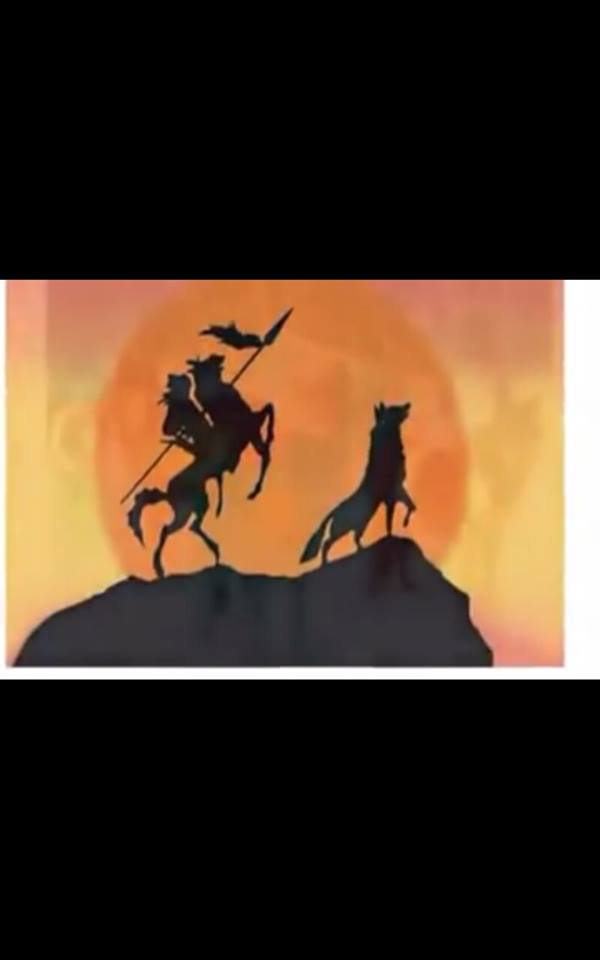
Türkiy milletlerde, jümlidin uyghurlarda islamiyettin burun we islamiyetning deslepki mezgilliride milliy roh küchlük türde gewdilinip, millet ezalirining ortaq shuarigha we heriket ölchimige aylan’ghan. Bu xil medeniy halet uyghur medeniyitige mensup her qandaq bir maddiy we meniwiy belgilerde tuluq ekis etken. Bulupmu batur tengriqut, chichi, attila, türkshad, tunyuquq, bilge qaghan, bögü we alp arslanning meshhur nutuqliri milliy rohning yüksek ülgisini gewdilendürüshtek xaraktéri bilen Türkiy milletlerning siyasiy hayatini küchlük asaslar teminligen. Shuningdek tengrini milliy süpet bilen xaraktérlendürüp << Türk tengrisi >> dep atash arqiliq << milliy tengri>>(1) chüshenchisini yaratqan kökTürkler bolsa üzining siyasiy, herbiy we medenyet jehettiki bir qatar utuqliri bilen milliy rohtin tarix yaritishning omumiy halitini namayen qilip, insaniyetning siyasiy idiologiyisige yéngi roh we yéngi mezmun qoshqan. Yat millet aptorlirimu Türkiy milletlerning alahidiligini milliy rohqa baghlap chüshendürgen. Ereplerdin jahizi, mes’udi, mubarekshah guri, quteybe ibni muslim , farslardin shemis qashani, hemdulla kazwini we xatifi qatarliq alimlar we qumandanlar Türkiy milletlerdiki milliy rohning her qandaq bir millet Türkimige sélishturghanda tulimu üstün urunda turidighanlighini qeyt qilip ötken. Zaman jehettinmu her qandaq bir milletning tarixigha sélishturghanda eng qedimiylikke ige bu milliy roh tariximizda << kök böre >> din ibaret simwolluq obraz arqiliq bir xil medeniyet tipini shekillendürüp, milletning mewjutluq we tereqqiyatigha , shundaqla ümüt, ghurur we sherep bilen yashishigha asas we körsetme bolup keldi.
<< kök böre >> obrazida simwolluq shekilde eks etken milliy roh aldi bilen Türkiy milletlerning uyushush – birlik éngining küchlüklikide körülgen. Bu xil roh << hun >>, << Türk>>, << Uyghur >>, << ughuz >> dégen millet namliridimu ipadilen’gen , bu namlarda omumen uyushush – birlik we uningdin hasil bolghan küch – quwwet we siyasiy iqtidar menisi eks etken. << ughuzname >> dastanidiki ughuzxanning dadisi we taghilirigha qarshi urush qilghanda , uning etrapigha öz ixtiyari bilen toplan’ghanlargha << Uyghur >> dégen namning bérilgenligi toghrisidiki melumatlar bizge Uyghurlardiki milliy rohning menbesining bir shexsning yaki bir eserning we yaki melum birsiyasiy guruhning meqsetlik terghibati netijiside peyda bolghan sün’iy haldiki milliy roh bolmastin , belki irqiy amildin menbelen’gen we milliy xaraktérgha aylan’ghan bir xil pisxikilik belge ikenligini chüshendürüp béridu.
Melumki, jughrapiyilik muhitmu irqiy tip we pisxilogiyilik alahidilikke yandashqan muhim amilning biri süpitide bir milletning rohiy dunyasi, exlaqiy qiyapetliri, qanun – tüzümining mahiyiti we siyasiy tüzülmisining shekli qatarliq tereplirining shekillinishige belgilik tesir körsitidu. Buninggha misal qilip bu yerde peqet Türkiy milletlernila tilgha élish kupaye qilidu.
Türkiy milletlerning jümlidin Uyghurlarning ana yurti bolghan ottura asiyada taghliq – igizlik, qaqas dala we chöllükning igiligen nisbiti chong bolup , eksiche hayatliq üchün zörür bolghan suluq, yaylaq we bostanliq jaylarning kölimi tulimu kichik we tarqaq bolghan. Ottura asiyada qerelsiz halda körülüp turidighan kilimat özgürüshliri, qurghaqchiliq we bashqa tebiiy apetlerning adem we charwa – malning hayatigha körsitidighan tesiri , hayatliq makanlirigha bolghan weyranchilighi intayin éghir bolatti. Tarqaq halette we özgürüshchan muhitta yashawatqan insanlarning öz mewjutliqini qoghdishi we siritning tehlikisige taqabil turalishi peqet yüksek derijidiki uyushush küchi bolghandila andin emelge ashatti. Tarqaq halette yashash, ünümsiz tebiiy sharaittin peqet kolliktip küchige tayan’ghandila yashash pursitige érishish, shundaqla tebiiy apet we bashqa krézisler tüpeylidin yéngi hayatliq makanlirini izdep , égiz we xeterlik taghlardin, cheksiz dala — deshtilerdin kisip ötüshke toghra kélidighan musheqqetlek turmush jeryani Türkiy milletlerge uyushushning muhimliqini téximu hés qildurghan. Démek, milletning wujudidki uyushush – birlik rohi jughrapiyilik sharaitning zörüriyiti bilen téximu kücheygen. Junggo menbeliridin << shimaliy sulalilar tarixi >> da Uyghurlardiki oyushush – birlik rohi toghrisida söz échilip : << ular küchlük milliy anggha ige . Gerche ularning olturaqlashqan orunliri kéyinche intayin tarqaq bolup , ulargha qarashliq uruq — qebililer qanchilik yiraqliqta ayrilip turishidin qet’iynezer , hemmisi özlirini < chili > ( Uyghur ) dep atighan. Qiyinchiliq we yat milletlerge qarshi küreshte , ular bir niyet – bir mexsette öz ara yar yölek bulup, ittipaqliship qiyinchiliqqa taqabil turatti>>(2) dep yézilghan. << shimaliy sulalilar tarixi >> da yene << télilarning uruq – qebililiri eng köp bolup , gherbiy déngiz (kaspi déngizi) ning sherqidin tartip tagh — jilghilarni boylap jaylashqan. Gerche ularning uruq – qebililiri oxshimisimu, hemmisi < téli> dep atilidu. >>(3) dep melumat bérilgen. Bu yerde tilgha élin’ghan we Uyghurlarnimu öz ichige alghan << téli >> dégen nam del << Türk >> dégen namning xenzuche atilishi idi.(4) yuqiriqi melumatlardimu otturigha qoyulghinidek , Uyghurlarda , shundaqla Türkiy milletlerde oyushush – birlik rohi yalghuz birla millet kishiliri üchün zörür milliy alahidilik bolush bilenla cheklinip qalmay , belki yene bir menbedin kélip chiqqan, til we medeniyet ortaqlighigha ige milletler guruhining chong birlikige qarap tereqqiy qilghan we << Türk >> tin ibaret chong bir millet qarishini yaratqan. Shunga, << orxun abidiliri >> ,<< Türkiy tillar diwani >> da shuningdek erep — paris we yawropa aptorlirining eserliride bular qanche köp tarmaqqa bölünüp , qanchilik keng térritoriyige yéyilghan bolishigha qarimay , birdek halda << Türk >> dep xitap qilin’ghan. Bu chong millet qarishi toghrisida elishir newai mundaq yazghan:
ger bir qewm, ger yüz yaki mingdur,
mueyyen Türk milliti xud méningdur. (5)
newaidin kéyinmu taki 20- esirning bashlirigha qeder Uyghur kilassikliri << Uyghur>> dégen namdin bekrek << Türk >> ibarisini shlitish arqiliq ,’özlirining Türkiy milletler ortaq gewdisige bolghan baghlinishi we himayisini ipadilep keldi. Nikita bichurin bu heqte mundaq deydu: << kaspiy déngizidin tartip köknurgha qeder bolghan jaylarda olturaq we köchmen bir millet yashaydu. Bu millet Türkche sözlishidu we muhemmedning qanunigha ( islam dinini démekchi– a ) ishinidu. Bu insanlar özlirini < Türk > dep xaraktérlendüridu we yashighan memlikitinimu < Türkistan > dep ataydu.>>(6)
milliy roh tariximizda milletke bolghan hörmet küchiyip , << ulugh millet >> qarishi gewdilen’gen . Mehmud qeshqeri << Türk >> nami astidiki millet Türkimining tengri teripidin ulughlan’ghanlighini, ularning bashqa millet guruhidin üstün turidighanlighini, tengrining özi ghezeplen’gen milletni Türklerning qoli bilen jazalaydighanlighini, << Türk >> dégen namningmu tengri teripidin qoyulghanliqini, hetta herqandaq bir kishining << Türk >> dep atalsa, uning ulughluqqa érishidighanliqini bayan qilish arqiliq milletni ulughlash éngining yüksekligini ipadiligen. Milletni ulughlash éngi yene milletni atashta, dölet , patext, orda namlirida we özliri yashawatqan zéminning jughrapiyilik atalghuliridimu körülgen.
Türkiy milletlerdiki uyushush – birlik rohi ularda belgilik birsiyasiy küchning yitekchiligide teshkillik we tertiplik yashash qarishini yaratqan. Shu seweplik ularning qurghan döletliri qandaqtur bir guruhning qoral küchige tayinip tikligen déktaturisi bolmastin , belki öz ixtiyari bilen uyushup, hökümdar bilen birleshken we uni qobul qilghan keng xelqning gheyriti we töhpisi bilen shekillen’gen siyasiy teshkil idi. Wesiqilerdimu döletni qurghanlarning xelq ikenligi tilgha élinidu.(7) bu roh Türkiy milletlerning siyasiy – huquq tarixida milletning pütkül ezalirini , shundaqla bir sistémigha mensup we ortaq medeniyet asasigha ige millet Türkümlirini bir bayraq astigha toplap, ularni qudretlik bir döletning himayisi bilen ortaq güllinish pursitige érishtürüshni meqset qilghan hakimiyet qarishining tiklinishige menbe bolghan. Bu chüshenchining tünji belgisini batur tengriqut << barche oqya tutqan xelqler bir aile bolup uyushti>>(8) dep teswirligen. << Türkiy milletler milletchiligining ana kitabi >>(9) dep teriplinidighan << orxun abidiliri >> de kökTürk qaghanlirining sherqte qidirqan taghliridin gherpte tömür quwuqqiche bolghan jaylarda yashaydighan Türkiy milletlerni kökTürk hakimiyiti astigha merkezleshtürüsh üchün küresh qilghanliqi tekrar tilgha élinidu. Uyghurlarning uyushush we uyushturush küchi téximu küchlük boldi. Uyghurlar éghir siyasiy we bashqa hadisiler tüpeylidin qattiq weyran bolghan chaghlardimu assimilatsiye we yoqilishqa qarap yüzlenmey, belki qaytidin bash kötürüp yéngi hakimiyetlerni berpa qilishqa térishqanlighi ularning oyushush — birlik ruhi bilen munasiwetlik idi. Hazirmu Uyghurlarning turmus usulida oyushush – birlik , ömlük hemmidin bekrek tekitlinidu we << inaq bolsa el, hemme bolar tel >> dep temsil qilinidu. Shu seweplik miladiye 8- esirdin 13 – esirgiche bolghan mezgilde ottura asiyadiki barliq Türkiy qebililer we iran nesillik bezi xelqler Uyghurlar etrapigha uyushup , << Uyghur >> namida atilidighan halet shekillen’genidi(10) . Buninggha munasip halda miladi 13 — esirde ottura asiya bashqa millet aptorliri teripidin << Uyghur yéri >> dep atalghanidi. Shundaq qilip << Uyghur>> dégen nam gerche << Türk >> dégen nam bilen tengdash orun’gha ötken we uningdinmu bekrek tesirge ige bolghan bolsimu, meshhur buddizm terjimani singqu seli tutung öz tilini << Türk tili >> yaki << Türk – Uyghur tili >> dep atighinigha oxshash , Uyghurlar yenila özini awwal << Türk >> , andin << Uyghur >> dep atashni himaye qildi.
Türkiy milletlerning qedimde siyasiy we herbiy jehette üstünlük qazinishining menbesining ularning uyushush — birlik rohida ikenligini yat milletlermu tuluq chüshen’gen. Shu seweplik yat milletler Türkiy milletlerning küchi we tesirini cheklesh üchün , hemmidin awwal siyasiy yaki herbiy wasitidin bekrek, teshwiqat we bashqa chareler arqiliq ularning uyushush — birlikini parchilashni eng asasiy wasite qilip tallighan we shu arqiliq közligen meqsitige yetken. Netijide hunlar dewridin bashlap bu milletlerning hayatidiki eng éghir tarixiy qismetler uyushush – birlik parchilan’ghanda yüzbérip keldi. Hunlarning meshhur dahisi attila bir milletning mewjutliqi, tereqqiyati we shan — sheripi üchün uyushush – birlikning eng muhim amil ikenligini körsitip mundaq nutuq sözligen: << bir hun hemmidin awwal sadaqetmen bolushi kérek. Qebile, ewlad we tughqandarchiliqni dep ayrimchiliq qilghan, qebililerge ziyanliq heriketlerge qatnashqan we bu heriketlerni teshwiq qilghan hun asidur . Bundaq biri qomandan bolghan teqdirdimu , uni közdin yoqitish kérek . Bizning yash bir millet bolushimizgha , bir munche qebililerdin teshkil tapqinimizgha qarimay, bizni bir birimizge baghlap turghan bir munche en’eniler bar. Bu baghlinishni uzmeslikimiz kérek. Bozqir hayatimizda we en’enimizde millitimizning meniwiy küchi we nizami bügün’ge qeder sel qaraldi. Millitimizning birleshken mezgilliri boldi. Lékin milletning musteqilliqi yat eller teripidin sétiwélin’ghan chaghlarda bu birlik bir chetke qayrip quyuldi. Awullirimizda < hun bolush > ning qandaq menide ikenligini obdan bilidighanlar yoq. Boysundurghili bolidighan milletler bilen ittipaq tüzüp , millitimiz < hun rohi >ni unutti. Aldimizdiki sinaqlarda utuq qazinishni arzu qilsaq , hun nizamini, hun exlaqini we hun chüshenchisini bilishimiz kérek. Hun milliti yalghuz bizdin bolghan kishilardinla teshkil tapmaydu. Hunlar dunyagha hökümran bolush yolida bizge qétilishni xalaydighanlarningmu millitidur. Hun bolushni xalaydighan her kishini millitimizge qobul qilishimiz kérek. Kücheymekchi bolsaq burundin dawamlashturup kéliwatqan musteqil millet tedbirliride muhim özgürüsh yasishimiz kérek. Millitimning birlishishini tosidighan her qandaq bir qewmge, qomandan’gha yaki hun’gha chüshenche bermeymen, undaqlargha eng éghir jaza bérilidu. Hiyliger yaki sheytan bir hunning bizge keltüridighan yamanliqlirini sanap tügetkili bolmaydu. Buning üchün her kim könglide sadaqet qesimini ichip , kéyin shikayet qilidighan hun’gha diqqet qilsun ! Qomandan bolghan halettimu bu tégipes xainni yoqitish üchün , her qandaq térishchanliqni körsetsun! öz millitimizdiki brütüsni tuniwalsun! Élinglarning, millitinglarning we qomandaningilarning prinsipi bilen birdek bolunglar . Pütkül hunlarning heriket we tedbirliride birlik rohi eng muhim prinsiptur .birla parchilansaq yat döletlerge esir chüshümiz. Pütün hunlar we bizge qétilghanlar en’enimizni üginishi kérek. Eger hun bolmaydiken, undaqlarni jasus dep bilip diqqet qilinsun! Bir ejdatqa we bir iriqqa tayan’ghan millet zeipttur. Meqsitimizge qétilmaqchi bolghan barliq yatlargha quchaq échish , ulargha tilimiz we örüp – aditimizni ügitish mejburiyitimiz bar. Mewjut perqlirimiz ortaq térishish we ortaq nishanning bashqurishida bolushi kérek. Asiya we yawrupadiki ejdatlardin bizge qalghan medeniy, exlaqiy we ijtimaiy ölchemler her kishi teripidin tunulishi, qobul qilinishi we hörmet qilinishi kérek . Türlük qewmlerdin teshkil tapqan küchlük xelqimizni bir hun milliti süpitide bir yerge jem qilghan en’enimizni ulargha ügitish we tedbiqlash siz qomandanlirimning mes’uliyitidur. Bolmisa xelqimiz salahiyitini yoqitidu.>>(11) << oghuzname >> de oghuzxanning oghullirigha oq bilen ya ning bérikishini misal keltürüsh arqiliq milletning yitekchilirining uyushush – birlik ruhini qoghdashtiki rolini obrazliq shekilde körsetkenligi tilgha élinidu. << orxun abidilliri >> de oyushush – birlikning parchilinishi milletke we döletke xainliq qilish dep xaraktérlendürilidu.
Türkiy milletliridiki üstün milliy rohning siyasiy – huquq sahediki padisi tereqqiy qilip, ularda << kün chiqqan yerdin kün patqan yergiche bolghan jaylar>> diki milletlerni töre – qanun boyinche idare qilishni meqset qilghan <<dunyawi hakimiyet chüshenchisi>> ni yaratti. ( 12) << tarixiy hemidiye >> diki << yafes dunyaning sherqiy we shimaliy terepliridiki idil ( wolga ), értish derya wadillirighiche bolghan jaylarda yashayti . Yaxshi qaide – yosunlarni ornatti… Xudawendekérem uninggha on bir perzent berdi, ular chin ,saqlap , gumadi , Türk, xelej, xezir, rus, sed san, gherba, ruj, munshej dep ataldi…. Yafesning ewladigha Türk dégen oghul bashliq boldi. U nahayiti gheyretlik, merdane , hönerwen, eqilliq bala idi. … Uninggha nahayiti adil we séxi padishaliq bexshende qilin’ghan bolup , u heqtaalaning bendilirini öz himayisige élip, ularni qattiq terbiye astigha aldi hem nahayiti yaxshi perzentlerni kördi. (13) dégen bayanlar del tariximizdiki<< dunyawi hakimiyet chüshenchisi >> ning menqibe sheklidiki ipadisi hésaplinidu. Mehmud qeshqeri Türklerning siyasiy iqtidaridin söz achqanda ,’ularning dunyagha hökümdar bolush üchün yaritilghanlighini tilgha alghan. Yüsüp xas hajip bu iqtidarni Türkler arisida aprasiyap dewridin béri dawamliship kéliwatqan << milliy qudret >> süpitide teswirligen. Emeliyettimu ottura asiyada apiride bolghan we awughan Türkiy milletler türlük dewrlerde bu tupraqtin halqip chiqip ,’asiya, yawrupa we afriqidin ibaret üch qit’ege kéngiyip, mushu üch qit’ede yashighan milletlerning hayatigha küchlük tesir körsetken chong bir iriqning we medeniyet sistémisining wekilirige aylan’ghan. Shöbhisizki , bu haletni hergizmu ulardiki milliy rohning türtkisidin ayrip qarighili bolmaydu. Bu jeriyanda ular 120 ge yéqin siyasiy teshkil ( hakimiyet, dölet, impériye ) qurup, jughrapiyilik daire we siyasiy tesir jehettin tarixtiki her qandaq bir millet Türkimidin halqip ketti.(14) << oghuzname>> de << men Uyghurlarning xaqanimen men pütün jahanning xaqani bolishim kérek. Men silerning manga boysunishinglarni suraymen >>(15) déyilidu. Melumki , dastan weqeliki bir milletning sap hayatiy küchini we milliy rohining pütkül tereplerini tuluq ipadilep béridu. Dastanda milliy rohning belgisi süpitide gewdilen’gen yüksek döletchilik éngi tarixshunaslar teripidin << Türkiy milletliri ghururining ilahiy yüksekliki >>(16) dep teriplinidighan << orxun abidilliri >> de << üstimizdiki kök asman bilen astimizdiki qongur yer yaritilghanda , ikksining arisida insan balisi yaritiliptu. Insan balisi üstide ata bowam bumin qaghan bilen stemi qaghanlar olturuptu >>(17) dégen bayanlar arqiliq iptixarliq bilen tilgha élin’ghan üstünlük tüyghusi kök Türk qaghanlirining yer yüzidiki insanlarni idare qilish iqtidari we salahiyitini toluq hazirlighan idial hökümdarlardin ikenligi toghrisidiki chüshenche bilen bérikken halda otturigha qoyulghan. Shuning bilen bérge bu abidiler de milliy tarix yézish, milletke xitap qilish we millet bilen dertlishish usuli bilen milliy rohning mahiyetlik xususiyetliri körsitilgen. Ezerbeyjan alimi , tilshunas a. Jafer oghli qaraxaniylar dewridiki alimlar heqqide toxtilip , << bular ottura asiyaning türlük medeniyet merkezliride hemmidin köprek milletchilik xaishidiki pelsepe we fililogiyige oxshash penler bilenmu meshghul bolghanidi>>(18) dep toghra körsetkinidek, mehmut qeshqeri bilen yüsüp xas hajipning eserlirini shu dewrning tarixi we medeniyettiki yüzlünüsh noxtisidin közetkende küchlük milliy rohning mehsuli , shundaqla milliy rohning ikki xil shekilde ipadilinishi bolup hésaplinidu. Qaraxaniylarning teqdiri krézis we siritqi medeniyetning xiéris qilishigha we istila qilishigha duch kelgen mezgilde otturigha chiqqan bu ikki eserde ikki alim siyasiy we tilshunasliq noqtisidin milliy medeniyetke küchlük türde baghlinish yoli bilen << Türk üstünligi>> ni tikleshke térishqan. Ular dunyani idare qilish hoquqining tengri teripidin peqet Türkiy milletlerge bérilgen salahiyet we hoquq ikenligini körsitish arqiliq, Türk rohining , Türk milliy medeniyitining qudritini qoghdighan we uni küchlük türde terghip qilghan. Bu yerde shunimu tilgha zörürki , kéyinki chaghlarda yashighan elishir newaining qimmiti we shöhritimu uning edebéy kamalitidin bekrek Türkiy tilgha sadiq bolup , uning hökümranliqini tiklesh üchün térishqanlighida körilidu. Ereb aptori ibni hassülmu<< Türklerning eng chong xaraktéri bir milletke hökümranliq qilish jehettiki istidatliridur. Ular tughulishidinla hökümdar we qomandan süpitide buyruq bérish we milletlerni idare qilish üchün yaritilghan>>(19) dep körsitish arqiliq Türkiy milletlerdiki milliy rohning siyasiy – hoquq sahesidiki eng yuqiri ipadisini xaraktérlendürgen.
Yuqirida éytip ötkinimizdek ,’Uyghur qatarliq Türkiy milletlerde << dunyawi hakimiyet chüshenchisi >> tereqqiy qilghan bolghachqa , ular üchün jughrapiyilik tosalghu dégen uqum mewjut emes idi. Eger ular yashawatqan ottura asiyada kilimat özgirip hayatliq menbesi üzülse, nopus köpiyip hayatliq makani tar kelse , türlük apet we krézisler tüpeylidin hakimiyet béshidin yiraqlashsa , ular derhal siritqi dunyagha qarap yüzlinetti we qisqa waqit ichidila junggo, hindistan, iran, ereb dunyasi we yawropada peyda bolatti. Ularning köchüshliri hemmidin bekrek hörlük we üstünlük tuyghisi bilen bérikken bolghachqa, yitip barghan yéngi ziminlarda hergizmu béqinda – qaram halette yashash bilen emes, belki shu orundiki yerlik xelqlerni yéngidin teshkillep ,’iqtisad we medeniy hayatta güllinish weziyiti yaritishtek yitekchilik orni bilen otturigha chiqatti. Türkiy milletlerdiki bu xususiyet yéqinqi dewrde in’glizlada körildi. Shuning bilen rim we Türk impériyiliridin kéyin dunya tarixidiki üchinchi chong impériye – büyük béritaniye impériyisi meydan’gha keldi. Buningdin melumki ,Türkiy milletlerning milliy ghururi fewqul’adde yüksek idi. Ularning dunyani idare qilish üchün yaritilghanlighi toghrisidiki chüshenchisi nahayiti semimiy idi.(20)
Türkiy milletlerning << dunyawi hakimiyet chüshenchisi >> ning mahiyiti heqqide yene shu nersini qoshumche qilip qoyush kérekki, << shaxtin üzüp yigen bir sap üzümning heqqini tal( tek ) ning astigha tashlap qoyidighan >> sezgür we heqqaniyetchi Türkiy milletler tarixta zadila mustemlikichi –istilachi bolmighan. Ular özi ishghal qilghan memliketlerge adalet we ijtimaiy tertip ornitip , wijdan’gha, iman’gha, ijtimaiy – iqtisadiy en’enilerge hörmet körsitish arqiliq ülgilik döletchilik we insanchilliq (insanperwerlik) chüshenchisini tarixqa hediye qilghan. (21)
Millet ezalirini mutleq halda hör we musteqil yashaydighan muhit bilen teminlesh, milletning we döletning mewjudiyitini siritqi ellerning tesiri yaki tehditi astigha chüshürmeslik Türkiy milletlerdiki milliy rohning siyasiy sahediki yene bir muhim belgisi hésablinidu. Melumki , dunyadiki héchqandaq bir millet Türkiy milletlerdek hörlükke meptunkar bolghan emes. Asaret astida yashashtin ölüsh ular üchün jennetke kirgenlik hésablinatti. Ular ölümni hörlük yolidiki küreshning muhim bir belgisi qilghan. Bu toghrisida merwizi mundaq yazghan:<< Türkler hör insanlardin bolup, özige özi xoja. Ular héchbir kishining yaki milletning özige zorluq qilishigha yol qoymaydu. Bir ish üchün tutush qilsa, chuqum özining iradisi boyinche qilidu.>>(22) Türkiy milletler milliy rohni dölet siyasitide tedbiqlashqa hemmidin bekrek urun’ghandi. Bilin’ginidek, dölette heqiqiy musteqilliq yalghuz idare qilghuchi guruhning arzusi bilenla emes , belki yene xelqningmu ashu arzu ichide bolishi , yeni istiqlal — musteqilliq chüshenchisining milletning barliq ezalirining ortaq arzusigha aylan’ghan bolishida ipadilinidu. Bundaq ortaq bir shuar Türkiy milletlerining jem’iyitide, dölitide nahayiti qedimdin béri her waqit mewjut bolup kelgen. Türkiy milletlerning köchüp barghan her qandaq bir yéride hör – erkin yashashqa we musteqil siyasiy teshkil (xanliq , dölet) berpa qilishqa térishishi buni körsitip berginidek , türlük ölke we memliketlerde buninggha muweppeq bolghanlighimu ularning istiqlal – musteqilliq chüshenchiside qet’iy ching turghanlighigha dalalet bolidu. Bozqir turmush sharaiti Türkiy milletlerni her waqit makan almashturup turush imkaniyitige ige qilghan . Bu xil imkaniyet ularni yimek – ichmek éhtiyaji tüpeylidin , qandaq ehwal körilishidin qet’iynezer tupriqini terk ételmeslik zörüriyitining bésimi astida yashaydighan noqul haldiki tériqchi milletletlerning ehwaligha chüshüp qélishtin yiraq tutatti. Éghir bésim we asaretke duchar bolghan müshkül minutlarda tériqchi milletler el bolup bash igishke mejbur bolidu. Hör siyasiy muhitni hayatliqning eng aldinqi prinsipi qilghan Türkiy milletler bolsa bundaq ehwalgha duch kelgende asasliq turmush wastisi bolghan charwa – mallirini heydep, yéngi bir hör – erkin makan izdep köchetti. Hunlarning orxun wadisidin awwal bügünki jenubiy qazaqistan bozqirlirigha, kéyin uyerdin yawropagha köchishi, ulardin kéyin oghurlar ( besh Uyghurlar ), sibirlar, hazarlar, pechenekler, quman – qipchaqlar we uzlar ( oghuzlarning bir tarmiqi ) ning ottura asiyadin yawropagha köchishi, oghuzlarning orxun boyliridin sir deryasi etraplirigha, uyerdin iran we anatoliyige köchishi, shuningdek , miladi 840 — yili éghir talapetke uchrighan Uyghurlarning gherpke qarap köchishi mahiyet jehettin stiqlal — musteqilliqni qoghdashni we yéngi dölet qurushni meqset qilghan futuhat yürüshi hésaplinidu.(23)
shunimu tekitlep ötimizki, Türkiy milletler üchün éyitqanda, hörlük – erkinliktin ayrilip , kishilik izzet – ghururni qoghdash üchün pidakarliq körsitishke amal qalmighan chaghda , ularning eng yéqin yardemchisi at hésaplinatti. At tizlik jehette bashqa minik haywanlargha nisbeten üstün turushtek alahidiligi bilenmu ulargha ishench we hökümranliq tUyghusi béghishlayti. Bolupmu at bozqirning japaliq turmush sharaitida we yashash üchün jan tikip kuresh qilidighan muhitida Türkiy milletlerge yol körsetküchi we rehber rolini oynighan. Shu seweblik Türkiy milletler üchün normal hésaplan’ghan mesile peqet tiz sür’ette urush seperwerligige öteleydighan we bozqirning iqtisadiy halitini shekillendürgen üzlüksiz küresh idi. Höriyet tUyghusi bilen parallil halda dawamliship mangghan buxil küresh rohi bu milletlerning aile hayatidimu öz ipadisini körsetken, kéyin tediriji halda boy, bodun we il – dölet miqyasida kéngiyip , millet ezaliri arisida ortaq qimmet ölchimige aylinish arqiliq, dölette istiqlal – musteqilliq uqumini barliqqa keltür gen we bashqa milletlerge örnek bolidighan emeliy küresh hayatini bashtin ötküzüp , insaniyet tarixida özgiche bir medeniyet tipini yaratqan.
Tarixiy menbelerge nezer tashlaydighan bolsaq, miladidin buruniqi 5- esirge mensup sak qebrisi (altun kiyimlik shahzadining qebrisi) din tépilghan bir kömüsh tawaqtiki döletning musteqilliqini qet’iy qoghdash toghrisidiki hökümdargha qilin’ghan xitap (24) bilen miladidin burunqi 1- esirde hunlarning siyasiy hayatida bölünüsh yüz birip , jenuptiki xen sulalisigha béqinish pikri otturigha chiqqanda, buninggha qarshi chiqqan chichi tengriqutning étiraz bildürüp sözligen nutqi Türkiy milletlerdiki istiqlal – musteqilliq qarishini chüshinishte bizni tulimu qimmetlik pakit bilen teminleydu. Chichi bu nutqida ejdatlardin miras süpitide yalghuz yer – zémin we döletla emes, belki yene höriyet we istiqlal – musteqilliqningmu miras qalghanliqini körsitip mundaq dégen: << hunlarning aditide ezeldin küch – quwwet etiwarlinip ,qulluq pes körilidu. Hunlar atliq jeng qilish ariliq dölet qurghan. Shunga yat xelqler arisida abroyluq bolup kelgen. Ular urushta ölüshni sherep dep bilidu. Hazir qérindashlar arisida hakimiyet talishish boliwatidu. Dölet aghining bolmisa inining bolidu.inisi ölse yenila nami qalidu. Hunlar yenila ewlattin ewlatqa yat qewmlerge bash bolup qéliwiridu. Xen sulalisi gerche qudretlik bolsimu, lékin hunlarni özige qoshiwalalmaydu. Nime üchün ejdatlirimizning qaide – tüzümini bozup xen sulalisige teslim bolghidekmiz?! Undaq qilsaq ötken dewrdiki tengriqutlarning shenige dagh tekküzüp, bashqa döletlerning aldida külkige qalimiz. Bundaq qilip eminlikke érishkinimiz bilen yat qewmlerni qandaq bashquralaymiz.>> (25)chichi tengriqutning bu ghurur kürishide bir milletning yashash istekliri, bolupmu shan – sherep bilen yashash istekliri ipadilen’gechke, gérman xenzushunas f. Hirit << tarixta milletchilikni dölet siyasitining asasi qilghan tunji siyasiyon chichidur. > >(26) dep körsetken. << her bir qurlirida qoyuq milletchilik hökümran orunda turghan> >(27) << o rxun abidilliri >> de nam – abroy we shan – sherep bilen yashashning aldiniqi sherti istiqlal – musteqil hayat, dep körsitilgen . Shuningdek milletning istiqlal – musteqilliqtin ayrilghan we bashqilarning qolida béqinda bolghan chaghliri<< öldi >> sözi bilen xaraktérlendürülgen. Abidilerde yene istiqlal – musteqilliqtin mehrüm bolghan dewrning dert – elemliri mundaq bayan qilinidu: << ili bar xelq iduq, emdi ilimiz qéni? Qaghanliq xelq iduq qaghanimiz qéni? Beg bolidighan oghulliringlar qul, pak , xanish bolidighan qizliringlar didek boldi.>>(28) << orxun abidilliri>> diki pakitlardin qarighanda , kökTürk qaghanliri millet ezaliri döletke , weten’ge, qaghan’gha, ejdatlar rohigha we shan – sherep bilen yashashqa sadiq bolghandila , üstide kök asman örülüp chüshmise, astida yer yérilip ketmise Türk dölitining musteqil hayatining menggü dawamlishidighanlighigha ishen’gen we musteqil– hör hayat bilen béqinda – depsende turmushni sélishturma qilish arqiliq ewladlargha ibret qilip yol körsetken. Türkiy milletlerde istiqlal – musteqilliq tentenisi << erginequn dastani >> arqiliq obrazliq shekilde dawamliship keldi.( 29)
melumki, en’enige sadiq bolush bilen yéngiliqqa intilish, siritqi medeniyetning ilghar we paydiliq tereplirini qobul qilish , shu arqiliq öz jem’iyitining tereqqiyatini ilgiri sürüsh her qandaq bir millet üchün milliy rohning muhim bir belgisi dep qarilidu. Uyghurlarmu tarixta en’enini himaye qilghan halda sirittin türlük dinlarni we bashqa medeniyet belgilirini qobul qildi. Lékin, siritqi terkiplerni qobul qilghanda istiqlal – musteqilliqni nezerge élishni aldinqi shert qilatti. Attila en’ene bilen milletning mewjutluqining munasiwiti toghrisida tulimu itibarliq we ehmiyetlik bir nutuq sözligen. Bu nutuqta mundaq déyilidu: << urushta, toyda we murasimda kiygen kiyimlirimiz en’enimizge Uyghun bolsun. Hunlarning qaide – yusunlirini yashlirimizgha ügiteyli. Hun qaide – yosunlirini ügenmeydiken, qomandanlar ularni izbasar dep qarimaydu. Naxshimiz, usulimiz we pütkül miraslirimiz xas we tengdashsiz bolishi kérek. Ejdatlirimizdin bizge qalghan mirasni buzup, bulghap, uninggha yat xususiyetlerni chaplimayli. Naxshilirimiz, usullirimiz, uyunlirimiz we murasimlirimiz mewjutliqimizni we salahiyitinizni ekis ettürüshning pursitidur. Bu menggü shundaq dawamlishishi kérek. …>>( 30) xuddi attilaning nutuqlirida déyilginidek, Türkiy milletlerde siritqi medeniyetning belgilirige muamile qilishta we uni qobul qilishta uning milletning teqdiri we döletning musteqilliqige bolghan tesiri mesilisige qattiq diqqet qilin’ghan. Bu jehette kökTürkler insaniyet üchün bir ülge tikligen. Bolupmu herbiy alim we siyasiyon tonyuquqning budda dinini ret qilish toghrisidiki bir nutqi bu ruhni gewdilendurgen . Tonyuquq kökTürkler bilen tang sulalisining nopusi, qimmet qarishi, turmush usuli , yashash aditi, küch nisbiti we siyasiy – diplumatiye jehetlerdiki bir biri bilen bolghan munasiwitini nezerge élip turup, budda dinini qobul qilip itiqad we turmush aditini özgeritkende, kökTürklerning xelqara riqabette utturup qoyupla qalmay , belki yene millet we döletningmu tang sulalisining qolida biraqla yoqilidighanlighini körsitish arqiliq bu dinni kök Türk jem’iyitige yolatquzmighan.(31) milliy en’enige bolghan sadaqetni kökTürkler yat tildin héchbir élémint qobul qilmighandek derijide öztilige körsetken semimiy qizghinliqidimu ipadiligen. KökTürklerning tarixidiki bir qatar ongushsizliqlar we xelqara weziyet ulargha peqet milliy en’eningla milliy mewjutluqni qoghdiyalaydighanlighini nahayitimu éniq tunutqan. Tarixshunaslarning bayanlirigha qarighanda , miladi 762 – yili Uyghur hökümdari bögü qaghanning Uyghur xanliqigha tesir körsitishke yüzlen’gen budda dinini tosush üchün mani dinini qobul qilishida döletning siyasiy mewjutlighi üchün sirittin kélish éhtimali bolghan tehlikini cheklesh meqset qilin’ghan. Gerche mushu waqitta Uyghurlar herbiy küch jehettin tang sulalisidin üstün orunda tursimu , lékin nupusi bir milyun etrapidiki Uyghurlargha nisbeten éyitqanda , 50 milyundin artuq nupusi bar we özliri eng köp alaqida bolidighan tang sulalisi bilen bir xil itiqat chembirigide yashash milliy we siyasiy mewjutluq üchün heqiqeten xewplik hadise hésaplinatti. Shu seweplik , bögü qaghan mani dinige kirish arqiliq milletning teqdirini junggodin ayrimaqchi bolghan.( 32) bu yerde shunimu qisturup quyush kérekki, tarim wadisida yashighan ejdatlirimiz miladidin burunqi waqitlardin tartipla kök tengri eqidisige yandashturup budda dinighimu étiqad qilip keldi. Idiqut we kengsu xanliqi dewrige kelgende bu din téximu étibargha érishti. Ilgiri hökümdarlar teripidin chetke tipilgen bu dinning emdilikte qaytidin étibargha érishishini Uyghurlarning shu chaghdiki yashawatqan makani we xelqara weziyetke bolghan tunishi bilen baghlap chüshendürüshke bolidu. Biri, bu ikki dölet jughrapiyilik jaylishish jehettin buddizim medeniyiti güllen’gen rayunlarda quruldi . Shu seweplik chongqur yiltiz tartqan buddizim medeniyitidin xali turishi yaki uni biraqla ghulitip tashlishi mumkin emes idi. Yene biri, bu chaghda tang sulalisi zeiplishishke yüzlen’gen bolup, qaysila jehettin bolmisun Uyghurlargha xewp peyda qilalaydighan tesirge ige emes idi. Tang sulalisi yoqalghandin kéyin, junggoda bölünme weziyet shekilliendi , hetta bu weziyetke xatime bergen sung sulalisimu Uyghurlargha küch körsetkidek haletke érishelmidi. Tashqi muhitning küchini toluq mölcherliyeligen Uyghurlar bu waqitta buddizm medeniyitining himayichiliri supitide otturigha chiqqan.Uyghurlar buddizm medeniyitini himaye qilghanda , uni milliy en’enige boysundurushqa térishqan , shu seweplik u << Uyghur buddizmi >> sheklige kirgen.(33) a . Jafer oghli Uyghurlarning en’enige bolghan sadaqet rohi toghrisida mundaq dégen: << témoriyler dölitining qurulishigha qeder ottura asiya Türkiy xelqliri arisida héchqaysisi Uyghurlardek özining adet we en’enisini, yeni tarixini sadaqet bilen dawamlashturalmidi. Uyghur yéziqining Uyghurlarning ayighi tegken herqandaq yerde qollinilishi bu tarixqa bolghan hörmet we sadaqetning eng chong ipadisidur.>>(34) a jaferning bu sözide idiqut Uyghurliri nezerde tutulghan . Eyni waqitta qaraxaniylar islam itiqatida bolup , bu teweliktiki Uyghurlarning slam medeniyitige bolghan baghlinishi milliy roh we en’enige bolghan sadaqettin halqip ketkenidi.
Qisqisi, istiqlal – musteqilliq chüshenchisi tariximizda milliy mewjutluq , tereqqiyat we shan – sherep bilen yashashning aldinqi sherti qilin’ghan. Shunglashqimu Uyghurlar erginequndin chiqqan künni<< istiqlal – musteqilliq küni >> qilip bikitip, noruz en’enisi bilen << yéngi yil küni >> süpitide tebriklep kelmekte. Noruzning Türkiy milletlerdiki eng muhim menisi uning << istiqlal – musteqilliq küni>> süpitide qobul qilinishidur.
Uyghur qatarliq Türkiy milletlerdiki weten chüshenchisi nahayiti muqeddes bir uqum bolup, u aile, mehelle, yurtqa bolghan küchlük muhabbet we sadaqetning yüksek derijidikii belgisi süpitide gewdilen’gen. Weten’ge baghlinish we uning üchün sadaqet — piidakarliq körsitish << milliy alahidilik >> ke aylan’ghan. Shu tüpeyli , qedimde << ulush >> sözi bilen ipade qilin’ghan we belgilik chégrisi bolghan dölet ziminigha qaritilghan weten hökümdar ailisining xususiy mülki bolmastin , belki pütün milletning ortaq zémini, hayatliq , mewjutluq , tereqqiyat tuprighi , shundaqla xatirjemlik we xushalliq soruni hésaplinatti.
Türkiy milletlerde weten’ge sadiq bolush bilen birge seyyare, köchmen we heriketchan turmush kechürüsh bir gewdiliship ketken we ularning siyasiy chüshenchisining asasliridin biri qilin’ghan. Chünki ularning weten chüshenchisi qanun we hörlük bilen birikken bolup, bu ikki sherttin mehrum bolghan chaghda , ular yéngi bir yurt qurush istikide, weten üchün wetendin ayrilatti .bu toghrisida junggo menbeliride << ular bügünki künde junggogha teslim bolghan teqdirdimu , öz wetinini asanliqche unutmaydu >>(35) dep melum chüshenche bérilginidek, jahizi bu noqtini << weten muhabbiti barliq insanlargha ortaq bolghan bir xil hésyattur. Likin, bu xil hésyat Türklerde téximu üstün we yüksektur >>(36) dep xaraktérlendürgen. Quteybe ibni muslim << Türkler wetinige nahayiti sadiq bolup, uning üchün jan béridu. Héchqachan wetinini unutmaydu. Qeyerge bérishidin qet’iynezer , wetinige sadiq bolidu. Türklerni bashqa milletlerdin üstün qilghan amil del mushu xususiyettur. Türkler buni nahayiti yaxshi bilidu. >> (37) dep teripligen .Türkiy milletlerning wetinini qoghdash yolida pidakarliq körsitidighanliqi yene iran dastanliridimu sözlinidu.Iran dastanlirida tumaris we shiraq qehrimanliqliri buning misali süpitide bérilgen. Junggo menbeliridimu buninggha oxshash misallar tilgha élinidu. Hunlarning sherqtiki qoshnisi tungguslar hun ziminining bir parchisini kisip bérishni telep qilghanda batur tengriqut << yer – zimin döletning uli, nime dep bériwetkidekmiz >>(38) dégen üe bu ziminni bériwitishni teshebbus qilghan wezirlerning kallisini alghan. Eslide tungguslar bilen inaq qoshnidarchiliqni teshebbus qilghan batur ularning mushu telipi üchün urush qozghap , ularni qattiq meghlup qilghan.(39) shuningdek, xen sulalisimu hunlardin bir parche taghliq yerni sorighanda, irishkini hun tengriqutining << bu yer merhum atamdin miras qalghan zimin bolup , qoldin bérip qoyush heddim emes >>(40) dégen qattiq étirazidin ibaret bolghan. Buningdin melumki, Türkiy milletlerde weten – ulush hökümdarning özi xalighanche shexsiy mülük supitide ishlitidighan zimin bolmastin , belki hökümdar teripidin qoghdilidighan ata miras yadikarliq hésaplinatti.
Bu ehwallar Türkiy milletlerde weten qarishi jehettin << dominom >> tipi emes, belki <<impériyum >> hakimiyet chüshenchisining mewjut bolghanliqini körsitidu. Dölet zéminining hökümdarlar bilen xelqning ortaq mes’uliyiti astida tutulishi ularning siyasiy teshkili – dölet namliridinmu melum bolghinidek , buni bu millletlerdiki shexistin bekrek weten’ge yaki siyasiy teshkilge baghlinidighanliqi mesilisi bilen birlikte küzitidighan bolsaq yurt – ölkining tiz sür’ette wetenlishishining mümkin bolidighanlighini chüshen’gili bolidu. (41)
Türkiy milletlerning << herbiy millet >>( jenggiwar millet ) süpitide otturigha chiqishi we herbiy ishlar téxnikisining yüksilishi ulardiki wetenperwerlik hésyati bilen birikken bir medeniyet tipi idi. Junggo menbeliride hunlar, kökTürkler we Uyghur qatarliq Türkiy miilletlerning kiselde ölüshni nomus, urushta ölüshni sherep dep bilidighanliqi tekitlen’gen . << orxun abidilliri >> dimu << insan balisi ölüsh üchün törelgen>>(42) déyilidu. Sasan chichen << Türkler öyde tughulup , urush meydanida jan béridu>> (43) deydu. Türkiy millet Türkimide her bir insan kichikidin tartipla oqya étish we at minish terbiyisi bilen chong bolup, maharetlik bir esker bolup yétiletti. Kiygen kiyimlirimu turmush we urushqa mas kélidighan ikki xil xususiyette layihilen’gen. Bu xil turmush bilen urush bir gewdileshken hayat shekli qandaqtur bir tajawuzchiliq yaki istila chüshenchisining türtkiside shekillen’gen bolmastin , belki özi mensup milletning we döletning mewjutluqini, bixeterligini , tinchlighini we hörlükini siritning tehlikisidin qoghdash üchün her waqit teyyar turushtek sadaqet we pidakarliq ruhidin tughulghan. Démek , herbiy küchning tereqqiy qilishi milliy qoghdinish bilen munasiwetlik idi.(44) Uyghurlarda bügünki kün’giche dawamliship kéliwatqan << özüng üchün kül, yurtung üchün öl >> , << yétip qalghiche, étip qal >> dégen maqal – temsiller buni ochuq körsitip béridu. Emeliyettimu Türkiy milletlerning urushliri turk alimi ibrahim kafes oghli körsitip ötkinidek, tinchliq we sülhini meqset qilghan bir wasitidin ibaret bolup, uningda yene chong birliktin ibaret pelsepiwi chüshenche yitekchi qilin’ghan. Shu seweplik tinchliq we sülhini << el >> dep atighan Türkiy milletler özlirining we öz döletlirining bu xil haletni emelde körsitidighan küch ikenligige shen’gechke , millet we dölet dégen uqumnimu yene ashu << el >> sözi bilen ipade qilghan. Dimek, weten üchün sadaqet we pidakarliq bilen yashighandila andin tinch hayatqa, mewjutluq sharaitige we yüksilish pursitige irishkini bolidighanliqini toluq chüshünüp yetken Türkiy milletler weten dep urush meydanida jan bérishni idial hayat tipi qilip tallighan we buningdin ghurur, sherep, bext tUyghusi hés qilghan. Hetta qiz – ayallarmu mushundaq qehrimanliq rohta yashighan . Shu seweplik urushta qehrimanliq körsetkenlerning jem’iyettiki orni , nopuzi hemmidin üstün bolghan. Millet ularning hayatini teswiriy sen’et wasitiliri ( heykel, balbal tiklesh, qebre béshigha öy, yeni xatire sariyi sélip, uning tamlirigha qehrimanning urush qiliwatqan körinishlirini sizish ) bilen obrazlashturghan, menggü tash tiklep qutluqlighan we naxsha – qoshaq , dastanlargha qétip ebediyleshtürgen. Qisqisi, tarixshunaslarning Türkiy milletler toghrisidiki << qehrimanliq jasariti küchlük >> dégen sözliride del ularning << wetenperwerlik rohi üstün >> dégen uqum ipadilen’gen.
<< orxun abidiliri >> de wetenperwerlik bir xil étiqad sheklide tilgha élin’ghan. Bu abidilerde hunlar dewridin béri Türkiy milletlerning döletlirige paytext bolup kelgen we ashu orni bilen bu milletlerning siyasiy we meniwiy iptixarliq bazisigha aylan’ghan ötüken’ge sadaqet körsitish wetenperwerlikning muhim ölchemliridin béri qilip körsitilgen. ötükendin yiraqlishish, wetenni tashlap kétish dölet aldida ötküzülgen jinayet hésaplinip, tengrining jazasigha uchraydighan éghir guna süpitide qaralghan. Abidilerde ötüken’ge küchlük türde baghlan’ghandila milletning ghem – qayghusiz yashaydighanliqi, dölitiningmu menggü dawamlishidighanliqi étirap qilinish arqiliq wetenperwerlikning mahiyetlik belgiliri otturigha qoyulghan. Bu chüshenche << qutluq tagh dastani>> nida téximu quwwetlen’gen. Bu dastanda déyilishiche, döletning saaditi, milletning birliki bir taghqa , téximu toghrisi bir qiyagha baghliq dep qarilidu. Kéyinche tang sulalisidin alghan bir melikining toyluq méli süpitide bu qiya tang sulalisigha bériwitilidu. Tang sulalisining bu qiyani parchilap junggogha élip kétishi netijiside ölüm we qischiliq yüz béridu. Axirida milletning birliki bozulup, öz yurtidin köchüp kétishke mejbur bolidu.(45) shuningdek yene menbelerdiki pakitlardin qarighanda, Türkiy milletler üchün wetendin ayrilip qélish eng éghir zerbe we dert – elem hésaplan’ghan. Buning azabi ularning rohiy dunyasida qattiq tesir qozghighan. Hunlarda alchi téghini xen sulalisigha tartquzup qoyghanda peyda bolghan éghir dert – elem hestetlik qoshaqqa aylan’ghan. Bu bayanlarda peqet milletning mewjutluq soruni bolghan weten tupriqini saqlap – qoghdap turalighandila andin milletning siyasiy hayati we güllinishidin söz achqili bolidighanlighidin ibaret bir xil siyasiy – hoquq chüshenchisi otturigha qoyulghan.
Omumen qilghanda, Türkiy milletlerde jümlidin Uyghurlarda weten chüshenchisi we muhabbiti nahayiti üstün bolushtek xaraktéri bilen herqandaq bir millet Türkimidin perqliq halda siyasiy istiqlal – musteqilliq pikri bilen birge dawamliship mangghan. Ular teshkillik we qanuniy asasta, ixtiyari, erkin , hör we musteqil yashalighan ziminni weten dep hésaplighan. Bu shertler körülmigen yaki uni saqlap qélishqa héchqandaq mümkinchilik qalmighanda, wetenni terk étip köchetti.dimek, Türkiy milletler medeniyitide weten ularning tughliri we al renglik bayriqi lepildep turghan yerlerni körsitetti. (46)
insaniyetning bügün’giche bolghan tarixidin shuni hés qilishqa bolidiki , her qandaq bir milletning tereqqiy qilishi yaki chékinishi , nam – shöhret qazinishi yaki untulushi omumen shu milletning milliy rohigha munasiwetlik bolup keldi. Uyghurlarning miladi 13 — , 14 – esirlergiche bolghan tarixida siyasiy— hoquq chüshenchisining küchiyip, iqtisad we medeniyette tereqqiy qilip , tesiri we nam – abroyining asiyadin halqip hetta yawropa we afriqighimu tarilishi ularning maddiy we meniwiy hayatning herqandaq saheside milliy rohni yitekchi qilghanlighidin bolghan. Uningdin kiyinki chékinish we bashqilar teripidin untulushqa yüzlinishide nurghun sewepler bolsimu, lékin buning asasliq sewebini bezi kishiler jar séliwatqinidek qandaqtur << yipek yoli >> ning üzülüp, << déngiz yoli >> ning échilishigha baghlap qoyushqa bolmaydu. Buning asasliq sewebini mushu mezgillerning aldi – keynidiki dewirlerdin bashlap Uyghurlarning tarixida milliy rohning dawamliq tereqqiy qilishigha tosqun bolidighan amillarning körülishke we küchüyishke bashlighanlighidin izdeshke bolidu. Bu tosqunluqmu del siritqi muhittin qobul qilghan türlük itiqad shekilliri we ashu itiqad shekillirige egiship kirip kelgen medeniyet belgirining itibargha érishishidin bolghan .
Melumki, Türkiy milletler arisida miladidin buruiqi dewirlerdin tartipla << ulugh tengri >> dégen menidiki << kök tengri >> namida atalghan bir tengrilik itiqad shekli asas qilinip kelgen. Islamiyet dewrige qeder izchil dawamlashqan bu dinning eqidiside , hoquq, qanun ,ghurur , üstünlük, jenggiwarliq, shan – sherep, insanchiliq, jümlidin milliy roh tengrining iradisi dep qarilartti. Hökümdarlarmu bu eqidini rial hayatta emelge ashurushqa térishatti, dimek ,bu dewirde milliy roh bir xil itiqad we eqidige aylan’ghanidi. Melumki , din bashqa medeniyet belgilirige sélishturushqa bolmaydighan alahide birxil medeniyet hadisisi hisaplinidu. Din bir milletning rohi haliti, tarixi we medeniytige nahayiti zor tesir körsiteleydu yaki milletning hayatini qayta quridighan haletni peyda qilalaydu. Tarixshunaslarning delillishiche, Uyghurlarning öz jem’iyitining tereqqiyat ihtiyaji yüzisidin kök tengri dinige yandashturup , sirittin qobul qilghan mani we budda dinliri Uyghurlar teripidin qanchilik derijide milliy xaraktérge boysundurulishidin qet’iynezer , yenila ularning milliy rohini cheklep turush rolini oynighan . Bu toghrisida << Türk énsiklopédiyisi >> ning << qaraxaniylar >> maddisida : << buddizm we mani dinining milliy xaraktérge mas kelmeydighanlighi asanla chüshünildi. Türklerni yat medeniyetke ittirgen, jahan’girlik xaraktérini yoqatqan, hetta herbiy üstünlikige we teshebbuskarliq talantigha ziyan yetküzgen bu dinlar Türk jem’iyitide krizis peyda qilish , meniwiy qimmetni özgertiwétish bilenla cheklen’gen emes. Yene Türk dölitining siyasiy alahidiligini weyran qilip , palech haletke duchar qilghan>> (47) déyilgen. Heqiqeten idiqut we kengsu Uyghurlirining küchlük siyasiy we herbiy küch teshkillep , pütkül Uyghurlarni özining hémayisige alghan chong bir impériyige aylinalmasliqi, axirida özining musteqil siyasiy hayatidin ayrilip qélishi bu dinlarning belgilik derijide cheklesh rolini oynighanlighidin bolghan. Shundaqtimu bu dewir medeniyitige mensup pakitlar bizge bu dinlarning cheklep turush rolini oyniyalighan bolsimu, lékin milliy rohni we tarixni untuldururush derijisige baralmighanlighini körsitip bermekte . Shunisi éniqki , budda we mani dinining bu ikki tarmaqtiki Uyghurlarning edebiyat , sen’et , terjimichilik we mimarchiliq tarixida yaratqan paydiliq– ijabiy tesirining zorluqini inkar qilghini bolmaydu.
Budda we mani dinlirigha sélishturghanda, ghurur, sherep, üstünlük, heqqaniyet bilen yashashning usullirini ügitidighan, tulimu emeliyetchil we << exlaq dini >> bolghan islam dini heqiqeten Uyghurlarni exlaq , turmush usuli we kishilik munasiwette téximu mukemmelleshtürüp, bir millet süpitide bügünki kün’ge ulushishidiki bir wasite we siritqi medeniyetning istilasni cheklep turushtiki muhim qorallarning biri bolup keldi. Emeliyettimu qaraxaniylar Uyghurlar islam dinigha ötken deslepki mezgillerde, bu yéngi eqidini milliy rohqa we milliy medeniyetke birleshtürüshke tériship, maddiy we meniwiy jehettin << Türk islam medeniyiti >> ning bir munche utuqlirini yaratqan . Hetta islam dinigha egiship kirip kelgen erep – paris medeniyitining bashqa belgilirimu Türk milliy medeniyitining bir qushumchisi süpitide yandashturulghan.
Islam dinida emeliyetchil tereplerdin kök tengri dini bilen birdeklik teshkil qilidighan , millet we milliy rohning tereqqiyatini ilgiri süridighan eqidiler bar idi .islam dini intérnatsiunal xaraktérge ige bolup , bu chong birlik peqet islam itiqadi asasigha uyushushni körsitidighan birlik idi. Shundaqtimu islam eqidiside bu dinning sirtidiki milletlerning mewjutliqi we ularning medeniyitimu itirap qilin’ghan. Shundaqla << eger rebbing xalighan bolsidi, yer yüzidiki insanlarning hemmisi biraqla iman éyitqan bolatti . Shundaq tursa sen hemmisini mömin bolsun dep mejburlamsen>> (süre yünüs , 99 – ayet )(48), << dinda zorlash yoqtur >>( süre beqere , 256 – ayet ) (49), << sen peqet bir wez – nesihet qilghuchisen, ulargha bésim qilghuchi( iman’gha mejburlighuchi) emessen>>(süre ghashiye, 21- 22 – ayetler )(50) dégen ayetler arqiliq uninggha itibar bilen muamile qilish terghip qilin’ghan. Melumki ,’islam dinida wijdan’gha bésim yoq bolup, wijdan’gha, milliy rohqa, tarixqa we medeniyetke hörmet körsitish << qur’an >> ning buyriqi idi. Démek, islam dini eqilning his qildurishi bilen shekillen’gen birlikni terghip qilatti . Buning milletning oyushush rohini kücheytishi we chong birligini shekillendürishi tebiiy idi. Lékin, islam dinini tarqitish we omumlashturush jeriyanida buni ijra qilghuchilar dinning esli mahiyitige yat hisyatni arilashturiwélishtin yanmighan. Islam muxlislirining neziri boyinche bolghanda pütün insanlar << musulman >> we << kafir>> ( yat dindikiler) dep ikkila Türkimge yaki ikki milletke ayrilatti . Shu wejidin irq , millet , til , milliy roh we medeniyet perqi qandaq bolishidin qet’iynezer islam itiqatidila bolsila , ularning hemmisi bir’ümmet — bir xelq( bir millet) süpitide qaralghan. Islam itiqatining sirtidikiler bolsa eslide bir millet bolsimu , gheyri insanlar süpitide qarilip chetke qéqilghan, qirghin qilin’ghan. Netijide qaraxaniylar tewesidiki Uyghurlar mushundaq chüshenchige asasen, islamiyetning sirtidiki ejdatlar we qéridashlar bilen bolghan chek – chégrani éniq ayrip , özining hayati, rohi we medeniyitini qayta tikligechke, bu halet tebiiy halda tarix we medeniyet asasining untulishidek hadisining peyda bolishigha sewep bolup qalghan. Qaraxaniylar islam itiqadi arqiliq Uyghurlarni birlikke keltürüshni milliy siyaset qilip tallighan bolsimu , lékin uni emelge ashurush jeriyani qanliq küresh we tarix bilen medeniyetni biraqla öchürüp tashlash asasida élip bérilghachqa ,bu halet idiqut Uyghurliri bilen qaraxaniylar Uyghurlirining birlikini wujutqa chiqarmayla qalmay, belki ularni bir birige reqip qiliwetti. Mehmud qeshqerining idiqut Uyghurliridin söz achqanda, milliy rohning türtkisi bilen , ularni Türklerning bir tarmiqi we mahir mergenler dep maxtisa , diniy hisyat noqtisidin chiqip, ularni esheddiy kapir dep qarap , qaraxaniylarning qoshunlirining ularning medeniyitini weyran qilghanliqini söyünüp turup yazghanlighi buninggha bir misal bolidu. Dimek , islam dinining Uyghurlar arisida tarqilishi << milliy shuar >> ni yitekchi qilghan halda , milletni himaye qilish , tarixni we medeniyetni qoghdash asasida élip bérilmidi. Buning bilen milletning parchilinip turush haliti uzaq dawamliship , Uyghurlaning milliy rohigha deslepki qedemde éghir dez ketken .
Bolupmu qaraxaniylar dewrining axiriqi mezgilliridin bashlap hökümdarlar we ziyalilar arisida erep – paris medeniyitining tesirini himaye qilish küchiyip, milliy rohqa bolghan sadaqet barghanséri itibardin qélishqa yüzlendi. Türk medeniyitige sel chaghlinip , bu medeniyetni himaye qilghanlar nadan, jahil , mutesip dep qaraldi, hetta mushu wejidin ulugh we shereplik bir nam bolghan << Türk >> sözimu << nadan>> , << döt >> , << qara qosaq>> dégen menidimu istimal qilinidighan gheyri ehwal otturigha chiqti. Milliy rohni oyghitidighan ,milletke yol körsitidighan, milletning yüksilishini menbe bilen temin itidighan edebiyattimu tariximizning utuqliri, ejdatlirimizning arzuliri, milliy qehrimanlirimiz — ulugh simalirimiz , milletning asasiy gewdisi bolghan xelqning rial haliti we ümidi ashu xelqqe chüshünishlik Türkiy til bilen ipadilinip , roh we ghururni oyghitip, uninggha küch – quwwet ataqilip yol körsitishning ornigha , erep — pars edebiyatidiki motiflar we obrazlar ( << ming bir kiche >>, rustem, jemshid, feridun , siyawush qatarliq) we ashu edebiyat uslobidiki timilar sözlinip rialliqtin yiraqliship ketti. Yene kélip bu edebiyat pars tilida yézilghan . Türkiy tilda yézilghan eserler dimu erep – paris tilidin kirgen sözlükler asasiy salmaqni igiligen bolup , umu janliq tildin yiraqliship ketken. Bu xil edebiyattin hergizmu xelqimizge meniwiy yitekchilik qilishni kütkili bolmaytti. Bartoldmu bu haletni << Türklerge- Uyghurlargha islamiyetning we fars edebiyatining tesiri shu derijide küchlük bolghan idiki , Türkler- Uyghurlar islamiyettin burunqi tarixini pütünley unutti>> (51) dep süretleydu. Medeniyettiki mushu özgirish tüpeylidin , milliy rohning yüksek ipadisi bolghan << oghuzname >> dastani qaraxaniylar teweside yashighan Uyghurlar ichide emes, belki idiqut Uyghurliri arisida saqlinip qelemge élindi. Aprasiyap (qaraxaniylarda yüsüp xas hajip we mehmud qeshqeridin kéyin untuldi) , tunyuquq we bögü qaghan’gha ait xatirilermu mushu Uyghurlar arisida saqlandi.(52) budda we mani dinining cheklep turushi bilen özining siyasiy iqtidarini qoldin bérip qoyghinigha qarimay , milliy rohqa baghlinishni dawamlashturghan mana shu idiqut Uyghurliri mongghul impériyisi we tömüriler impériyisi dewrining siyasiy,herbiy , iqtisad we medeniyet munbéride yuqiri orun’gha iriship ,’Uyghurlar we Uyghur medeniyitige sherep ata qilalidi. Jümlidin Uyghur til – yéziqini asiyadin halqip yawropa(okraina we latwiye) dimu shöhret qazan’ghan xelqaraliq medeniyetke aylandurdi. (53)
dimek, qaraxaniylarning axiriqi dewridin bashlap , buxanliq tewesdiki Uyghurlarda, miladi 14 – esirdin bashlap pütkül Uyghurlarda milliy roh millet xaraktérliq yitekchi prinsip bolushtin qilip , peqet kishilerning wujudida yoshurun küch halitide saqlinishqa yüzlen’gen bir meniwiy amilgha aylinip qaldi.
Shundaqtimu bu yoshurun küch pat – pat mehelliwiy yaki birer sheher dairiside bolsimu özini ipadilep, milletning mewjutliqi we tereqqiyatining eng muhim menbesi ikenligidin sada bérip keldi.
Bibliografiye:
(1)(7) (12) (23) (41) (46) << islam énsiklopédiyisi >> , Türkche, 12- tom , 2 – qisim , 223- , 227 – ,244 -, 260 – betler , 1988 – yili , istanbul.
(2) düen lyenchin : << dinglinglar, turalar we qangqillar >> , Uyghurche,81 – , 86 – betler , 1997 – yili , ürümchi.
(3) li yenshu : << shimaliy sulalilar tarixi >> , Uyghurche, 568 – , 569 – betler, 2000 – yili , ürümchi .
(4) (32) << Türk énsiklopédiyisi >> , Türkche, 33 – tom , 147 – , 151 – betler, 1984 – yili , enqere.
(5)(6) baymirza hayit : << sowitler ittipaqidiki Türklükning we islamiyetning bezi mesililiri >> , Türkche, 193 – bet, 1987 – yili , istanbul.
(8) simachyen: << tarixiy xatiriler>> , Uyghurche , 1988 – yili , ürümchi.
(9)(16) << Türk énsiklopédiyisi >> , Türkche , 25 – tom , 487 – bet , 1977-yili, enqere.
(10) wéy lyangtaw : << qaraxaniylar tarixidin bayan>> , Uyghurche, 106 – bet , 2000 – yili , ürümchi .
(11) (30) << Türkchilik prinsipi >> , Türkche , intirnéttin élin’ghan nusxa.
(13) molla musa sayrami : << tarixiy hemidiye >> , Uyghurche, 46 – , 47 – betler, 1988 – yili , béyjing.
(14) abdulqadir donuk : << tunji Türk milletchisi chichi tenxu >> , << Türk dunyasi tarix jornili >> , Türkche, 1987 – yili , 3 – san, 44 – bet.
(15) << oghuzname >> , Uyghurche, 46 – bet , 1980 – yili , béyjing .
(17) ( 28) (42) << qedimqi Uyghur yazma yadikarliqliridin tallanmilar >> , Uyghurche, 80 – , 84 – , 85 – betler , 1983 – yili , ürümchi.
(18) (34) a. Jafer oghli : << Türk tili tarixi >> , Türkche, 2 – qisim, 18 – , 208 – betler, 1984 – yili, istanbul.
(19) yilmaz إztuna : << büyük Türkiye tarixi >> , Türkche, 2 – tom, 391 – bet, 1977 – yili , istanbul.
(20) (27 ) (26) (37) (44) yilmaz إztuna : << büyük Türkiye tarixi >> , Türkche, 1 – tom, 50 – , 51 – , 95 – , 100- ,101- , 140 – ,141 – betler, 1977 – yili, istanbul.
(1 2) samixa aywerdi : << Türkler mustemlikichi bolmighan >>, << Türk dunyasi tarix jornili >> , Türkche, 1987 – yili, 11 – san, 23 – bet.
(24 ) aydin taneri : << Türk dإlet en’enisi >> ( tünügün – bügün ) , Türkche, 11- bet, 1981 – yili ,
( 25) (38) (39) (40) ben’gu : << xenname >>, Uyghurche, 698 – , 778 – , 798 – betler, 1994 – yili , ürümchi.
(29) mustapa uslu : << Türk medeniyiyitide noruz motfi >> , << Türk dunyasi tarix jornili >>, Türkche, 1987 -yili, 4 – san, 22 – bet.
( 31) (35) jang réntang : << tang dewridiki sherqiy kإk Türkler heqqide yéngi hإjjetler >> , Türkche, 67 – , 174 – betler, 1968- yili , teybéy.
(33) (45) mustapa ergün : << Türk maarip tarixi >> , Türkche, intérnéttin élin’ghan nusxa.
(22) (36) (52) a. Zekiy welidi toghan : << omumiy Türk tarixigha kirish >> , Türkche, 100 – , 106 — , 168-betler , 1 198 -yili, istanbul.
(43) a. Zekiy welidi toghan: << Türk we tatar tarixi >> , tatarche, 18 – bet , 1912 – yili , qazan.
(47) << Türk énsiklopédiyisi >> , Türkche , 21 – tom , 287 – bet , 1974 – yili , enqere.
(48) (49) (50) ibrahim agah chubukchu : << medeniyet tariximizda din >> , Türkche, << belleten >>, 1990- yili, 4 – san, 778 -bet.
(51) w. W. Bartold , m . F. Kإprülü: << islam medeniyiti tarixi >> , Türkche, 1940 – yili, istanbul.
(53) a. Jafer oghli : << Türk tili tarixi >> , Türkche, 1 – qisim, 178 – bet,1984 – yili , enqere.
Dada Qurqud: Heroic Destan of Ancient Oghuz Türks – دده قورقود – (Film, 1975)
Heroic Destan of Ancient Uyghur/Oghuz Türks – دده قورقود –
Dede Korkut is a heroic destan (legend), also known as Oghuz/Uyghur-nameh among the Uyghur/Oghuz Turk people, which starts out in Central Asia, continues in Anatolia and Iran, and centers most of its action in the Azerbaijani Caucasus. For the Turkic peoples, especially people who identify themselves as Uyghur/Oghuz, it is the principal repository of ethnic identity, history, customs and the value systems of the Turkic peoples throughout history. It commemorates struggles for freedom at a time when the Uyghur/Oghuz Turks were a herding people.
The tales tell of warriors and battles and are likely grounded in the conflicts between the Uyghur/Oghuz and the Pechenegs and Kipchaks. Many story elements are familiar to those versed in the Western literary tradition. For example, the story of a monster named „Goggle-eye“ Tepegoz bears enough resemblance to the encounter with the Cyclops in Homer’s Odyssey that it is believed to have been influenced by the Greek epic or to have one common ancient root.
The book also describes in great detail the various sports activities of the ancient Turkic peoples: „Dede Korkut (1000- 1300) clearly referred to certain physical activities and games. In Dede Korkut’s description, the athletic skills of Turks, men and women, were described to be „first-rate,“ especially in horse-riding, archery, cirit [javelin throw], wrestling and polo which are considered Turkish national sports.“
(Source: Wikipedia)
Portrait of Dədə Qorqud:
1: http://cetinbayramogluefsaneler.files…
(Source: http://cetinbayramogluefsaneler.wordp…)
The National Father, The Conqueror And The Founder of The Timurid Dynasty-Amir Timur

Timur (Persian: تیمور Timūr, Chagatai: Temür, Uyghur: Temur; died 18 February 1405), historically known asTamerlane[1] (Persian: تيمور لنگ Timūr(-e) Lang, „Timur the Lame“), was a Turko-Mongol conqueror and the founder of the Timurid dynasty in Central Asia.[2] Born into the Barlas confederation in Transoxiana during the 1320s or 1330s, he gained control of the Western Chagatai Khanate by 1370. From that base, he led military campaigns across West,South and Central Asia and emerged as the most powerful ruler in the Muslim world after defeating the Mamluks of Egypt and Syria, the emerging Ottoman Empire and the declining Sultanate of Delhi. From these conquests he founded the Timurid Empire, although it fragmented shortly after his death. He is considered the last of the greatnomadic conquerors of the Eurasian steppe, and his empire set the stage for the rise of the more structured and lasting gunpowder empires in the 1500s and 1600s.[3][4]:1
Timur envisioned the restoration of the Mongol Empire of Genghis Khan.[5] As a means of legitimating his conquests, Timur relied on Islamic symbols and language, referring to himself as the „Sword of Islam“ and patronizing educational and religious institutions. He converted nearly all the Borjigin leaders to Islam during his lifetime.[6] His armies were inclusively multi-ethnic. Timur also decisively defeated the Christian Knights Hospitaller at Smyrna, styling himself aghazi.[7]:91 By the end of his reign, Timur had gained complete control over all the remnants of the Chagatai Khanate,Ilkhanate, Golden Horde and even attempted to restore the Yuan dynasty.[citation needed]
Timur’s armies were feared throughout Asia, Africa, and Europe,[7] sizable parts of which were laid waste by his campaigns.[8] Scholars estimate that his military campaigns caused the deaths of 17 million people, amounting to about 5% of the world population.[9][10]
He was the grandfather of the renowned Timurid sultan, astronomer and mathematician Ulugh Beg, who ruled Central Asia from 1411 to 1449, and the great-great-great-grandfather of Babur, founder of the Mughal Empire, which ruled parts of South Asia for around four centuries, from 1526 until 1857.[11][12] Timur is also recognized as a great patron of art and architecture, as he interacted with Muslim intellectuals such as Ibn Khaldun and Hafiz-i Abru.[7]:341–2
Timur was born in Transoxiana, near the City of Kesh (an area now better known as Shahrisabz, „the green city“), some 80 kilometres (50 mi) south of Samarkand in modern-day Uzbekistan, part of what was then the Chagatai Khanate.[13] His father, Taraqai, was a minor noble belonging to the Barlas tribe.[13] The Barlas were originally a Mongol tribe[14][15] that becameTurkified.[16][17][18] According to Gérard Chaliand, Timur was a Muslim[19] but he saw himself as Genghis Khan’s heir.[19] Though not a Chinggisid or a descendent of Genghis Khan,[20] he clearly sought to invoke the legacy of Genghis Khan’s conquests during his lifetime.[21] His name Temur literally means „Iron“ in old Turkic languages (Temir in modern Uzbek, Demir in modern Turkish.) BothTimur and Demir are popular male names in Turkey today.
Later Timurid dynastic histories claim that he was born on 8 April 1336, but most sources from his lifetime give ages that are consistent with a birthdate in the late 1320s. Historian Beatrice Forbes Manz suspects the 1336 date was an invention designed to tie Timur to the legacy of Abu Sa’id Bahadur Khan, the last ruler of the Ilkhanate descended from Hülegü, who died in that year.[22]
At the age of eight or nine, Timur and his mother and brothers were carried as prisoners to Samarkand by an invading Mongol army.
In his childhood, Timur and a small band of followers raided travelers for goods, especially animals such as sheep, horses, and cattle.[22]:116 In around 1363, it is believed that Timur tried to steal a sheep from a shepherd but was shot by two arrows, one in his right leg and another in his right hand, where he lost two fingers. Both injuries crippled him for life. Some believe that Timur suffered his crippling injuries while serving as a mercenary to the khan of Sistan in Khorasan in what is known today as Dashti Margo (Desert of Death) in south-west Afghanistan. Timur’s injuries have given him the names of Timur the Lame and Tamerlane by Europeans.[7]:31
Timur was a Muslim, but while his chief official religious counselor and adviser was the Hanafi scholar ‚Abdu ‚l-Jabbar Khwarazmi, his particular beliefs are not known. In Tirmidh, he had come under the influence of his spiritual mentor Sayyid Barakah, a leader from Balkh who is buried alongside Timur in Gur-e Amir.[23][24][25] Timur was known to hold Ali and the Ahlul Bayt in high regard and has been noted by various scholars for his „pro-Alid“ stance. Despite this, Timur was noted for attacking Shiites on Sunni grounds and therefore his own religious inclinations remain unclear.[26]
Timur is regarded as a military genius and a tactician, with an uncanny ability to work within a highly fluid political structure to win and maintain a loyal following of nomads during his rule in Central Asia. He was also considered extraordinarily intelligent – not only intuitively but also intellectually.[4]:16 In Samarkand and his many travels, Timur, under the guidance of distinguished scholars was able to learn the Persian, Mongolian, and Turkic languages.[7]:9 More importantly, Timur was characterized as an opportunist. Taking advantage of his Turco-Mongolian heritage, Timur frequently used either the Islamic religion or the law and traditions of the Mongol Empire to achieve his military goals or domestic political aims.[7]
In about 1360 Timur gained prominence as a military leader whose troops were mostly Turkic tribesmen of the region.[19] He took part in campaigns in Transoxiana with the Khan of Chagatai. His career for the next ten or eleven years may be thus briefly summarized from the Memoirs. Allying himself both in cause and by family connection with Kurgan, the dethroner and destroyer of Volga Bulgaria, he was to invade Khorasan at the head of a thousand horsemen. This was the second military expedition that he led, and its success led to further operations, among them the subjugation of Khorezm and Urganj.
Following Kurgan’s murder, disputes arose among the many claimants to sovereign power; this infighting was halted by the invasion of the energetic Chagtaid Tughlugh Timur of Kashgar, another descendant of Genghis Khan. Timur was dispatched on a mission to the invader’s camp, which resulted in his own appointment to the head of his own tribe, the Barlas, in place of its former leader, Hajji Beg.
The exigencies of Timur’s quasi-sovereign position compelled him to have recourse to his formidable patron, whose reappearance on the banks of the Syr Darya created a consternation not easily allayed. One of Tughlugh’s sons was entrusted with the Barlas’s territory, along with the rest of Mawarannahr (Transoxiana), but he was defeated in battle by the bold warrior he had replaced, at the head of a numerically inferior force.
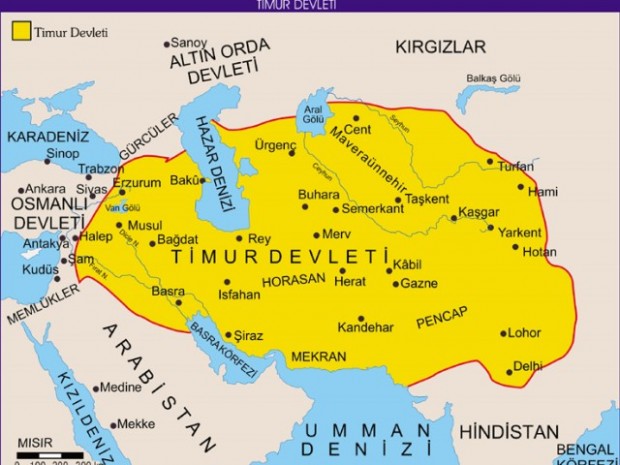
It was in this period that Timur reduced the Chagatai khans to the position of figureheads while he ruled in their name. Also during this period, Timur and his brother-in-law Husayn, who were at first fellow fugitives and wanderers in joint adventures, became rivals and antagonists. The relationship between them began to become strained after Husayn abandoned efforts to carry out Timur’s orders to finish off Ilya Khoja (former governor of Mawarannah) close to Tishnet.[7]:40
Timur began to gain a following of people in Balkh, consisting of merchants, fellow tribesmen, Muslim clergy, aristocracy and agricultural workers, because of his kindness in sharing his belongings with them. This contrasted Timur’s behavior with that of Husayn, who alienated these people, took many possessions from them via his heavy tax laws and selfishly spent the tax money building elaborate structures.[7]:41–2 At around 1370 Husayn surrendered to Timur and was later assassinated, which allowed Timur to be formally proclaimed sovereign at Balkh. He married Husayn’s wife Saray Mulk Khanum, a descendant of Genghis Khan, allowing him to become imperial ruler of the Chaghatay tribe.[7]
One day Aksak Temür spoke thusly:
„Khan Züdei (in China) rules over the city. We now number fifty to sixty men, so let us elect a leader.“ So they drove a stake into the ground and said: „We shall run thither and he among us who is the first to reach the stake, may he become our leader“. So they ran and Aksak Timur, as he was lame, lagged behind, but before the others reached the stake he threw his cap onto it. Those who arrived first said: „We are the leaders.“ [„But,“] Aksak Timur said: „My head came in first, I am the leader.“ Meanwhile, an old man arrived and said: „The leadership should belong to Aksak Timur; your feet have arrived but, before then, his head reached the goal.“ So they made Aksak Timur their prince.[27][28]
Timur’s Turco-Mongolian heritage provided opportunities and challenges as he sought to rule the Mongol Empire and the Muslim world. According to the Mongol traditions, Timur could not claim the title of khan or rule the Mongol Empire because he was not a descendant of Genghis Khan. Therefore, Timur set up a puppet Chaghatay khan, Suyurghatmish, as the nominal ruler of Balkh as he pretended to act as a „protector of the member of a Chinggisid line, that of Genghis Khan’s eldest son, Jochi.“[29]
As a result, Timur never used the title of khan because the name khan could only be used by those who come from the same lineage as Genghis Khan himself. Timur instead used the title of amir meaning general, and acting in the name of the Chagatai ruler of Transoxania.[22]:106
To reinforce his position in the Mongol Empire, Timur managed to acquire the royal title of son-in-law when he married a princess of Chinggisid descent.[4]:14
Likewise, Timur could not claim the supreme title of the Islamic world, caliph, because the „office was limited to the Quraysh, the tribe of the Prophet Muhammad.“ Therefore, Timur reacted to the challenge by creating a myth and image of himself as a „supernatural personal power““ ordained by God.[29] Since Timur had a successful career as a conqueror, it was easy to justify his rule as ordained and favored by God since no ordinary man could be a possessor of such good fortune that resistance would be seen as opposing the will of God. Moreover, the Islamic notion that military and political success was the result of Allah’s favor had long been successfully exploited by earlier rulers. Therefore, Timur’s assertions would not have seemed unbelievable to fellow Islamic people.

Timur spent the next 35 years in various wars and expeditions. He not only consolidated his rule at home by the subjugation of his foes, but sought extension of territory by encroachments upon the lands of foreign potentates. His conquests to the west and northwest led him to the lands near the Caspian Sea and to the banks of the Ural and the Volga. Conquests in the south and south-West encompassed almost every province in Persia, including Baghdad, Karbala and Northern Iraq.
One of the most formidable of Timur’s opponents was another Mongol ruler, a descendant of Genghis Khan named Tokhtamysh. After having been a refugee in Timur’s court, Tokhtamysh became ruler both of the eastern Kipchak and theGolden Horde. After his accession, he quarreled with Timur over the possession ofKhwarizm and Azerbaijan. However, Timur still supported him against the Russians and in 1382 Tokhtamysh invaded the Muscovite dominion and burned Moscow.[30]
After the death of Abu Sa’id, ruler of the Ilkhanid Dynasty, in 1335, there was a power vacuum in Persia. In 1383, Timur started the military conquest of Persia. He captured Herat, Khorasan and all eastern Persia by 1385; he captured almost all of Persia by 1387. Of note during the Persian campaign was the capture of Isfahan. When Isfahan surrendered to Timur in 1387, he treated it with relative mercy as he normally did with cities that surrendered. However, after the city revolted against Timur’s taxes by killing the tax collectors and some of Timur’s soldiers. Timur ordered the massacre of the city’s citizens with the death toll reckoned at between 100,000 and 200,000.[31] An eye-witness counted more than 28 towers constructed of about 1,500 heads each.[32] This has been described as a „systematic use of terror against towns…an integral element of Tamerlane’s strategic element“ which he viewed as preventing bloodshed by discouraging resistance. His massacres were selective and he spared the artistic and technical (e.g. engineers) elites.[31]
In the meantime Tokhtamysh, now khan of the Golden Horde, turned against his patron and in 1385 invaded Azerbaijan. The inevitable response by Timur resulted in the Tokhtamysh–Timur war. In the initial stage of the war Timur won a victory at the Battle of the Kondurcha River. After the battle Tokhtamysh and some of his army were allowed to escape. After Tokhtamysh’s initial defeat Timur invaded Muscovy to the north of Tokhtamysh’s holdings. Timur’s army burned Ryazanand advanced on Moscow. He was pulled away before reaching the Oka River by Tokhtamysh’s renewed campaign in the south.[30]
In the first phase of the conflict with Tokhtamysh, Timur led an army of over 100,000 men north for more than 700 miles into the steppe. He then rode west about 1,000 miles advancing in a front more than 10 miles wide. During this advance Timur’s army got far enough north to be in a region of very long summer days causing complaints by his Muslim soldiers about keeping a long schedule of prayers.It was then that Tokhtamysh’s army was boxed in against the east bank of the Volga River in the Orenburg region and destroyed at the Battle of the Kondurcha River.
It was in the second phase of the conflict that Timur took a different route against the enemy by invading the realm of Tokhtamysh via the Caucasus region. The year 1395 saw the Battle of the Terek River concluding the titanic struggle between the two monarchs.
Tokhtamysh was not able to restore his power or prestige. He was killed about a decade after the Terek River battle in the area of present day Tyumen.
During the course of Timur’s campaigns his army destroyed Sarai, the capital of the Golden Horde, and Astrakhan, subsequently disrupting the Golden Horde’s Silk Road. The Golden Horde no longer held power after the coming of Timur.
In May 1393 Timur’s army invaded the Anjudan. This crippled the Ismaili village only one year after his assault on the Ismailis in Mazandaran. The village was prepared for the attack. This is evidenced by it containing a fortress and a system of underground tunnels. Undeterred, Timur’s soldiers flooded the tunnels by cutting into a channel overhead. Timur’s reasons for attacking this village are not yet well-understood. However, it has been suggested that his religious persuasions and view of himself as an executor of divine will may have contributed to his motivations.[33] The Persian historian Khwandamir explains that an Ismaili presence was growing more politically powerful in Persian Iraq. A group of locals in the region was dissatisfied with this and, Khwandamir writes, these locals assembled and brought up their complaint with Timur, possibly provoking his attack on the Ismailis there.[33]
In 1398, Timur invaded northern India, attacking the Delhi Sultanate ruled by Sultan Nasir-ud-Din Mahmud Shah Tughluq of the Tughlaq Dynasty. He was opposed by Ahirs and Jats but the Sultanate at Delhi did nothing to stop him.[34] After crossing the Indus river on 30 September 1398, he sacked Tulamba and massacred its inhabitants.[35] Then he advanced and captured Multan by October.[36]
Timur crossed the Indus River at Attock (now Pakistan) on 24 September 1398. His invasion did not go unopposed and he encountered resistance by the Governor of Meerut during the march to Delhi. Timur was still able to continue his approach to Delhi, arriving in 1398, to fight the armies of Sultan Nasir-ud-Din Mahmud Shah Tughluq, which had already been weakened by a succession struggle within the royal family.
Capture of Delhi (1398)
The battle took place on 17 December 1398. Sultan Nasir-ud-Din Mahmud Shah Tughluq and Mallu Iqbal’s[37] army had war elephants armored with chain mail and poison on their tusks.[7]:267 With his Tatar forces afraid of the elephants, Timur ordered his men to dig a trench in front of their positions. Timur then loaded his camels with as much wood and hay as they could carry. When the war elephants charged, Timur set the hay on fire and prodded the camels with iron sticks, causing them to charge at the elephants howling in pain: Timur had understood that elephants were easily panicked. Faced with the strange spectacle of camels flying straight at them with flames leaping from their backs, the elephants turned around and stampeded back toward their own lines. Timur capitalized on the subsequent disruption in Nasir-ud-Din Mahmud Shah Tughluq’s forces, securing an easy victory. Delhi was sacked and left in ruins. Before the battle for Delhi, Timur executed 100,000 captives:[12]

The capture of the Delhi Sultanate was one of Timur’s greatest victories, arguably surpassing the likes of Alexander the Great and Genghis Khan because of the harsh conditions of the journey and the achievement of taking down one of the richest cities at the time. After Delhi fell to Timur’s army, uprisings by its citizens against the Turkic-Mongols began to occur, causing a bloody massacre within the city walls. After three days of citizens uprising within Delhi, it was said that the city reeked of decomposing bodies of its citizens with their heads being erected like structures and the bodies left as food for the birds. Timur’s invasion and destruction of Delhi continued the chaos that was still consuming India and the city would not be able to recover from the great loss it suffered for almost a century.[7]:269–274
Before the end of 1399, Timur started a war with Bayezid I, sultan of the Ottoman Empire, and the Mamluk sultan of Egypt Nasir-ad-Din Faraj. Bayezid began annexing the territory of Turkmen and Muslim rulers in Anatolia. As Timur claimed sovereignty over the Turkmen rulers, they took refuge behind him.
In 1400 Timur invaded Christian Armenia and Georgia. Of the surviving population, more than 60,000 of the local people were captured as slaves, and many districts were depopulated.[38]
Then Timur turned his attention to Syria, sacking Aleppo[39] and Damascus.[40] The city’s inhabitants were massacred, except for the artisans, who were deported to Samarkand.
He invaded Baghdad in June 1401. After the capture of the city, 20,000 of its citizens were massacred. Timur ordered that every soldier should return with at least two severed human heads to show him. (Many warriors were so scared they killed prisoners captured earlier in the campaign just to ensure they had heads to present to Timur.)[citation needed]
Shakh-i Zindeh mosque, Samarkand.
In the meantime, years of insulting letters had passed between Timur and Bayezid. Finally, Timur invaded Anatolia and defeated Bayezid in the Battle of Ankara on 20 July 1402. Bayezid was captured in battle and subsequently died in captivity, initiating the twelve-year Ottoman Interregnum period. Timur’s stated motivation for attacking Bayezid and the Ottoman Empire was the restoration of Seljuq authority. Timur saw the Seljuks as the rightful rulers of Anatolia as they had been granted rule by Mongol conquerors, illustrating again Timur’s interest with Genghizid legitimacy.
After the Ankara victory, Timur’s army ravaged Western Anatolia, with Muslim writers complaining that the Timurid army acted more like a horde of savages than that of a civilized conqueror.[citation needed] But Timur did take the city of Smyrna, a stronghold of the Christian Knights Hospitalers, thus he referred to himself as ghazi or „Warrior of Islam“.
Timur was furious at the Genoese and Venetians whose ships ferried the Ottoman army to safety in Thrace. As Lord Kinross reported in The Ottoman Centuries, the Italians preferred the enemy they could handle to the one they could not.
While Timur invaded Anatolia, Qara Yusuf assaulted Baghdad and captured it in 1402. Timur returned to Persia from Anatolia and sent his grandson Abu Bakr ibn Miran Shah to reconquer Baghdad, which he proceeded to do. Timur then spent some time in Ardabil, where he gaveAli Safavi, leader of the Safaviyya, a number of captives. Subsequently, he marched to Khorasan and then to Samarkhand, where he spent nine months celebrating and preparing to invade Mongolia and China.[41]
He ruled over an empire that, in modern times, extends from southeastern Turkey, Syria, Iraq, and Iran, through Central Asia encompassing part of Kazakhstan,Afghanistan, Armenia, Azerbaijan, Georgia, Turkmenistan, Uzbekistan, Kyrgyzstan, Pakistan, and even approaches Kashgar in China. The conquests of Timur are claimed to have caused the deaths of up to 17 million people, an assertion impossible to verify.[42]
Of Timur’s four sons, two (Jahangir and Umar Shaykh) predeceased him. His third son, Miran Shah, died soon after Timur, leaving the youngest son, Shah Rukh. Although his designated successor was his grandson Pir Muhammad b. Jahangir, Timur was ultimately succeeded in power by his son Shah Rukh. His most illustrious descendant Babur founded the Islamic Mughal Empire and ruled over most of Afghanistan and North India. Babur’s descendants Humayun, Akbar,Jahangir, Shah Jahan and Aurangzeb, expanded the Mughal Empire to most of the Indian subcontinent.
Markham, in his introduction to the narrative of Clavijo’s embassy, states that his body „was embalmed with musk and rose water, wrapped in linen, laid in an ebony coffin and sent to Samarkand, where it was buried.“ His tomb, the Gur-e Amir, still stands in Samarkand, though it has been heavily restored in recent years.
By 1368 the new Chinese Ming Dynasty had driven the Mongols out of China. The first Ming Emperor Hongwu and his son Yongle demanded and received, homage from many Central Asian states as the political heirs to the former House of Kublai. The Ming emperor’s treatment of Timur as a vassal did not sit well with the conqueror. In 1394 Hongwu’s ambassadors eventually presented Timur with a letter addressing him as a subject. He summarily had the ambassadors Fu An, Guo Ji, and Liu Wei detained. He then had them and their 1,500 guards executed.[44]Neither Hongwu’s next ambassador, Chen Dewen (1397), nor the delegation announcing the accession of the Yongle Emperor fared any better.[44]
Timur eventually planned to conquer China. To this end Timur made an alliance with the Mongols of the Northern Yuan Dynasty and prepared all the way to Bukhara. The Mongol leader Enkhe Khan sent his grandson Öljei Temür, also known as Buyanshir Khan after he converted to Islam while he stayed at the court of Timur in Samarkand.[45] In December 1404 Timur started military campaigns against the Ming Dynasty and detained a Ming envoy. But he was attacked by fever and plague when encamped on the farther side of the Sihon (Syr-Daria) and died at Atrar (Otrar) on 17 February 1405[46] before ever reaching the Chinese border.[47] Only after that were the Ming envoys released.[44]
Timur preferred to fight his battles in the spring. However, he died en route during an uncharacteristic winter campaign against the ruling Chinese Ming Dynasty. It was one of the bitterest winters on record. His troops are recorded as having to dig through five feet of ice to reach drinking water.
Just before his death, Timur designated his grandson Pir Muhammad ibn Jahangir as his successor. However, his other descendants did not abide by this wish, and spent the next fifteen years engaged in violent infighting.
Timur had numerous epistolary and diplomatic exchanges with various European states, especially Spain and France.
Relations between the court of Henry III of Castile and that of Timur played an important part in medieval Spanish Castiliandiplomacy. In 1402, the time of the Battle of Ankara, two Spanish ambassadors were already with Timur: Pelayo de Sotomayor and Fernando de Palazuelos. Later, Timur sent to the court of Castile and León a Chagatay ambassador namedHajji Muhammad al-Qazi with letters and gifts.
In return, Henry III of Castile sent a famous embassy to Timur’s court in Samarkand in 1403–06, led by Ruy Gonzales de Clavijo, with two other ambassadors, Alfonso Paez and Gomez de Salazar. On their return, Timur affirmed that he regarded the king of Castile „as his very own son“.
According to Clavijo, Timur’s good treatment of the Spanish delegation contrasted with the disdain shown by his host toward the envoys of the „lord of Cathay“ (i.e., the Ming Dynasty Yongle Emperor), the Chinese ruler. Clavijo’s visit to Samarkand allowed him to report to the European audience on the news from Cathay (China), which few Europeans had been able to visit directly in the century that had passed since the travels of Marco Polo.
The French archives preserve:
- A 30 July 1402 letter from Timur to Charles VI of France, suggesting that he send traders to the Orient. It is written in Persian.[48]
- A May 1403 letter. This is a Latin transcription of a letter from Timur to Charles VI, and another from Amiza Miranchah, his son, to the Christian princes, announcing their victory over Bayezid, in Smyrna.[49]
A copy has been kept of the answer of Charles VI to Timur, dated 15 June 1403.[50]
Timur’s legacy is a mixed one. While Central Asia blossomed under his reign, other places such asBaghdad, Damascus, Delhi and other Arab, Georgian, Persian, and Indian cities were sacked and destroyed and their populations massacred. He was responsible for the effective destruction of the Christian Church in much of Asia. Thus, while Timur still retains a positive image in Muslim Central Asia, he is vilified by many in Arabia, Persia, and India, where some of his greatest atrocities were carried out. However, Ibn Khaldun praises Timur for having unified much of the Muslim world when other conquerors of the time could not.[51]
Timur’s short-lived empire also melded the Turko-Persian tradition in Transoxiania, and in most of the territories which he incorporated into his fiefdom, Persian became the primarylanguage of administration and literary culture (diwan), regardless of ethnicity.[52] In addition, during his reign, some contributions to Turkic literature were penned, with Turkic cultural influence expanding and flourishing as a result. A literary form of Chagatai Turkiccame into use alongside Persian as both a cultural and an official language.[53]
Tamerlane virtually exterminated the Church of the East, also known to Westerners as theNestorian church, which had previously been a major branch of Christianity but afterwards was largely confined to certain parts of Iraq.[54]
Timur became a relatively popular figure in Europe for centuries after his death, mainly because of his victory over the Ottoman Sultan Bayezid. The Ottoman armies were at the time invading Eastern Europe and Timur was ironically seen as a sort of ally.
Timur has now been officially recognized as a national hero of newly independent Uzbekistan. His monument in Tashkent now occupies the place where Marx’s statue once stood.
Muhammad Iqbal, a philosopher, poet and politician in British India who is widely regarded as having inspired the Pakistan Movement,[55][better source needed] composed a notable poem entitled Dream of Timur, the poem itself was inspired by a prayer of the last Mughal Emperor Bahadur Shah II:[citation needed]
The Sharif of the Hijaz suffers due to the divisive sectarian schisms of his faith, And lo! that young Tatar (Timur) has boldly re-envisioned magnanimous victories of overwhelming conquest.
In 1794, Sake Deen Mahomed published his travel book, The Travels of Dean Mahomet. The book begins with the praise of Genghis Khan, Timur, and particularly the first Mughal Emperor Babur. He also gives important details on the then incumbent Mughal Emperor Shah Alam II.
Historical sources
Ahmad ibn Arabshah’s work on theLife of Timur.
The earliest known history of Timur’s reign was Nizam ad-Din Shami’s Zafarnama, which was written during Timur’s lifetime. Between 1424 and 1428, Sharaf ad-Din Ali Yazdi wrote a second Zafarnama drawing heavily on Shami’s earlier work.Ahmad ibn Arabshah wrote a much less favorable history in Arabic. Arabshah’s history was translated by the Dutch Orientalist Jacobus Golius in 1636.
As Timurid-sponsored histories, the two Zafaramas present a dramatically different picture from Arabshah’s chronicle.William Jones remarked that the former presented Timur as a „liberal, benevolent and illustrious prince“, while the latter painted him as „deformed and impious, of a low birth and detestable principles.“[citation needed]
Malfuzat-i Timuri
The Malfuzat-i Timurī and the appended Tuzūk-i Tīmūrī, supposedly Timur’s own autobiography, are almost certainly 17th century fabrications.[12][56] The scholar Abu Taleb Hosayni presented the texts to the Mughal emperor Shah Jahan, a distant descendent of Timur, in 1637–38, supposedly after discovering the Chagatai Turkish originals in the library of a Yemeni ruler. Due to the distance between Yemen and Timur’s base in Transoxania and the lack of any other evidence of the originals, most historians consider the story highly implausible and suspect Hosayni of inventing both the text and its origin story.[56]
European views
Timur arguably had a significant impact on the Renaissance culture and early modern Europe.[57] His achievements both fascinated and horrified Europeans from the fifteenth century to the early nineteenth century.
European views of Timur were mixed throughout the fifteenth century with some European countries calling him an ally, while others saw him as a threat to Europe because of his rapid expansion and brutality.[58]:341
When Timur captured the Ottoman Sultan Bayezid at Ankara, he was often praised and seen as a trusted ally by European rulers such as Charles VI of France andHenry IV of England because they believed he was saving Christianity from the Turkish Empire in the Middle East. Those two kings also praised him because his victory at Ankara allowed Christian merchants to remain in the Middle East and allowed for their safe return home to both France and England. Timur was also praised because it is believed that he helped restore the right of passage for Christian pilgrims to the Holy Land.[58]:341–44
Other Europeans viewed Timur as a barbaric enemy who presented a threat to both European culture and the religion of Christianity. His rise to power moved many leaders, such as Henry III of Castile, to send embassies to Samarkand to personally scout out Timur, learn about his people, make alliances with him and to try to convince him to convert to Christianity in order to avoid war.[58]:348–49
In the introduction to a 1723 translation of Yazdi’s Zafaranameh, the translator wrote:[59]
[M. Petis de la Croix] tells us, that there are calumnies and impostures, which have been published by authors of romances, and Turkish writers who were his enemies, and envious at his glory: among whom is Ahmed Bin Arabschah…As Timur-Bec had conquered the Turks and Arabians of Syria, and had even taken the Sultan Bajazet prisoner, it is no wonder that he has been misrepresented by the historians of those nations, who, in despite of truth, and against the dignity of history, have fallen into great excesses on this subject.
Exhumation
A forensic facial reconstruction of Timur by M. Gerasimov (1941).
Timur’s body was exhumed from his tomb in 1941 by the Soviet anthropologist Mikhail M. Gerasimov. From his bones it was clear that Timur was a tall and broad chested man with strong cheek bones. Gerasimov reconstructed the likeness of Timur from his skull. At 5 feet 8 inches (1.73 meters), Timur was tall for his era. Gerasimov also confirmed Timur’s lameness due to a hip injury. Gerasimov also found that Timur’s facial characteristics conformed to that of Mongoloid features with somewhat Caucasoid admixture. In the study of „Anthropological composition of the population of Central Asia“ shows the cranium of Timur predominate the characters of the South Siberian Mongoloid type.[60] Timur is classified as being closer to the Mongoloid race with some admixture.
It is alleged that Timur’s tomb was inscribed with the words, „When I rise from the dead, the world shall tremble.“ It is also said that when Gerasimov exhumed the body, an additional inscription inside the casket was found reading, „Who ever opens my tomb, shall unleash an invader more terrible than I.“[61] In any case, the same day Gerasimov begun the exhumation, Adolf Hitler launchedOperation Barbarossa, the largest military invasion of all time, upon the USSR.[62] Timur was re-buried with full Islamic ritual in November 1942 just before the Soviet victory at the Battle of Stalingrad.[63]
In the arts
- Tamburlaine the Great, Parts I and II (English, 1563–1594): play by Christopher Marlowe
- Tamerlane (1701): play by Nicholas Rowe (English)
- Tamerlano (1724): opera by George Frideric Handel, in Italian, based on the 1675 play Tamerlan ou la mort de Bajazet by Jacques Pradon.
- Bajazet (1735): opera by Antonio Vivaldi, portrays the capture of Bayezid I by Timur
- Il gran Tamerlano (1772): opera by Josef Mysliveček that also portrays the capture of Bayezid I by Timur
- Tamerlane: first published poem of Edgar Allan Poe (American, 1809–1849).
- Timur is the deposed, blind former King of Tartary and father of the protagonist Calaf in the opera Turandot (1924) by Giacomo Puccini, libretto by Giuseppe Adami and Renato Simoni.
- Timour appears in the story Lord of Samarkand by Robert E. Howard.
- Tamerlan: novel by Colombian writer Enrique Serrano in Spanish[64]
- Tamburlaine: Shadow of God: a BBC Radio 3 play by John Fletcher, broadcast 2008, is a fictitious account of an encounter between Tamburlaine, Ibn Khaldun, and Hafez.
- Tamerlane (1928): historical novel by Harold Lamb.
Uyghuristanda Bir Dewletning Yene Qurulishi(1933 – 1937)

Bütün ka’inatni yaratqan, bizlerni shularning ichidiki eng shereplik mexluq qilghan janabi allahgha hemdu-sanalar bolsun, insaniyetke izzet abroy we shan-sherep bilen yashash yolini ögetken hezriti muhemmed eleyhissalamgha salamlar bolsun.
Tariq insaniyetning algha ilgirlishidiki eng muhim amillarning birsidur. Insaniyet tarixida shanliq tariq sehipiliridin orun alghan, öz tarixini tariq bétige altun hel bilen yazalighan we bu tarixidin qandaq paydilinishni bileligen herqandaq bir milletning kelgüsi istiqpalimu parlaq bolidu.
Tariq bilen tonushup chiqish muhimdur. Erep tarixchisi ibni xeldun tarixni chüshendürüp shundaq éytidu. «tarix bolsa köpchilik kishilerni ötken weqelerdin xewerdar qilidu. Ayrim kishilerni yoshurun sirlardin xewerdar qilidu. Tarix ishida aldinip qélishning aldini élish kérek». Sherqi türkistan ziyaliylirining sherqi türkistan tarixida nahayiti chong mes’uliyiti bar. Keminimu bu ishta öz mes’uliyitini hésqilghanlardin bolup hésaplénimen. Bu toghrida qelem tewretmigen edipini millitimizning kechürmeslikige heqqi bar.
Tarixta her millet ademliri peqet öz dini, öz wetini, öz millitining menpe’eti üchün xizmet qilip kelgen bolup, bashqilargha xizmet qilmighan. Eger bashqilargha xizmet qilghan teghdirdimu birer gherez bilen qilghan. Bir rus herqanche oqughan medini kishilerdin bolsimu, dunyawi bilimge ige kishilerdin bolsimu moskwaning menpe’etini qoyup bizning menpe’etimizge tarix yazmaydu. Xulase qilip éytqanda, her millet öz tarixini özi yazghandek, bizning tariximiznimu öz layaqiti we mahiyiti bilen özimiz yazimiz. Képinini kéyip, atqa min’gen pida’iy shéhitlirimizning kechürmishliri, insaniyetning böshiki bolghan ottura asiye paji’esi, jümlidin özimizning kechürmishlirimizdur.
Shuning üchün dinigha, wetinige xizmet qilishni biz öz üstimizge alimiz, özimizning tarixini özimiz yazimiz. Bu arqiliq biz özimiz üchün xizmet qilghan pidakarlarning qutluq namlirini izzet- ikramlar ichide yad itip, ularni untulushtin saqlaymiz.
Biz sherqi türkistanliqlar , bu xildiki nurghun issiq- soghoqlarni béshimizdin ötküzduq, tariximizda nurghun dölet we impiriyeler qurduq, bezide meghlupmu bolduq emma achchiq sawaqlardin ibret élip yene qayta- qayta döletmu qurduq. Islam tarixida islam dinini tunji qétim dölet dini qilip békitken, sutuq bughraxan bizdin chiqqan. Biz shuningdin étibaren bashqa ellerge islam dölitining adalétini sherqi türkistanliq musulmanlarning ali janap exlaqi bilen eks ettürüp kelduq. Héch qachan zulum qilmiduq, zulumghimu razi bolmiduq. Biz inaq- ittipaq we birlik- baraberlik ichide yashighan waqtimizda düshmenlérimiz bizni yéngelmidi. Inaqliqimiz bozulup shexsi menpe’et bésip chüshüshke bashlighan haman düshmenlérimiz pursettin paydilinip, hiyle- neyreng arqiliq bizlerni mehkum qildi.
Yéqinqi zaman tariximizgha nezer salidighan bolsaq, ejdadlirimizning pem- parasetlérige we eqil qabiliyitige barikalla éytmay turalmaymiz. Dunyadiki bashqa milletler zamaniwi dölet qurushqa bash qaturup, talash-tartish qilip yürgen bir peytte sabit demolla hajimgha oxshash dana kishilirimiz 1933- yili eng mukemmel asasi qanun we dölet apparatigha ige, dunyada tunji islam jumhuriyiti bolghan „sherqi türkistan islam jumhuriyiti“ ni qurup chiqti. Epsuski yawuz xitay we rus zomigerliri ichki düshmen bilen birliship bu islam jumhuriyitini uzun yashatmidi. 1949- yili qanxor kommunist, tirorist xitay wetinimiz sherqi türkistanni bésiwalghandin étibaren, bizni dunyadin yitim qaldurushqa, siyasi sehnidin yoq qilishqa we yalghan- yawidaq tariq bilen kelgüsidin ümid üzüshimizge tirishmaqta.
1933- yili qurulghan sherqi türkistan islam jumhuriyitimizning tarixini burmilap, uning obrazini xunikleshtürüp, kelgüsi ewlatlirimizni ümütsizlendürüshke urunmaqta. Chünki bu, bizning parlaq kelgüsimizni berpa qilish, izzet- abroyimizni we shan- sheripimizni qaytidin eslige keltürüshimizde intayin muhim ehmiyetke ige bir tarixi weqedur. Chünki ejdadlirimiz u tarixta , pütün dunyagha bolupmu kelgüsi ewladlirimizgha neq pakitliri bilen ispatlap béreleydighan musteqil bayriqi bar, heshemetlik dölet gérbi bar we inqilabi rohqa ige dölet marshi bar „sherqi türkistan islam jumhuriyiti“ ni ene ashu tarixta qurup chiqqan idi.
Inqilap harpisidiki umumiy weziyet
Burunqilar saldi köchet, méwisini biz yéduq,
Bizmu emdi bu qerzni kéyinkilerge töliduq.
Sherqi türkistan xelqi xitay tajawuzchilirigha qarshi qozghaldi. Tunji qozghilang 1931- yili xojaniyaz hajim bashchiliqida qumuldin bashlandi… .
Bu xewerni anglighan sherqi türkistan musulmanlirining quwwet we ishenchisi kündin- künige éship bardi. Ular özlirining shadliq tentenilirini mundaq bir qoshaq bilen ipadileydu.
Islam échildi qomuldin bashlap,
Xitaylar qachti wetenni tashlap.
Zalim, nijis we qanxor mustebit xitay hökümiti teripidin qattiq ézilgen, xarlan’ghan sherqi türkistan xelqi qumul xelqi teripidin bashlan’ghan qozghilanggha tézlikte awaz qoshti. Turpan xelqi mexsut muhiti we mexmut muhiti qatarliq qérindashlar
Bashchiliqida qozghilip chiqqan bolsa, arqidinla kucha xelqi töümür ghazi (lüyjang) bashchiliqida qozghilip chiqip, kucha we aqsularni xitaylardin tazilidi.
Xoten xelqi bolsa muhemmet émin bughra bashchiliqida qozghilip chiqip, bütün xoten, yeken we qeshqerning yéngisarghiche bolghan yerlirini öz qoligha aldi.
Qeshqer shehiride peqet xitaylarning madotey isimlik bir waliysila qalghan bolup, bu dotey yamul ichige kiriwélip, qozghulangchilargha bar küchi bilen esebiylerche qarshiliq qiliwatatti.
Bu heriketlerdin waqti- waqtida xewerdar bolup turghan kashigherning uchuq pikirlik munewwer kishiliri yighilip, «istiqlal jem’iyiti» isimlik bir mexpi teshkilat qurup chiqti. Bu teshkilat shu zaman shara’itige küre yuqiri éhtiyat bilen öz xizmitige kirishti. Töwende bu jem’iyet ezalirining tizimliki bérildi:
1- ebul qasim axun demollamning oghli ziya’uddin mexdum
2- muhemmed hajim palta artush
3- mexdum zade artush
4- qutluq hajim shewqi
5- turghun bay bechche réhimi
6- ehmed paxta
7- abdullah xaniy
8- muhemmed emin qari sufiyzade
9- satip aldi jan
10- jernil sahip (muhemmed sheriڧxan)
11- muhemmedjan damolla ushluq
12- mulla ibrahim wa’iz
13- yüsüp muzeferzade
14- turghun hekim merghilani
15- musa türkistani
Bulardin bashqa öz ismini mexpi tutqan yurt chongliri, tijaretchiler, katiplar we xadimlarmu bar idi.
Madoteyning yéngi tedbirliri
Madoteyning milliti tunggan bolup, qeshqerning dotiyi idi. U musulman hésablan’ghan bilen musulmanlargha ich- ichidin düshmen idi. U bu qétim asanliqche jan biridighandek emes idi. Sheher ichidiki bir ochum xitaylar bolsa madoteyning qol astida jan saqlimaqta idi.
Mushu künlerde xitaylardin xéli köp adem musulman boldi. Ular her küni kelime teyyibeni ögünüsh, oqush yadlash bilen meshghul idi. Köpchilik xitaylar musulman qiyapitige kirip, özi we a’ilisini aman- ésen saqlap qaldi. Madoteyning qolida qoral- yaraq köp idi. U buning türtkisi bilen qeshqer etrapidiki qirghizlardin köplep esker qobul qilip, ularni yéngidin teshkillep, alay (batalyon) terkibige kirgüzüp, shitey yamuligha orunlashturidu. Yene birtereptin qeshqerning bayliri, alimlirini yénigha chaqirip, ochuqtin- uchuq:- jahan xeter astida qaldi, xelqning mal- mülkini ziyandin saqlap, sheherni qoghdap qélish üchün milli qushun teshkil qilish lazim. Bu ishning yüki silerdek yurt kattilirining zimmisige chüshidu, dégendek geplerni qilip, ularni 300 kishilik bir milli qushun teshkilleshke qayil qildi. Shuning bilen qeshqerning öz dewridiki chong bayliridin ibrahim axun lozung, abdurehim axun baywechche, muhiyiddin jan bay qatarliqlar milli qushun teshkillesh ishigha jiddi kiriship kétidu. Bu ishning chiqimlirimu shulardin bolidu.
Madotey mundaq shereplik bir xizmetni yolgha qoyghandin kéyin, bu milli eskerlerni tizginlesh üchün sheher we yézilardin bolup, mensepdar bolsun, baqqal bolsun, görükesh bolsun, meyli epyunkesh bolsun milliti xitay bolghan, yéshi 13 yashtin 60 yashqiche bolghan 36 xitayni yighip kélip, ularning ata- anisidin miras qalghan uzun köngleklerni saldurup, kalte kemzul keydürüp, uzun örülgen chachlirini kestürüp, nil renglik eskerche kiyim bilen yasandurdi. Madotey héchqandaq eskiri telim- terbiye körmigen, méngish- turushni bilmeydighan bu qara qosaq xitaylarni qeshqerning reste, bazarlirini charlash xizmitige qoydi. Shundaq qilip ular her küni kocha aylinip, marshqa dessep, xelqqe heywet körsitip, aylinip yürüshke bashlaydu. Madotey bu qiliqi arqiliq xelqni, héliqi milli eskerlerni bular bashquridiken dégen qarashqa keltürmekchi bolidu.
Qeshqerge qilin’ghan ushtumtut hujum
Jem’iyetning qarar qilishi bilen 1933- 2- ayning 2- küni (seyshenbe) tang seherde osman éli qumandanliqida atush tereptin kelgen qirghizlar , atushluq yashlar miltiq, qélich, palta, gürjeklerni yene beziliri yaqupbeg bedölet zamanidin qalghan choquma yeni qara miltiqlarni kötürüshüp, atliq we piyade halda qeshqerge omumi yüzlük hujum bashlidi. Allahu ekber sadasi bilen teng her tereptin oq awazi anglinishqa bashlidi. Mujahitlarning etrapigha toplan’ghan xelq amin, amin dep towliship, ulargha meniwi küch ata qilmaqta idi. Düshmenlerge böridek étilghan bu mujahitlar körün’genla xitay eskerlirini jehennemge uzatti. Ular yarbagh derwazisigha yéqin bir yerdin yéqinliship kélip sépilge yamashti. Bashta atliqlar undin kéyin piyadiler sépil üstige chiqip, hemmisi bir awazdin tekbir éytishti. Tekbir awazini anglighan xitay eskerliri qorqup yüriki yérilghudek bolushup teslim bolushqa bashlidi. Nurghun xitay eskiri qilichtin ötküzüldi we esir élindi.
Hujumchi yigitler sipil üstide at chapturup yarbagh derwazisi üstige kelgende, aldin orunlashturulghan hujum pilani boyiche sheher ichidiki madotey qoshunidiki perghanilik eskerler qoralliq halda ordidin chiqip, udul kelginiche yarbagh derwazisidiki xitay eskerlirini öltürüp, sheher derwazisini mujahitlargha échip berdi. Sheher ichidin perghanilik eskerler, sirttin atushtin kelgen eskerlerning öz ara maslishishi, xelqning bütün küchi bilen qollap- quwwetlishi bilen qeshqer shehiri axiri azat boldi.
Pütün sheher derwazilirining mujahitlar qoligha ötkenlikini körgen, isimlirini madoteyning bashchiliqida islam axun’gha özgertishken musulman xitaylarning köpchiliki öyliride mexpi saqlawatqan qorallirini élip chiqiship, mujahitlarni étishqa, qilichliri bilen chépishqa bashlap, özlirining esli qiyapetlirini ashkarilidi. Buni körgen sheher xelqi nahayiti qatti ghezeplendi we xitay dégen beribir xitay, qara xitay musulman bolmas, qéri düshmen dost bolmas déyiship, qarshiliq qilghan xitaylardin hich birsini saq qoymidi.
Qeshqer pütünley mujahitlarning qoligha ötti. Ularning quligha ötmigen peqet madotey qamilip turghan dotey yamuli qalghan idi. Mujahitlar yamulni qorshap oqqa tutushqa bashlidi we madoteyni teslim bolushqa ündidi. Madotey bolsa xitay we tunggan eskerlirini yamulning tam we poteylirige orunlashturup, axirghiche qarshiliq qilmaqchi boldi.
Kashgherde tunji doxturxanining qurulushi
Nechche aydin biri mushu pethiy künini töt köz bilen kütüp sheherning sirtidiki hajixanida yétip qupup kéliwatqan istiqlal jem’iyiti ezaliridin xaniy ependi we bu sehipilerni qara boyap turghuchi kemine ikkimiz pursettin paydilinip yarbaghdiki ularning zamanida baj xana qilin’ghan jayning qarshi teripige jaylashqan bagh waranliq öyliri köp, kengri meydan- seynaliri, chong- chong ambarliri bar bir qoroni hoylisi bilen qushup élip doxturxana qilip özgerttuq. Biz aldi bilen kochilarda, sipil üstide, sheher ichide oq tigip yiqilghan, ah- wah bilen peryad qilip yatqan yaridarlarni xestexanigha (doitur xanigha) élip kelduq. Bir tereptin yaghachchi ustilarni chaqirip charpaye (karwat) lar yasattuq. Yaridarlarni dawalash üchün shu chaghda kashgherde turuwatqan turghun hékimni ekelduq. Hekim ispirt, paxta, yod, xin, aspirin, yoda qurm dégen dorilarni öz öyidin ekilip yaridarlarning yarilirini tangdi. Menmu endijan kochisidiki bezzazliq (gezmalchiliq) dukkinimdin shipaxanigha kéreklik gezlime, bigiz, daka kérekler we shuninggha oxshash zörür nersilerni tézlikte keltürdüm. Yaridarlarni kariwatqa yatquzup aram aldurghandin kéyin bara- bara ularning közliri échilip, yüzlirige külke yügürgende bizningmu yüzimizge külke yügürüp, ularning xeter changgilidin qutulup qalghinigha cheksiz shadlanduq we bu kün’ge érishtürgen janabi igimizge medhiye, alqishlarni éyttuq. Shu küni sham namizidin kéyin yaridarlarning ata- ana, aka- ukiliri ularni izdep xestexanagha kélip ularning tinch aram éliwatqanliqini körgende ular xoshalliqini basalmighan halda közlirige issiq yash élishti. Heqqimizde sanap tügetküsiz xeyirlik du’a qilishti. Xeste xana barliq tirishchanliqlar bilen retlendi. Démek doxturxanimiz abdullah xaniy ependining qarishiche tashkent shipaxanisidin, méning qarishimche kabul shipaxanisidin qélishmighudek derijide dewrning aldinqi qatarida turidighan bir shipaxanigha aylandi.
Hayattiki maddi we meniwi lezzet
Hayatta lezzet mundaq ikki türlük bolidu déyishidiken: biri maddi lezzet, buning eng yoqiri pellisining jima (jinsiy yéqinchiliq) ikenlikige her kim qayil bolsa kérek. Ikkinchisi meniwiy lezzettur. Bilimdar we eqildarlarning bu heqtiki qarashliri birdek emes. Biri bu meniwi lezzetni bayliq, bayashatliq dése, yene biri izzet, hörmet deydu. Biri keyip- sapa, xoshal- xuramliq dése, yene biri bilim, hüner deydu. Yene birler bolsa meniwi lezzetning eng yoqursi düshmen üstidin ghelibe qilishtur, deydu. Bizning bu tebirlerdin peqet birnila qollap, qalghanlirini yoqqa chiqirish salahiyitimiz yoq. Ghalip bolushtiki lezzetning xoshliqi bashqa herqandaq maddi lezzettin üstün kélidu. Men shu chaghda emdila 28 yashqa kirgen, yéngi öylen’gen yigit idim. Hayat yoldishim 14 yashlardin ashqan idi. Adette a’ilem bilen körüshüsh mumkinchiliki bolmay, heptiler, aylar ötüp kétetti. Shundaqtimu yurtdashlarning ghelibe shadliqidin rahetlinishlirige egiship menmu rahetlinip qalar idim. Kéchini kündüzge ulap ishlep, bir yandin jan, bir yandin qan bérip, pul- mallirimni serp qilipmu yene charchimayttim. Ishqa toymas idim. Yene shuning bilen birge 4 urundiki (shipaxana, ma’arip nazariti, maliye nazariti, bash wekil „bash ménistir“ mehkimisidiki) wezipemning höddisidinmu chiqip ülgürettim.
Shundaq qilip shipaxanini qurghanlar bu qurlarni yézip turghuchi kemine ajiz bende bilen xaniy ependi ikkimiz bolduq. Méning shipaxanamning ishlirigha jan köydürüp kéliwatqan xaniy ependidin hich arqida qalghum kelmeytti. Kéche- kéchilep ishlep kétettim, shu yerde uxlayttim., urush bolup qalghan künliri shipaxana xadimlirining teleplirini aqsatmay urundap bérettim. Bu qizghinliq, bu hérip- charchimasliqning sewebini bilemsiz? … Kemine ghayet qizghinliq bilen ishlep zadila ishtin charchap qalmighan bolsammu, biraq, kütülmigende aghrip qaldim. Aghrip 26 kün bolghanda öyge qaytip kirdim. Birnechche künla aram éliwalghandin kéyin yene ish ornigha chiqip kettim. Shu yosunda 19 kün ötkende ikkinchi qétim öyge qaytip aram élishqa purset boldi. Sherqi türkistan islam jumhuriyiti ene shundaq tinimsiz ishlesh, tirishish, pidakarliq bilen ishlep, uyqu- aramni haram qilish bedilige quruldi.
Ma doteyning texittin chüshüp yunus begning wali bolushi
1933- yili 5- ayning 2- köni xoja niyaz hajimning tömür ghazi bashchiliqidiki qoshuni qeshqer shehirige kirip keldi. Tömür ghazi we qeshqerdiki mujahit qisimlar birlikte madotey eskerlirige qattiq zerbe birip, ularni qattiq halsiratti. Bu waqitta mazixuy arigha chüshüp, madoteyni millet mejlisining qararini qobul qilishqa köndürdi. Madoteymu tungganlarning herbi we mülki xadimlirini yéngi sheherde turghuzush telipini otturigha qoydi. Tömür ghazi uning bu telipige qoshuldi. Shuning bilen madotey pul we mal- mülüklirini élip, yamulni boshitip chiqip ketti. Tömür ghazi yamulgha tentene bilen kirip keldi. Yunus begmu yardemchiliri bilen yamulgha kirip mensipige munasiwetlik tamghilar we döletke munasiwetlik arxip, höjjetlerni tapshurup élip shu künisidin bashlap öz xizmitini bashlidi.
Tömür ghazi qeshqerge yétip kélip, birmezgildin kéyin xoten inqilapchilirining sabit demollam we muhemmet émin bughraning chong inisi emir abdulla bashchiliqidiki qismimu qeshqer shehirige kirip keldi.
Bu waqitlarda qeshqerde, qeshqerdiki yerlik mujahitlar, yüsüpjan bashchiliqidiki özbék eskerler, xojaniyaz hajimning génirali tömür ghazining eskerliri we osman qirghiz bashchiliqida qirghiz eskerler bolup, herqaysi terepler öz aldigha herket qiliwatqan bir weziyette idi.
Sabit demollam we emir abdullalar qeshqerge kelgendi kéyin herqaysi terepler arisida oxshimighan derijide sürkilishler we bezi köngülsizlikler yüzberdi. Emma sabit demollam tillarda dastan bolghidek eqil parasiti, yiraqni körerliki, tewrenmes iradisi, pütmes, tügimes ishench we ümitke tolghan tengdashsiz,ixtidarliq bir alim bolush süpiti bilen qeshqerdiki barliq inqilabchi küchlerni birlikke keltürüp, qisqa waqit ichide sherqi türkistan islam jumhuriyitining qurulush shara’itini hazirlidi.
Hökümet qurulush harpisida échilghan qurultay
Waqit sa’iti- kélip, hilal ehmer jem’iyitide chong qurultay ötküzüldi. Barliq qelemdar, elemdarlar qurultay sorunigha toplandi. Birqanche basquchluq qilip ötküzülgen bu qurultayda hemme birnewa, bir ahang bolup, nöwettiki hökümet qurush ishi we uninggha kéterlik xizmetler toghrisida jiddi kéngeshkendin kéyin, axirda hemme birdek dölet namini sherqi türkistan islam jumhuriyiti dep békitishke qarar qildi. Arqidin türlük qurulush lahiyeler tüzüldi. Hökümet ezaliri saylap chiqildi. Mana shu ariliqta manga, «ependim siz nazaretlerning biride xizmet qilishingiz lazim» dégen gep boldi. Emma men nazarette xizmet qilishqa layiq emeslikimni bildürgen bolsammu ular, «sehiye nazariti yaki maliye nazaritidek birer urunni qobul qilmisingiz bolmaydu, siz mushundaq xizmetlerge taza layiq kélisiz» dep ching turuwaldi. Men ulargha:
– «sözünglarning semimi bolghanliqidin hemminglargha rexmet éytimen. Emma men nazarette ishleshni oylumudum, emma men el- wetenning xizmiti üchün eger mumkin bolsa könglümde mundaq bir arzuyum bar idi. U bolsimu men hökümitimizning enqerediki elchixanisida xizmet qilghan bolsam, shu arqiliq ikki qérindash döletning alaqilirini téximu mustehkemlesh üchün qolumdin kelgen xizmetlerni qilghan bolsam. Shuning üchün keminiliri ichki ishlar bilen ariliship qalmay serbest ‹bir chette› tursam» dédim. Mejlis ehli bu sözümni alqishlidi hem qollidi. Shuning bilen manga sehiye nazaritige waqitliq mu’awin nazir, ma’arip nazaritige musteshar ‹meslihetchi› liq wezipisi tapshuruldi.
Mejlis shu küni kechkiche dawam qildi. Layihini emillileshtürüsh etisige qaldi. Etisi ordigha eskiri boyiche sherqi türkistan islam jumhuriyiti döliti qurushqa qushulghan qelemdar we elemdarlar qoshulghanliqigha da’ir imzalirini qoyushti. Tamgha- möhürler bésildi. Döletning yoqiri derijilik qomandan, opitsirlirining sani 35 kishige yetti.
Bular qa’ide boyiche qesem ichishliri lazim idi. Buning ijrasi üchün nedimbeg ornidin turup, otturigha kélip, shire üstide turghan qur’an kerimni qoligha élip,«ushbu qur’an kerimning heqqi- hörmiti üchün döletke xizmet qilimen, wetinimge, dinimge xizmet qilimen. Hökümitimge xiyanet qilmasliq üchün qesemyad qalimen» dep qur’an kerimni söyüp béshigha qoydi. Unidin kéyin jerxil sahip bashliq barche qomandan we ofitsérlar mehmud nédim begning yétekchiliki we méning terjimanliq qilishim bilen hemmisi bolup 35 kishi ayrim- ayrim halda shire aldigha kélip, qur’an tutup, hökümetning emrige ita’et qilishqa, dinige, wetinige xizmet qilishqa qesemyad qilishti. Axirda hemmeylen bir- birige mubarek bolsun déyiship hökümetni tebrikleshti.
Qeshqerde namayish köni
Etisi (1933- yili 11- ayning 12- küni) sa’et onlarda herbi qomandanlar , mülkiy emeldarlar , yurt namayendiliri, dölet rehberliri bashliq istiqlal jem’iyiti, neshriyat, ma’arip jem’iyiti, hilal ehmer jem’iyitining hey’etliri darilmu’ellimin oqughuchilirining milli marishini oqup, milletning dertlik könglini éritip retlik méngip tümen boyigha, yighin meydanigha yighildi. Bu namayishqa eskerdin yette ming kishi, xelqtin on üchming kishi bolup yigirme mingdin artuq adem qatnashti. Namayishning hey’et riyasiti teripidin sherqi türkistan islam jumhuriyiti döliti qurulushining ushbu bayannamisi oqup ötüldi.
Sherqi türkistan islam jumhuriyiti dölet qurulushining bayannamisi
Allah ning yardimi we mihribanliqigha we re’isi mu’ezzem xojaniyaz haji ibni emin niyaz hajim we hezretlirining layaqetlik we salahiyetlik wekilliri ning ittipaqige we pütün leshkiri islam bashliqliri, qumandanlirining we barche puqra (re’iyet) ning muweppeqiyetlirige söyünüp musteqil dölitimiz sherqi türkistan islam jumhuriyitining muweqqet hökümiti töwende bayan qilin’ghan teriqide quruldi.
Bash wekil (bash ministir): sabit abdulbaqi.
Ichki ishlar naziri (ministiri): yunusbeg se’iydzade.
Tashqi ishlar naziri: me’arip naziri.
Me’arip naziri: orazbeg.
Epqap naziri: shemsuddin turdi haji.
Edliye naziri: zeriyip qari haji.
Maliye naziri: eli axunbay.
Dixanchiliq, soda naziri: ebul hesen haji.
Sehiye naziri: abdullah xaniy.
Mupettish: haji e’ilem axunum. …
Sherqi türkistan islam jumhuriyitining qurlishi
Bash wekilning (bash ministirning) xitabi
Bayanname oqulghandin kéyin, bash wekil sabit abdulbaqi omum xelqqe qarap töwendiki xitapni oqudi:
– eziz millitim, möhterem wetendashlirim, allah te’elagha hemde bihet, peyghembirimizge doridi binahayet bolsunki, dölitimiz quruldi!
Ulugh türkistan üchün ayyultuzluq kök bayraq qobul qilindi. Dölet girbimiz üchün ikki bash bughday ottursigha élin’ghan ayyultuz qobul qilindi. Her bir kishining mal- mülki, jéni we shan-sheripidin xatirjem bolushi we dölitimizge ishinishi kérek.
Dölet qurushtin meqset- memlikitimizning sheher we sehralirida köp waqittin biri dawam qilip kelgen hökümetsizlik sewebidin wujudqa chiqqan öz béshimchiliqlarni yoq qilip, yurtta tinchliq we esayishtelikni jari qilishtur. Eskeri we herbi wezipeler, ixlasliq, layaqetlik kishilerge tapshuruldi. Barche yurtdashlarning siyasiy, diniy, milliy we medeniy hoquqliri hökümetning kefilligi astindadur.
Qoshna, chégridash döletlerning dölet emeldar liri, xadimliri we xelqi, xatirjem halda öz wezipilirini ijra qilsa bolidu. Burundin tartipla yéqin ötüwatqan döletlerning héch birsige adawet tutmiduq. Sherqi türkistan xelqining pak tebi’etlik wijdanigha terjiman bolushqa warisliq qilimiz. Burundin tartipla yéqin ötüwatqan döletler bilen semimi dostluqimizni insha allah dawamlashturimiz.
Bash wekil sabit demollamning yalqunluq xitabi ayaghlashqandin kéyin yene bashqa dewlet rehberlirimu sözge chiqip tentenilik sözler bilen öz tebriklirini bildürüshti. Arqidin shadliq murasimi bashlinip milli muzika chélinishqa bashlidi. Qiriq birpay top oqi étildi. Top étilghan haman sherqi türkistan jumhuriyitining tarixi, milli kök bayriqi hawagha kötürüldi. Ayyultuzluq milli kök bayriqimiz kök baghrida lepildeshke bashlidi. Bir terepte oqughuchilar bir awazdin:
Bayriqimiz kök bayraq
Ordimiz altun orda
Türkistan türkning yurdu
Türkning olajaq
Dégen dölet marishini oqushup dertlik köngüllerdiki ghayilerni yangraq awazliri bilen sap türk tilida sözlep turdi. Bu küni meydan’gha toplan’ghan kishilerning rohi keypiyati pütünley bashqiche idi. Xushluqidin külüp turghan chihirlerni , özini tutalmastin yighlap turghan shad közlerni, ya’allah, bu bexitlik künlergimu ulishidikenmiz, allah gha tümenming shükri, dep ötmüshning qara tutqunluq dewrige nepret yaghdurup turghan kishilerni her yerde körgili bolatti. Xelq xushluqidin serxush (xoshkeyif) heyret közliri bilen namayishqa pütün barliqi bilen bérilip qarap qalghan idi. Xelqimizni bu ishlar heqiqeten hang tang qaldurmaqta idi. Chéliniwatqan milli muzikilar we gümbürlep atiliwatqan shadiyane toplarning awazi yiraq- yiraqlargha ketmekte idi. Bayanname tarqitip birilgen bolup, xelq uni top- top bolup oqushup, bir- birige chüshendürüshüm öz köngüllirini kötürüshmekte idi. Bu waqitta namayishchilar topi sheher sirtidiki tümendin sheher ichige qarap yürüshke bashlidi. Ular shu mangghiniche hey’et ezalirining bashchiliqida udul héytka meydanigha kélip toxtidi. Deslep bash wekil sabit demollam andin kéyin herqaysi nazirlar, natiqlar, teshwiqatchilar arqa- arqidin xishtin sélin’ghan sarayning ögzisidiki peshtaqqa chiqip söz qildi. Söz qiliniwatqan waqitta kashgherdiki qoralliq qisimlar sep- sep bolup atliq we piyade halda héytkah meydanida kürektin ötüp turdi.
Sherqi türkistan islam jumhuriyiti qurulghandin kéyi herqaysi sahelerdiki xizmetlerge jiddi tutush qildi we ehmiyet berdi. Sherqi türkistan hökümiti teripidin abghanistan, türkiye we en’giliye qatarliq döletlerde xizmet qilishqa teyinlen’gen elchiler, tijaretchiler, sherqi türkistan hökümitining pasportini ishlitishti.
Jumhur bashliqi ghoja niyaz’hajim shu waqttiki eng muhim we éhtiyajliq mesililerdin biri bolghan qoral mesilisini hel qilish üchün jumhur bashliqi nami bilen en’giliye we türkiye qatarliq döletlerge xet yazdi.
Bash qomandan mexmut muhitimu barliq imkanlarni ishqa sélip herqaysi qisimlarni tertipke sélip, dölet armiyesini qurup chiqti.
Kashgherdiki ma’arip ishliri
Ma’arip mudiri abdulkerimxan mexdum etrapidiki jem’iyet ezalirining yardemlishishi bilen birinchi qilip qashgher nurbéshidiki butxanining bir qismini chéqip, qaytidin yasap daril mu’ellimin’ge özgertti.
Bir küni sheher we sheher etrapidin nurghun oqughuchilar yighilip kélip, katta daghdugha bilen daril mu’elliminning échilish murasimi ötküzüldi. Murasimgha tömür ghazi (sijang) we uning mu’awinliri, wali yunusbeg we uning mu’awini bilen birge bashqa chong- kichik herbi qomandanlar, sheherning bayliri, tijaretchiliri, alimlar, edipler, ziyaliylar, ilghar kishiler we bashqa alaqidar kishiler bolup, nurghun adem qatnashti… .
Bir küni ma’arip idarisi mudirining namidin ilmiy hey’etke hey’etning barliq ezalirining yighin’gha kélishi uqturulghan bir chaqiriq xet keldi. Kemine u chaghda xeste xanida bolghachqa yighin’gha kéchikiprek bardim. Qarighanda meslihet qilishidighan birer muhim ish bardek qilatti. Öyning otturisida bir top külreng lembugh turatti. Mejlis bashlinishi bilen abdulkerimxan mexdum manga qarap shundaq dédi:- «ependim obdan keldingiz, bizler daril mu’illimin oqughuchilirining üsti béshini kemzul, shim bilen aq sellidin qilishni oylashqan iduq. Buni shuninggha ishletkili élip kelduq» dep, otturigha qoyghan lembuqqa qarap isharet qildi we manga:- «buninggha özlirining pikri qandaq» dédi. Men,- «ehli mejlisning qarariche bolsa bolghidek, bizmu buninggha qoshulimiz» dédim. Biraq mudir bu gep bilen boldi qilmay yenila öz pikrimni bildürüp béqishimni telep qilip turuwaldi. Shuning bilen men:- «qarardin kéyin pikir bayan qilish aqilane ish emes, shundaqtimu öz pikrimni dep béqishim kérek bolsa, méning pikrim- bu idare ma’arip idarisi, ilmi hey’et mejliside oylishiwatqan bu ish, milletning küch- qudriti mesilisige munasiwetlik bir ish. Shunglashqa bu ishta milletchilik nuqta, neziridin söz ichish orunsiz emes» dep, otturdiki gezmallarni körsitip turup shundaq dédim:- «bu gezlime köp yaxshi iken, chirayliq iken. Emma shughinisi chet’elning méli. Séwittin kirgen qimmet pulluq mallardur. Méningche kashgherning özide xelqimizning qolida toqulghan chekmenlik (xam) ning birinchi xilidin élip uni boyaqchilirimizgha muwapiq rengde boyatsaq, mana shularni ishlitip oqughuchilargha kiyimler tikilse téximu yaxshi bolmasmu? Shundaq bolghanda milli sana’itimiznimu qedirligen bolimiz. Chünki paxta, yip, tuqush, boyash, yipni égirish, tikishlerning hemmisi özimizdin bolup, pul yatlarning chöntikige chüshüp ketmeydu» dep sözümni ayaghlashturdum. Abdulkerim mexdum bu sözümni qizghin alqishlidi. Shuning bilen hemmeylen bu gepke qoshulup, lembuqni qayturuwétip, uning ornigha chekmenliktin kemzul qilishqa kélishti hemde bu ish shundaq emilleshti.
Birqanche ministirlikning xizmet ehwaligha qisqiche nezer
Töwende shu chaghdiki hökümet terkibide yéngidin ishqa kirishken birqanche ministirlikning xizmet ehwaligha nezer sélip ötimiz.
Soda nazariti: bu nazaretning bashlamchiliqida qeshqer yarbagh derwazisi sirtida bir milli banka qurulup ishqa kirishtürüldi. Soda nazariti döletning tereqqiyatini nezerde tutup sodigerlerni sirttin mal kirgüzüsh ishlirigha yéqindin jelp qilish üchün tamuzhna resmiyetlirini yenggilletti. Yene bir bölek mallardin bajni kötürüwetti. Yurtqa metbe’e, iliktir buyumlirii keltürgen sodigerlerdin bajni pütünley kechürüm qildi. Nazaret yene undin bashqa milletke paydiliq élip kélidighan nurghun étibar siyasetlirini yolgha qoydi.
Herbi nazaret: bu nazaretning xizmiti jeng ishlirigha qaritilghan bolup, chiqim- xirajetliri bashqa nazaretning xirajetlirini nechche qatlaytti. Shundaqtimu hökümet uning barliq xirajetlirini hel qilip béretti.
Maliye nazariti: bu nazaretke nazir qilip saylan’ghan eli axunbay téxi xizmetke oltura- olturmay re’is jumhur xojaniyaz hajimning telipige bina’en aqsugha ketti. Bash ministirliqning permani bilen urun basarliqqa kemine ajiz bende teyinlendim. … Men shuningdin bashlap yérim kün maliye ministirlikide ishlisem, yérim kün sehiye ministirlikide ishleydighan boldum.
Shu künlerde birnechche ministirlikning xam chotigha pul chiqirip bérishke toghra keldi. Bolupmu herbi ishlar nazariti qattiq pul qiyinchiliqida qalghan idi. Bash qomandan we bashqa saqchi bashliqliridin kelgen telepnamiler bash wakalet namidin toghridin- toghra «ijra qilinsun, teminlep bérilsun» dégen testiqqa ériship, udulluq maliye nazaritige yollinip turatti. Halbuki maliye nazaritining xezinisi quruqdilip qalghan bolup, ulargha tigishlik pulni birelmeywatatti. Shunga bu arliqta maliye nazaritining eng muhim we zörür ishi xezine toldurush, xezinige kélidighan pul, iqtisadning menbesini saghlamlashturushtin ibaret boldi. Yéngi hökümet qurulghanda xezine qupquruq bolup, tungganlar ordidin chékin’gende xezinidiki bayliqlardin birni qoymay alip kétishken idi. Emdilikte hökümetke qattiq iqtisadi bésim chüshüwatatti. Men bu ehwallarni bash ministirning quliqigha yetküzdüm. Nihayet ministirlar mejlisining qarari boyiche pul bésip chiqirishqa we yene sabiq ularning maliye ministirliki hökümitidin qerz alghan qerizdarlardin hökümetning pulini ündürüshke, dölet igidarchiliqidiki mal- mülük we bashqa nersilerni sürüshtürüp chiqip hemmini toplap maliye ministirlikige ötküzüshke hemde hökümette heqqi bar kishiler bolsa ularning heqqini tölep bérishke bash ministir sabit demollam teripidin perman chiqirildi. Shundin bashlap maliye nazariti pul chiqirish ishlirigha chüshüp ketti. Bu ishta aldi bilen chiqirilidighan pulning layihisini tüzüsh kérek bulatti. Bu ishni xizmetdishim muhterem supizade bilen men üstümge aldim. Emma pulni bésip chiqirish ishi manga tapshuruldi. Allah gha shükriler bolsunki, bu ishmu muweppeqiyetlik boldi. Qeghez pullargha bash wakaletning tamghisini bésish ishlirigha bash ministir sabit demolla hajimning oqughuchiliridin beziliri yardem qilip, rexmitimizge layiq boldi. Bu birserlik aqchidin birnechchini nemune qilip möhterem oqurmenlerge teqdim qilish üchün saqlap kelgen bolsaqmu, ming epsuski muhajirettiki hayat we weten sirtidiki turmush aghriqchiliki tüpeylidin bu nemune qolimizdin ghayip boldi
Zémin yüzidiki yette qit’ening hemmisige tarqalghan ulugh xelqimizge muraji’et qila, qila axiri amérikida olturushluq wetendishimiz möhterem ghulamidin paxta oghlidin mezkur aqchining qélipi barliqi xewirini alduq. Biz bu yerde ghulamidin ependige chungqur minnetdarliq bildürüsh bilen birge uning atisi exmet paxtigha janabi heqtin rexmet we meghpiret tileymiz.
Bu maqale musa türkistanining, „sherqi türkistan paji’esi“ namliq kitawidin paydilan’ghan asasta yézildi.(Memet tursun uyghur)
2013- yili. Türkiye- istanbul
Seypidin Ezizi we Ishghal Asidiki Dewlet Uyghuristan

Seypidin ezizi tughulghanliqining 100 yilliqi munasiwiti bilen xitay hökümet taratqulirida köpligen maqale we bahalar élan qilinghan.
Mezkur maqalilerde xitay kompartiyesi merkiziy komitétining seypidin ezizige bergen bahasi qayta muhakimige qoyulghan.
Uyghur aptonom rayonluq siyasiy kéngeshning medeniyet-Tarix tetqiqatchisi baw shin «seypidin ezizi tughulghanliqining 100 yilliq xatirisi üchün shinjang némilerni qilishi kérek?» serlewhelik maqale élan qilghan. U seypidin ezizi bilen ulenfuni sélishturup, 1980-Yillardin buyan uyghur aptonom rayonida seypidin ezizi heqqidiki teshwiqat we tetqiqatlarning yéterlik bolmighanliqini tekitligen. Shuning bilen bir waqitta u yene 2015-Yilidin taki 2020-Yiligha qeder dawamlishidighan «seypidin ezizi eserliri we idiye tetqiqati pilani» ni otturigha qoyghan.
Baw shin uyghur aptonom rayonluq partkom bilen siyasiy kéngeshke sunghan mezkur teklipide seypidin ezizining wapatidin kéyin xitay kompartiyesi merkiziy komitétining seypidin heqqide chiqarghan bahasini alahide eskertip ötken.
Tarix penliri doktori erkin ekrem nöwette xitay dairilirining seypidin ezizini qayta kötürüp chiqip, uning xitayning birliki üchün körsetken tirishchanliqlirini alahide gewdilendürüshi tasadipiy emes. Xitayning uyghur élidiki pewquladde weziyetni kontrol qilip turush teqezzasi shuni telep qilidu, deydu.
Xitay kompartiyesi merkiziy komitéti seypidin ezizining ölümidin kéyin chiqarghan 5 ming xetlik «baha» sida töwendiki nuqtilar alahide tekitlengen:
Uningda eng aldi bilen, seypidin ezizining xitay kompartiyesining 3 ewlad aliy rehberliri bilen, bolupmu maw zédung bilen pewquladde yéqin munasiwet ornatqanliqi ilgiri sürülgen. Uningda yene mundaq déyilgen: «1949-Yili 10-Ayning 15-Küni yoldash seypidin ezizi junggo kompartiyesige eza bolush iltimasini tapshurdi. Reis maw zédung uning iltimasigha öz qoli bilen testiq saldi. Shu yili 12-Ayning 27-Küni yoldash seypidin ezizi sherep bilen junggo kompartiyesige eza boldi shundaqla uyghurlar ichidin eng baldur junggo kompartiyesige eza bolghan kishi bolup qaldi.»
Muhajirettiki uyghur siyasiy paaliyetchiliridin exmetjan osman bu heqte toxtilip, 1949-Yili 9-Ayda seypidin ezizining bir ömekni bashlap béyjinggha bérishi we eng aldi bilen xitay kompartiyesige eza bolushqa iltimas sunushi özining ishghaliyetchi hakimiyetke bolghan sadaqitini bildürüsh üchündur, deydu.
Erkin ekremmu seypidin ezizining 1949-Yili béyjinggha qilghan tunji sepiridila teshebbuskarliq bilen xitay kompartiyesige eza bolush üchün iltimas sunushi uning kommunist xitayning tunji qétimliq siniqidin ötüshi dep qaraydu.
«Baha» ning ikkinchi nuqtisida seypidin ezizining xitayning 1950-Yillardiki diplomatiyeside alahide rol oynighanliqi, uning 1950-Yili we 1957-Yili ikki qétim maw zédung bilen bille sowét ittipaqida ziyarette bolghanliqi shundaqla «junggo sowét dostluq we ittipaqdashliq shertnamisi» ning uyghur éli bilen munasiwetlik qismigha qol qoyghanliqini tilgha alidu.
«Baha» ning üchinchi nuqtisida seypidin ezizining siyasiy meydani we uning xitaydiki atalmish «milletler ittipaqi» teshwiqati üchün ülge tikligenliki bayan qilinidu. Shuning bilen bir waqitta yene, jyang zéminning seypidin ezizining ölümidin kéyin uninggha bergen töwendiki bahasi qoshumche qilinidu: «seypidin ezizining milliy bölgünchilikke qarshi turush mesiliside bayriqi roshen, pozitsiyesi keskin bolup, bir péshqedem kompartiye ezasining tewrenmes siyasiy meydanini ipade qilghan.»
Exmetjan osman seypidin ezizige xitay kompartiyesining tarazisi bilen emes, belki tarixning heqqaniyet nuqtisidin, milliy wijdan nuqtisidin shundaqla uyghur xelqining milliy menpeiti nuqtisidin baha bérish kéreklikini tekitleydu.
U seypidin ezizining 1949-Yili bir ömekni bashlap béyjinggha bérishi, sherqiy türkistan milliy azadliq inqilabining méwisini «shinjang – Junggoning ayrilmas bir parchisi» dégen sepsetege tégiship, milliy teslimchilik qilishining özila uning qandaq shexs ikenlikige baha bérishke yiterlik pakittur, dep hésablaydu.
Bu yil 12-Mart küni seypidin ezizi tughulghanliqining 100 yilliqi munasiwiti bilen xitay hökümet taratqulirida bir qisim eslime we bahalar élan qilinghan.
Uningda eng aldi bilen xitay kompartiyesi merkiziy komitétining seypidin ezizining ölümidin kéyin uninggha bergen bahasi qayta otturigha chiqirilghan.
Bahada seypidin ezizining 1949-Yili 9-Ayda üch kishilik ömekni bashlap mexpiy halda béyjinggha barghanliqi؛ maw zédung, ju énley qatarliq xitay kompartiyesining rehberliri bilen uyghur élining teqdiri toghriliq ortaq pikirge kelgenliki shundaqla xitayning tunji nöwetlik siyasiy kéngesh yighinida söz qilip atalmish «shinjang xelqi» namidin ipade bildürgenliki alahide tilgha élinghan.
Seypidin ezizi özimu «ömür dastani» namliq eslimisining 2-Tomida bu heqte mundaq dep yazidu: «shu küni chong yighinda men mawjushigha ton we tumaq kiygüzdüm. Yighinda mundaq ton kiygüzüsh birinchi qétim bolghan ish idi. Men awwal qisqiche söz qilip, uyghur xelqining eng qedirlik kishisige ton yépish aditini éyttim we bu hediyemizni mawjushining qobul qilishini soridim. Mawjushigha ton we tumaq kiygüzülgen waqitta pütün zaldikiler ornidin turup chawak chélip ketti…»
«Baha» da yene, seypidin ezizining 1949-Yili 10-Ayning 1-Küni tyenenmén rawiqigha chiqip, maw zédungning arqisida turghanliqi hemde jungxua xelq jumhuriyitining qurulush murasimigha qatnashqanliqi alahide tekitlengen. Shuning bilen bir waqitta «baha» da töwendiki bayanlar bérilgen: «10-Ayning 4-Küni merkiziy xelq hökümitining axbarat bayan qilish yighini ötküzüldi. Yighinda seypidin ezizi sözge chiqip: ‹shinjang ötmüshte junggo térritoriyesining ayrilmas bir qismi bolghan idi, hazirmu shundaq boluwatidu, bu ehwal kelgüsidimu menggü özgermeydu› dégen sözni tentenilik jakarlidi.»
Muhajirettiki uyghur siyasiy paaliyetchiliridin exmetjan osman ependi, seypidin ezizining 1949-Yili béyjinggha bérip, 1944-Yili qurulghan sherqiy türkistan jumhuriyitini «shinjang – Junggoning ayrilmas bir parchisi» dégen siyasiy sepsetege tégishiwétishining özila uning qandaq shexs ikenlikini bilishte bashqa héchqandaq ispat telep qilmaydighan pakittur, deydu.
Seypidin ezizige bérilgen «baha» da yene uning 1950-Yillarning bashlirida uyghur élida milliy térritoriyelik aptonom jaylarni qurush jeryanida körsetken atalmish «töhpe» liri alahide medhiyelengen.
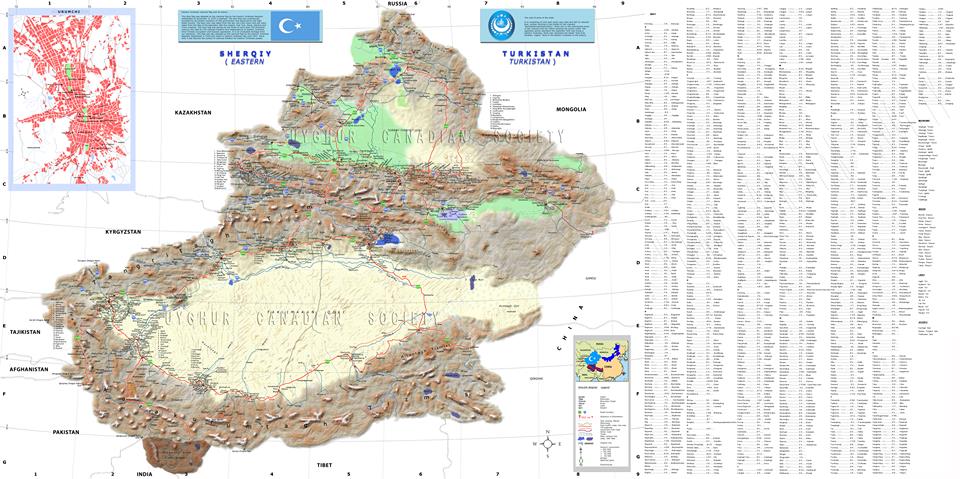
2004-Yili uyghur aptonom rayonluq siyasiy kéngeshning sabiq daimiy reisi féng dajén seypidin ezizi wapatining bir yilliqi munasiwiti bilen «shinjang géziti» de «yoldash seypidin ezizini esleymen» namliq bash maqale élan qilghan. Mezkur maqaliside u munularni tekitligen: «1950-Yillarning béshida shinjangda milliy térritoriyelik aptonom jaylarni qurush ishi élip bérildi. Bu jeryanda yoldash seypidin ezizi kökrek kérip otturigha chiqip, yüksek mesuliyetchanliq we keng qorsaqliq bilen ülge körsetti. U özi atushluq bolsimu, lékin qizilsu qirghiz aptonom oblasti qurulidighan chaghda atushni qirghiz oblastining merkizi qilish teklipini otturigha qoydi. Undin bashqa, uyghurlar nopusi köp sanliqni igileydighan ghulja shehirini ili qazaq aptonom oblastining merkizi qilish, korla shehirini bayingholin mongghul aptonom oblastining merkizi qilish teklipini berdi.»
Exmetjan osman bu heqte pikir bayan qilip, seypidin ezizi 1949-Yilidiki béyjing sepiri arqiliq sherqiy türkistan jumhuriyitini bir milliy dölet halitidin xitay xelq jumhuriyitining tewelikidiki bir ölke derijilik atalmish «aptonom rayon» gha aylandurup qoyushta mesuliyiti bar, dep körsetti. U yene seypidin ezizining, uyghur élini atalmish «shinjang uyghur aptonom rayoni» dégen quruq siyasiy gewde ichide birqanchilighan aptonom oblastqa we nechche onlighan aptonom nahiyelerge bölüp tashlashtimu bash tartip bolmaydighan mesuliyiti bar, dep tekitlidi.
Xitay kompartiyesi merkiziy komitétining seypidin ezizige bergen «baha» sining axirqi nuqtisida uning «merkez mutleq ishengen we 1970-Yillarda shinjang uyghur aptonom rayonining partiye, armiye, hökümet we bingtuen qatarliq 4 chong hoquqi bérilgen birdin-Bir uyghur rehber» ikenliki alahide tekitlengen. Seypidin ezizining özimu «ömür dastani» namliq eslimisining axirqi qismida, özining 1970-Yillarda shinjang uyghur aptonom rayonida «4 birinchi» bolghanliqini, yeni aptonom rayonluq partkomning birinchi sékrétari, aptonom rayonning birinchi reisi, shinjang herbiy rayonining birinchi siyasiy komissari we partkom sékrétari shundaqla shinjang ishlepchiqirish-Qurulush armiyisining birinchi siyasiy komissari bolghanliqini tilgha alidu.
Exmetjan osman, seypidinning bu mezgildiki siyasiy hayatidin kishiler oquyalaydighan birdin-Bir mezmun del uning kommunist xitay ishghaliyetchi hakimiyitige bolghan sadiqliqidur, deydu.(Qutlan)
Ahmetjan Qasim-President of the Republic of Uyghuristan(1938-1958)
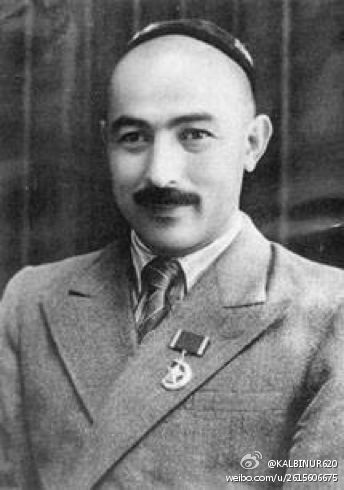
Ahmetjan Qasimi (15 April 1914–27 August 1949[1]) was a Uyghur political leader in Uyghuristan. He is a President of the Republic of Uyghuristan.
Ahmetjan was born in Ghulzha (Yining in Chinese) in 1914. He studied at the Communist University of the Toilers of the East, Moscow in 1936 and was a member of Communist Party of Soviet Union. Ehmetjan was described as „Stalin’s man“ and as a „communist-minded progressive“.[2] Ahmetjan Qasimi Russified his surname to „Kasimov“ and became a member of the Communist Party of the Soviet Union.
He was a member of the governing council of the Second East Turkestan Republic, a Soviet-backed administration founded in three northwestern districts of Uyghuristan during the Ili Rebellion in November 1944.[3] Ahmetjan Qasimi himself was not involved with the planning of the rebellion.[4] The Second ETR was initially led by Elihan Tore, who favored forming a conservative Islamic government.[5] Tore disappeared in the Soviet Union in 1946. Ahmetjan Qasimi was a leader of the pro-Soviet Sinkiang Turkic People’s National Liberation Committee (STPNLC).[5]
In June 1946, Ahmetjan Qasimi reached a political agreement with the Nationalist Chinese leader Zhang Zhizhong to form a coalition provincial government in Urumqi[6] The Second ETR was disbanded in name but the Uyghuristan retained autonomy.[5] As a vice-chairman of the coalition government, Ahmetjan Qasimi called for unity and support for the government.[7] He explained that the people of Ili had risen in rebellion only to secure their rights under the Chinese constitution.[8] He was a member of Uyghuristan’s delegation to the National Assembly in Nanjing.[8]
In the summer of 1949, as Chinese Nationalists were losing the civil war to the Chinese Communists, the Soviet Union planned for ETR leaders to switch sides. On August 22, 1949, Vasiliy Borisov, the Soviet Vice-Consul at Yining, accompanied ETR leadership in auto trip to USSR for urgent talks with Soviet officials about future of ETR, where they were told to cooperate with Communist Party of China. They were invited by Chinese Communist leader, Mao Zedongto attend the First Chinese People’s Political Consultative Conference in Beijing to prepare for the founding of thePeople’s Republic of China. On August 24, 1949 Ahmetjan Ehmetjan, Abdulkerim Abbas, Ishaq Beg Munonov, Dalelkhan Sugirbayev, Luo Zhi and other top ETR representatives (11 men in all) boarded a plane in Almaty, the capital of the Kazakh SSR, for Beijing. On September 3, the Soviet Union informed Saifuddin Azizi, another leader of the ETR, who was not on the flight that the plane had crashed near Lake Baikal en route to Beijing, killing all on board.[9]
Seyfidin Azizi and two other ETR leaders then traveled to Beijing by train where they agreed to incorporate the Three Districts into the newly founded People’s Republic of China and accept important positions within the administration. News of plane crash and death of Ehmetjan was not publicly announced in Uyghuristan until early December, after the People’s Liberation Army had secured the region.
Ehmetjan Qasimi was married in January 1945 to Mahinur Qasim (Maynor Kasim; 玛依努尔•哈斯木), a native of Korgas County in Ili.[10] The couple had a son and a daughter.[10] In 1952, Mahinur Qasim became the mayor of Yining and joined the Chinese Communist Party.[10] She later served as a member of Standing Committee of the National People’s Congress and a vice chair of the All-China Women’s Federation.[11] She has been a prominent advocate of women and children’s rights.[12] Her memoir of her husband, Remembering Ehmetijan Kasimi , was published in China in 2011.[10]
In the Uyghuristan, Ehmetjan Qasimi is remembered as a martyr and hero in the struggle against the Nationalist regime.[13] His remains were returned to China in April 1950 and later reburied in a martyr’s memorial cemetery in Yining.[13] The cemetery has a stele with calligraphy by Mao Zedong, praising Qasimi and his fellow martyrs for their contributions to the Chinese people’s revolution and mourning their death en route to the Inaugural Chinese People’s Political Consultative Conference in Beijing.[13]
Devlet Atisi- YAKUPHAN BEDEVLET we DOĞU TÜRKİSTAN İSLAM DEVLETİ – ( 1820 – 1877)

Yakuphan 1820 yılında Taşkent yakınlarındaki Pişkent’te doğdu. Hokand askeri kuvvetleri girmeye başaran Yakup bey kısa zamanda kabiliyetini göstererek 1845 yılında Hokand Hanı Hüdayar Han’ın dış ilişkiler memuru oldu.
Kendisine Ak Mescit (Kızıl Orda) nın komutası verildi 1853 yılında Rusyanın 26 gün süren kuşatmasına inatla karşı koyduğu bilinmektedir. Kaşgar hükümdarı Sadık Beğ Cihangir hocanın Kokand’da yaşayan oğlu Buzuruk hanı Kaşgar hükümdarı olarak görmek istiyordu, Kokand Hanı Hudayar Han 1864 yılında Buzuruk ve Yakuphanı 1000 kişilik bir ordu ile Kaşgara gönderdi. Kısa bir savaştan sonra Buzuruk, Han ilan edildi.Yakuphan 1867 de Kuçayı, 1869 da Korlayı 1871 de Turfanı ele geçirdi.
Yakupbeğ 1867 de Buzuruk Han’ın iktidarına son vererek kendisine ‚Atalik Gazi‘ ‚Bedevlet‘ (Mesut Hükümdar) ünvanı verildi.
Yakup beğ çok kuvvetli siyasi ve diplomatik şahsiyeti ile ün kazandı. Buhara, Osmanlı, İngiltere, ve Rusya ile diplomatik ilişkiler kurdu, askeri eğitimlerini Osmanlı İmparatorluğundan silahlarını İngiltereden ve ticari mallarını Rusyadan getirtti.
Yakup Han ülkede istikrarı sağladıktan sonra tarihi ve kültürel bağları olan ve İslam dünyasının hamisi konumunda bulunan Osmanlı İmparatorluğu nezdine elçi göndermiş Sultan Abdulaziz Han’dan yardım ve himaye talebinde bulunmuş; devletinin Osmanlı İmparatorluğu’nun bir parçası olarak kabul edilmesini dilemiş ve kendisine biat ettiğini bildirmiştir. Osmanlı İmparatorluğu Yakup Han’ın bu talebini kabul etmiş ve Padişah’ın direktifi üzerine Albay Kazım bey komutasında 5 muvazzaf ve 3 emekli Subaydan oluşan bir asker eğitim grubunu 1200 piyade tüfeği 6 sahra topu ve cephane yapımında kullanılan barut ve malzemeleri ile Hindistan üzerinden Doğu Türkistan’a göndermiştir. Heyet Kaşgar’da büyük coşku ve sevinç ile karşılanmış, hutbeler padişah adına okunmuş ve paralar da Sultan Abdulaziz Han adına bastırılmıştır. Doğu Türkistan semalarında Osmanlı sancağı dalgalandırılmıştır.
1876-1877 yıllarında Çinliler Yakup beğ’e karşı büyük bir hücuma geçtiler Yakup beğ savunmaya geçmek zorunda kaldı, Aksu etrafındaki Davançı dağları civarında şiddetli çarpışmalar oldu, Yakup beğ savaşta sayıca üstün olan düşman karşısında savaşı kaybetti geri çekildi.
Çinliler 16 Mayıs 1877 de Turfanı ele geçirdi aynı yılın 29 Mayıs günü Yakupbeğ vefat etti. Ölümünden sonra Çin istilası tüm Türkistanda devam etti, oğullarının taht kavgası ve hükümdarların kendilerini han ilan etmeleri ve eyaletlerin bağımsızlık ilan etmeleri DOĞU TÜRKİSTAN İSLAM DEVLETİNİN çöküşüne zemin hazırladı.
Çinliler 16 Aralık 1877 Kaşgarı 16 Mayıs 1878 de Doğu Türkistan’ın tamamını işgal ettiler. Yakup bey’in büyük güçlüklerle kan pahasına antlaşmalarla ve büyük bir beceriklikle kurmuş ve korumuş olduğu kendisine birleşik bağımsız bir devlet düzeni verdiği Doğu Türkistan bağımsızlığı sona erdi.
Doğu Türkistan İslam Cumhuriyeti Devlet Arması
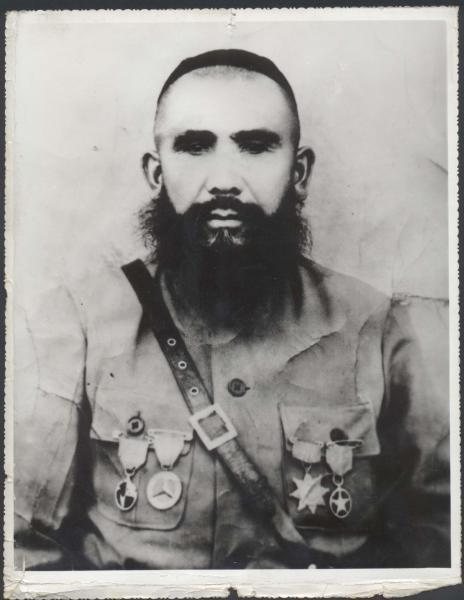
1933’te kurulan Doğu Türkistan İslam Cumhuriyeti Prezidenti Geniral Huja Niyaz Hajim Janapliri
1931 yılının Şubat ayında, Doğu Türkistan in kuzeyinde Kumul şehrinde, güneyinde Hoten şehrinde başlayan ve Kumul Ayaklanması diye tarihe geçen Türk milli hareketi, iki yıllık çetin mücadelelerden sonra muvaffak olmuş; 12 Kasım 1933 yılında„Şarki Türkistan İslam Cumhuriyeti“ adıyla bir devlet kurulmuştur.
Atatürk’ün Cumhurbaşkanlığı zamanına tesadüf eden Kumul ayaklanması ve kurulan „Şarki Türkistan İslam Cumhuriyetininkuruluşu Türkiye’de büyük alaka ile günü gününe takip edilmiştir.“
Bu milli kıyamın başında şu liderler bulunmaktadır;
Hoca Niyaz Hacı, Salih Dorga, Musul, Maksut – Mahmut Muhiti kardeşler, Hafız Beğ, Mehmet Emin Buğra Bey, Sabit Damolla, Osman Beğ, Şerifhan Töre gibi liderlerin öncülüğünde, önce Hoten ve Kumul da başlayan, sonra bütün Doğu Türkistan’a yayılan ayaklanma, pek çok kan dökülme pahasına muvaffakiyete ulaştırılmış ve yukarıda belirtildiği gibi 12 kasım 1933 tarihin de Kaşgar şehrinde istiklal ilan edilerek, „Şark-i Türkistan Türk İslam Cumhuriyeti“ kurulmuştur.
Yukarıda ki amblem (Alamet), istiklal ilanından sonra toplanan kurultayda, yeni doğan bu Cumhuriyetin sembolü olarak kabul edilmiştir.
Yukarıda da görüleceği üzere, Cumhuriyetin amblemi, Kur’an-ı Kerim’den bazı ayetlerle ve kurulan Cumhuriyetin prensipleriyle bezenerek bir kompozisyon teşkil etmektedir. Hilalin sağında ve solunda yer alan ayetlerden başka, alt taraftaki kavisli çerçevede, Cuma hutbelerinde devamlı okunan meşhur ayet yer almakta, bunun sağında; „İslamiyet“, „Azadiyet“, solunda ise, „Adalet“, „Uhuvvet“ prensipleri yer almaktadır.
En alttaki, yazıda ise „Yaşasın Türkistan Azadlığı, Kutluk Bolsun İslam Hakimiyeti.“ Sözleri okunmaktadır.
Doğu Türkistan’ı, 12 Kasım 1933’teki mutlu günlere ebediyen kavuşturmasını Cenab-ı Allah (c.c.)tan niyaz ederken, bu yolda çalışanların da muvaffakiyete ermelerini canı gönülden diliyoruz.
http://songokbayrak.blogspot.com.tr/p/yakuphan-bedevlet.html?view=classic
Büyük Inqilapchi, Marshal Ali Han Töre (1885-1976)

Ali Han Töre Saguni 1944’te Doğu Türkistan’da Çinlilere karşı savaşarak bir devlet kurmayı başaran mücadeleci, teşkilatçı, idareci din alimidir.
Türkistan Milli Azadlık Hareketleri’nin liderlerinden biri olan Saguni, hayatını Rus Emperyalizmi’ne karşı mücadeleyle geçirmiş ve davasında kısa bir müddet de olsa, büyük başarı göstermiş, yakın tarihimizin en az bilinen mümtaz şahsiyetlerindendir.
Yılmaz Öztuna’nın İslam Devletleri kitabında bu mevzuda ilgi çeken ve çok eksik olan şu malumatı yer almaktadır:
“1944 Temmuz’unda Ali Han Töre (Hocalar Hanedanı’ndan bir prens) Gulca’da Çinlilere karşı ayaklarak İli Bölgesi’ni ele geçirdi ki, Kazakistan’ın sınırı idi. 7. 8. 1944’te Ali Han Töre, Doğu Türkistan Cumhurbaşkanı oldu, başkent Gulca idi. Osman Batur, Ali Han’ı devlet başkanı olarak kabul etti. 1945 Mart’ında Ali Bey Rahim de Manas Sancağı’nı elde etti. 1946 yazında Ali Han kayboldu. Bir daha izine rastlanmadı ki, komünistlerce öldürüldüğü muhakkaktır. Fakat bu suikastin milliyetçi Çin Umumi Valisi U Cung Şin tarafından da düzenlendiği de iddia edilmiştir.”
Sayın Öztuna’nın eserinin, Kültür Bakanlığı Yayınları arasında 1989’da yayınlandığına bakarsak, bu bilginin yetersiz olduğunu aşikardır ve Türkiye’de bu mevzunun gündeme gelmesi önemlidir. Çünkü Ali Han Töre 1946’da komünistlerce öldürülmemiş, Sovyetler Birliği’nin Gulca Konsolosu Dabaşın (Konsolos yardımcısı Aleksandır Vasiloviç’tir.) tarafından Haziran 1946’da Korgaz Şehri’nde (Kazakistan Çin sınırı) anlaşma vaadi yalanı ile tuzağa düşürülerek, askeri bir uçakla Taşkent’e kaçırılmış, iki yıl halktan uzak bir şekilde şehir dışında tutulmuştur. Daha sonralar göz altında hayatını 1976 yılına kadar devam ettirmiştir.
Ìlginçtir ki, komünist iki devlete karşı hayatını mücadeleyle geçiren Ali Han Töre, Doğu Türkistan’da Cumhurbaşkanı olmasına rağmen Osman Batur, Yusuf Alptekin kadar meşhur değildir. Tarih kitaplarımızda da kendisine az yer verilmiştir.
Acaba neden?..
Doğu Türkistanlı bağımsızlık hareketinin önde gelenlerinin hatıralarında Ali Han Töre’den çok çok az bahsetmeleri veya hiç bahsetmemeleri O’nun tanınmamasında veya az tanınmasında önemli rol oynamıştır. Belki de Ali Han Töre’nin meşhurlaştırılmamasının en önemli sebebi bana göre herhalde İslami yönünün olmasıdır…
Sovyetler Birliği’nin Ağustos 1991’de dağılmasıyla bilindiği gibi Özbekistan da bağımsızlığını ilan etti. Bağımsız olan devletler öz milli kahramanlarını arayıp bularak, onların şahsiyetlerinde bağımsızlıklarını göstermeye çalışıyorlar.
Ali Han Töre de komünizm devrinde hain görülmüş ama, günümüzde bağımsızlığın sembolü milli kahramanlarından olmuştur. Başkent Taşkent’te bir çok okul ve caddelere onun adı verilmeye başlanmış ve eşyaları müzelerde sergiye konmuştur.
Öte yandan Ali Han Töre’yi yanlış tanıyan ve tanıtan şahıs ve kitaplar da mevcuttur. Mesela, Vincent Monteil, Sovyet Müslümanları kitabında. Kitabın diğer mevzularında olduğu gibi bizim mevzumuzda da kaynak gösterilmeden tutarsızca Şarki Türkistan İslam Cumhuriyeti’ni Sovyetlerin kurdurduğu belirtilmiş ve kuranlara “komünist ve Türk yanlısı” denilmiştir. Yani kitap baştan sona laubali şekilde ele alınmış, tenakuzlara düşülmüştür. Mesela, Ali Han Töre’ye hem komünist denilmiş, hem de Türk yanlısı. Evet o bir Türk’tü ve Türk yanlısı idi. Ama asla komünist değil, iyi bir din alimiydi, makalemiz okunduğunda Ali Han Töre daha iyi anlaşılacak ve Türkiye’de sevilen şahsiyetler arasında yer alacaktır.
Doğumu ve Tahsil Hayatı:
Ali Han Töre bugünkü Kırgızistan Cumhuriyeti’nin Tokmak şehrinde, eski ismi Balasagun (Issık Göl’e yakın bir yer) 1885 yılında doğdu. Babası Şakir Hoca Eşan diye nam yapan Şakir Han Töre olup, din alimlerindendir. Aynı zamanda Nakşibendi tarikatının şeyhlerindendir.
İlk derslerini dedesi Muhammed Hoca’dan okudu. 13 yaşında ağabeyi Alim Han Töre ile Mekke’ye amcasının yanına okumaya gönderildi ve oraya gitti. 17 yaşına kadar Mekke’de Arapça, Farsça, Türkçe, tefsir, hadis, fıkıh, mantık, siyaset ve askeri dersleri okudu. Kendi isteği ile hususen Mekke’deki Türk zabitlerinden askeri dersler aldı.
Medresede okuduğu süre içerisinde bir gün bile tatil yapmadı. 1902’de ailesinin yanına geri döndü. Tahsiline Buhara Emir Alim Han Medresesi’nde ağabeyi ile birlikte devam etti. Ali Han Töre, Buhara’ya okumaya gittiği yıllarda Buhara Emirliği, Dışişlerinde Rusya’ya bağımlı idi. Bu medresede musiki, edebiyat, coğrafya, hendese, felekiyat (astronomi), tarih, tababet (tıp), gibi ilmi dersler aldı.
Ayrıca hatıralarında o zamanlar medresede eğitim keyfiyetli olmadığından para ile müderrislerin evinde gizli özel dersler aldığını ve bu dönemde Türkiye’den gelen gazeteleri yasak olduğu halde okuduğunu belirtmektedir. Bir taraftan da Buhara’da başlayan mezhep kavgalarına karşı talebe lideri olarak mücadele etmiştir. I. Dünya Savaşı’ndan bir yıl önce ailesinin yanına Balasagun’a ağabeyi ile geri dönmüştür.
Batı Türkistan’daki Mücadelesi:
Rus Çarlığı Türkistan’da I. Dünya Savaşı için asker toplamaya teşebbüs ettiğinde karşı çıkarak: “Halife askerlerine silah çeken mürtettir” diye fetva yayınlamış ve Rusların bu bölgeden asker toplamasına engel olmuştur. Bu mücadele sırasında hakkında tutuklama emri çıkarıldı, lakin yakalanamadı. O zamanlar Rus İdaresi halkın ayaklanmasından endişe ettikleri için din alimlerine fazla baskı yapamıyordu. Bu sebepten dolayı ölüm cezası verilmedi, lakin kara listeye alındı.
Batı Türkistan’da 1916’da Çarlık Rusya’sına karşı umumi olarak çıkan ayaklanmalarda Ali Han Töre yaşadığı Kırgızistan’da, silahlı isyanda faal bir rol oynadı. Çarlık Rusyası’nın zayıf olduğu ve ahalide umumi hoşnutsuzluğundan yaygın olduğu bu dönemde ülkesinin bağımsızlığını kazanmasını istiyordu. Bu ayaklanma hareketi Ruslar tarafından kanlı bir şekilde bastırıldı. Ali Han Töre Kaşgar’a kaçtı.
1917 yılında Bolşeviklerin “Azadlık mücadelesi yapan kaçaklar yurtlarına dönebilir” ilanına inanarak memleketine döndü. Bolşeviklerin zulmüne uğramış olan insanlara yardım ettiğinden dolayı 1919’da tekrar kaçmak zorunda kaldı. İdareye hakim olan komünistlerin niyetini anlamış ve mücadeleye başlamıştı ki, tekrar kara listeye alındı ve çareyi kaçmakta buldu. Bir yıl Kaşgar’da ikamet etti.
“Beni Kaşgar’da anlayacak bir tek insan bulamadım ve vatanımı düşmana bırakıp kaçmak çok ağır geldi. Ne olursa olsun vatanıma dönmeliyim.” demiş ve tekrar dönmüştür. Sovyetler Birliği’nin kuvvetlenmesi üzerine halkın durumunun kötüleştiğini görünce tekrar başladığı mücadele hayatında:
1- Devlet siyaseti olan ateizme karşı vicdan hürriyetinden istifade ederek, İslam Dini ve medeniyetini yaşatmaya çalışmak düşüncesiyle ve halkın isteği üzerine, Balasagun şehir camiinde imamlık vazifesine başladı. Vaaz ve nasihatleri halk üzerinde müsbet tesir yaptı.
2- Türkistan’da ortaya çıkan Kasımovcular Harekatı’nın (vatanperverlerin kadrolaşma harekatı) temsilciliğini yaptı.
Ali Han Töre bu tarihten 1930’a kadar onbir yılda altı defa tutuklandı. En son tutuklanmasında on yıllığına Sibirya’ya sürgün cezasına mahkum oldu.
Şarki Türkistan’a Kaçışı ve Mücadelesi:
Ali Han Töre, Bişkek Şehir Hapishanesi’nden Sibirya’ya gönderileceği günden iki- üç gün önce; “Mahkumlar etrafı dikenli tellerle çevrili inşaatlarda çalıştırılırken nöbetçi askerin: -Yemek vaktim geçiyor, siz durun, ben yemek yiyip geleyim- diyerek gitmesinden istifade ederek, Şarki Türkistan’ın Gulca şehrine kaçtı.
Gulca’da bir yıl çalışarak kazandığı paraları kaçakçılara vererek, iki hanımını ve çocuklarını gizlice yanına getirtir. Niyeti ailesi ile birlikte akrabalarının da bulunduğu Arabistan’a gitmekti. Ancak Rusya’nın Şarki Türkistan sınırlarını iyi kontrol etmesi sebebiyle yurt dışına çıkamadı.
Sovyetler Birliği’nin o tarihlerde Şarki Türkistan’daki komünizm propagandasını Ali Han Töre’nin oğlu Doç. Dr. Kutluk Han Şakirov: “Uygur ve Çin yönetimine gelen, SSCB’de eğitim görmüş kömünizmle beyinleri yıkanmış insanlar, -Sovyetlerin ürettikleri mallar ucuz ve kaliteli ve bütün her şey komünizmin ürünü, Sovyetler Birliği güllük gülistanlık,… vs.- demekte ve Müslüman Çinlilerle Müslüman Uygurları ve komünizmden kaçan Rusların aralarına fitne salarak birbirine vurdurup, komünizme meydan açmaya çalışıyorlardı.” şeklinde anlattı.
Uygur Halkı, Ali Han Töre’yi ilmi ve dini yönlerinden dolayı öz alimleri gibi kabul ederek hürmet gösterdi. Bu ilgi üzerine Ali Han Töre, Şarki Türkistan’da ailesi ile beraber yaşamaya başladı ve komünizm propagandalarına karşı birlik düşüncesini halka aşılamaya çalıştı. Bu davasında muvaffak da oldu.
Düşüncelerine halkın büyük rağbet göstermesi üzerine, hürriyet için de mücadele edilmesi gerektiğini açıktan yaymaya başladı. Böylece Sovyet Emperyalizmi’ne ve komünizme karşı açıktan açığa mücadeleye girişti.
Bunun üzerine Moskova, komünizme karşı olan ve Sovyetlerden kaçan insanların bir listesini kukla durumuna getirdikleri Şarki Türkistan Valisi General Şen Şi Sey’e (Şin Du Ben) KGB aracılığıyla vererek, onları tutuklattı. Şarki Türkistan’da o zamanlar Sovyetlerden kaçan iki yüz insan bulunuyordu ve bunların yüz doksan dokuz tanesi bir gecede tutuklandı. Fakat Ali Han Töre, oğlu Asil Han Töre’nin haber vermesiyle gece yatak kıyafetiyle kaçtı. On ay saklandıktan sonra 1937 yılında Şarki Türkistan’ın sınır şehirlerinden Asuk’un pazarında yakalandı ve ömür boyu hapse mahkum edildi. Malları müsadere edilerek ailesi sokağa atıldı.
Merkezi Çin Hükümeti 1941 yılında biraz güçlenince Çin’de hapishaneleri teftiş ettirdi. Teftişlerde Şarki Türkistan Hapishaneleri’nde sadece suçları “Sovyetler Birliği’nden kaçmak” olan insanların bulunduğu ortaya çıktı. Çin kanunları gereğince Sovyetler’den kaçmanın suç teşkil etmemesi üzerine serbest bırakılma kararı alındı. Bu karar bir çok insanla beraber Ali Han Töre Saguni’nin de serbest bırakılmasını sağladı.
Bununla birlikte Sovyetler Birliği’nin Şarki Türkistan Konsolosluğu buna karşı çıktı ve “Ali Han Töre sizin başınıza bela olur.” dedi. Ama Merkezi Çin Hükümeti, -burası SSCB değil, Çin’dir-” diye talebi reddetti.
Çok az insanın sağlam çıktığı hapishaneden sağlam ve sıhhatli çıkan Ali Han Töre, halk tarafından büyük bir sevgiyle karşılandı, evi günlerce ziyaretçiler tarafından dolup taştı.
İkinci Dünya Savaşı’nın çıktığı o günlerde Sovyetler Birliği kendi derdindeydi. Ali Han Töre hapishaneden çıkarılacağı sıralarda Şarki Türkistan Valisi’nin gücü zayıftı ve halk yer yer ayaklanmaktaydı. Hapisten çıkan Saguni, bu fırsattan istifade ederek, ayaklanmaları bir birlik altında toplamak ve halkı teşkilatlandırmak için gizli “Azadlık Cemiyeti”ni kurdu.
Cemiyetin ilk üyeleri, Ali Han Töre Saguni, Abdülkerim Abbas (sonra Şarki Türkistan’ın İçişleri Bakan yardımcısı oldu.), Kasımcan Kamberi (Askeri Adliye Başkanı), …vb. oldu.
1944 yılına kadar teşkilatlanmaya ve güçlenmeye çalışıldı ve hürriyet için uygun şerait fırsatı kollandı.
Bolşeviklerin ayaklanarak ortaya çıktığı 7 Kasım’da (1917), “Biz İslam ve hürriyet bayrağını dalgalandıralım, aynı gün ortaya çıkalım” diye Ali Han Töre, 7 Kasım 1944’te silahlı mücadeleyi başlattı.
Şarki Türkistan İslam Cumhuriyeti’nin Kurulması ve İlanı:
İstiklal mücadelesi ve cumhuriyetin ilanı konusunda Kutluk Han Şakirov, “Babam, ilçe ve köylerdeki silahlı mücahitlere haber gönderdi ve – aynı gün aynı saatte siz dıştan Gulca’ya hücum edin, biz de içte mücadeleye başlayacağız.- dedi. Bu plan tamamen uygulandı. Üç gün içerisinde Gulca Şehri tamamen ele geçirildi. Aynı zaman da Şarki Türkistan İslam Cumhuriyeti’ni ilan ettiler” dedi.
Ali Han Töre Vilayet Konağı’ndaki Çin bayrağını indirerek yırtmış ve ayağının altında çiğneyerek, “İşte İslam Bayrağımız” demiş, daha önce hazırlanan ay yıldızlı ak bayrak dalgalandırılmış ve on iki bakandan oluşturulan hükümet ilan edilmiştir. Ayrıca dokuz maddelik bir beyanat yayınlanmıştır.
Ali Han Töre bu Cumhuriyetin Cumhurbaşkanı kabul edildi. O da kadrosunu şöyle tespit etmiştir:
Hekimbey Hoca ve Ebul Hayri Töre (Kazak) Cumhurbaşkanı yardımcıları,
Rahimcan Sabiri: İçişleri Bakanı, Askeri Bakan Muavini
Enver Musabeyov: Maliye Bakanı
Habib Yunisi (Tatar): Maarif Bakanı
Muhammedcan Mahsun : Ali Adliye (Yargıtay) Bakanı
Abdurrauf Mahzum : Hükümet Başkatibi
Salihcan Bay : Toprak, Yer ve Su Bakanı
Cani Yoldaş: Devlet Müfettiş Bakanı
Zünun Tabib : Askeri Muavin
Palinov ( Rus ) : Askeri Bakan
Ömercan : Levazımat Bakanı
Kerim Hacı : Milli Banka Bakanı
Seyfuddin Aziz : Propaganda Bakanı ( Daha sonra Maarif Bakanı oldu)
Abdürkerim Abbas : Matbuat Başkanı
Kasımcan Kamberi : Askeri Adliye Bakanı
Ahmed Efendi Kasımi : Ali Han Töre’nin Tercümanı
Gulca Şehrinde hakimiyet sağlandığında 4 savaş uçağı, 618 tüfek, 56 makinalı tüfek, 12 havan topu, bir kaç ton cephane ve bomba ele geçirildi. Bu sırada SSCB Japon ve Merkezi Çin Hükümeti’ne karşı tampon devlet olarak Şarki Türkistan İslam Cumhuriyeti’ni gizli olarak desteklemek zorunda kaldı. Şöyle ki, mesela 30 koyuna bir tüfek verdi ve tüfekler de Birinci Dünya Savaşı’ndan kalma tüfeklerdi.
Müslüman Türki halktan (Özbek, Kazak ve diğerleri) askeri uzmanlar gönderdi. Kısa zamanda şu işler yapıldı: Vergi %50 azaltıldı, demokratik hürriyetler verildi; oy verme, çalışma saati,… vs. Din ve dilde serbestlik. Çinlilerin ellerindeki mallar müsadere edildi.
Mücadelenin Genişlemesi:
Milli Ordu 8 Nisan 1945 yılında kurudu. Seferberlik ilan edildiğinde 100 bin müracaat olduğu halde 30 bin silah olduğu için 30 bin insan silah altına alındı. Temmuz, Ağustos ve Eylül aylarında 85 bin kişilik Çin Ordusu’na karşı savaşarak başarı kazanıldı. İli, Terbegatay ve Altay vilayetleri azad edildi. Manas Deryası’na ulaşıldı. Şarki Türkistan Çin Ordusu ile savaşıldı. Sonra da Milliyetçi Çin’den gelen ordu ile de savaşılarak, ona da galebe çalındı. ( 1945 )
1945-1946 yılları arası daima Çin askerleriyle vuruşmayla geçti. Çin askerlerinin elinden kışlayı, havaalanını Budistlerin tapınağını ele geçirdiler. Gulca etrafındaki düşman yok edilinceye kadar 3 binden fazla mücahit şehit edildi. 6 bin mücahit yaralandı. Şehit ailelerine yardım amacıyla “Şehit Meçruhlar Cemiyeti” kuruldu, ailelere yardım edildi.
Ordu içinde Gani Batur (Uygur), Fatih Batur (Tatar), Osman Batur (Kazak), Ekber Batur (Kazak), General Palinov (Rus) gibi cesur komutanlar yetişip çıktı. Şarki Türkistan Hükümeti Ali Han Töre’ye önceki faaliyetlerinden ve bu savaştaki başarılarından dolayı Maraşal ünvanını verdi. Şarki Türkistan Halkı Ali Han Töre’ye Maraşal Ata, (baba) diye hitap ederlerdi.
Şarki Türkistan Ordusu Urumçi’ye kadar yaklaşmıştı. Eğer Ali Han Töre iki üç gün daha Ruslar tarafından kaçırılmasıydı, Urumçi’de azad edilecekti.
Ali Han Töre’nin Kaçırılarak Taşkent’e Getirilmesi:
SSCB’nin Gulca Başkonsolosu Dabaşin, Şarki Türkistan Cumhuraşkanı Ali Han Töre’ye gelerek: “SSCB’nin Hükümet Başkanı Stalin sizinle antlaşma götürmek istediler. Ama Ali Han Töre konsolosların bu sözlerine inanmadı. “Eğer antlaşma yapmak istiyorsa sınıra gelsin” dedi.
Konsolosluk daha sonra, “Kazakistan-Çin sınırı olan Korgaz Şehri’nde Stalin sizinle görüşecek, sizi orada şu gün, şu saatte bekleyecek” diye daha önce kurulmuş tuzağa Ali Han Töre’yi davet etti. Ali Han Töre buluşma yerine geldiğinde askeri bir uçakla karşılaştı. Yanında yeterli koruması olmadığı için her hangi bir çatışmaya giremeden silahlı Rus askerleri tarafından bu askeri uçakla Taşkent’e getirildi. Ortada ne Stalin vardı, ne de antlaşma. Yeni bağımsızlık savaşını kazanmaya çalışan Şarki Türkistan Halkı’nın Devlet Başkanı Ali Han Töre böylece kaçırılmış oldu.
Ali Han Töre Taşkent’te iki yıl halktan uzak bir şekilde şehir dışında Bozbazar’daki hükümet misafirhanesinde tutuldu. Bu yıllar arasında Ali Han Töre’nin Taşkent’e getirilip tutulduğundan halkın haberi olmadı. Ailesi de daha sonra 1947 yılının Haziran ayında gizlice Taşkent’e çeşitli yollarla bir bir getirildi. En son 1960 yılında Ekrem Han geldi.
Bu müddet zarfında dış dünya ile alakası kesik şekilde gözaltında tutuldu. Daha hiç bir iş yaptırılmadı. Daha sonra siyasetten uzak durması şartıyla Taşkent Şehri’nin Oktyabır, Şeytan Tahar ilçesi, Kahata mahallesi, Kalhoznu 25 adresinde 1976 yılına kadar yaşadı.
Eserleri:
Ömrünün sonuna kadar yalnız ilmi ve içtimai işlerle meşgul olan Ali Han Töre, Arapça ve Farsça’yı çok iyi bilirdi. Birçok dini, siyasi ve tıbbi kitaplar yazmıştır: Tarih-i Muhammedi (2 cilt, 1991 yılında 100.000 adet basıldı.), Emir Timur Tüzükleri (Kutlukhan Şakirov tarafından şuan İstanbul’da Türkçe baskısına hazırlanıyor), Türkistan Gaykusu”(2 cilt), “Şifayi İlan” (Hastalıklar Devası), “Şiirler Toplusu”, “Ahmed Daniş”, “Nevadir ül Vekai” (Farsça’dan Tercüme) ve Herman Vamberi, “Buhara veya Maveraünnehir Tarihi” (Tercüme).
“Türküstan Gaygusu”: “1960 sonlarında gizli yazılmış ve vakti geldiğinde neşrini varislerine vasiyet etmiştir. Hazırda oğulları onu neşre çalışmaktadırlar. “Esasul İman” kitabı da gizli yazılmış, elden-ele gezerek muhtelif meclis ve toplantılarda okunmuştur.
Ayrıca Ali Han Töre Taşkent’e getirdikten sonra Stalin tarafından Şarki Türkistan’da neler yaptıklarını her şeyi ile yazmasını istedi. Netice de 60 sayfalık iki nüsha yazılan eser, müsvetteleri ile beraber elinden alınmış ve Moskova’ya gönderilmişti
. 1-Yılmaz Öztuna, İslam Devletleri, 1.Cilt, Kültür Bakanlığı Yayınları, Ankara 1989, s.685
2-Ali Han Töre’nin oğlu Doç. Dr. Kutluk Han Şakirov’la Mayıs 1993 Taşkent’te yapılan görüşme
3- Ali Han Töre’nin oğlu Doç. Dr. Kutluk Han Şakirov’la Mayıs 1993 Taşkent’te yapılan görüşme
4-Vincent Monteil, Sovyet Müslümanları, Pınar Yayınları, Tercüme Mete Çamdereli, Yıldızlar Matbaacılık, A.Ş. istanbul 1992, s.188)
5- Ali Han Töre’nin oğlu Doç. Dr. Kutluk Han Şakirov’la Mayıs 1993 Taşkent’te yapılan görüşme
6- Ali Han Töre’nin oğlu Doç. Dr. Kutluk Han Şakirov’la Mayıs 1993 Taşkent’te yapılan görüşme
7- Abdulhakim Baki İltebir, “Marşal Ali Han Töre kalbimizde, Mübarize içinde olan bir hayat”, Doğu Türkistan Sesi Gazeti, Doğu Türkistan Dayanışma Derneği Yayını, Özel sayı:1-1993, s. 14.
8- Ali Han Töre’nin oğlu Doç. Dr. Kutluk Han Şakirov’la Mayıs 1993 Taşkent’te yapılan görüşme
9-Ali Ali Han Töre’nin oğlu Prof. Dr. Asil Han Şakirov’la Haziran 1993’te Taşkent’te yapılan görüşme
10– Ali Han Töre’nin oğlu Prof. Dr. Asil Han Şakirov’la Haziran 1993’te Taşkent’te yapılan görüşme
11- Han Töre’nin oğlu Doç. Dr. Kutluk Han Şakirov’la Mayıs 1993 Taşkent’te yapılan görüşme
Atauyghur M.Emin Buğra we Uning Hayati (1901-1965)
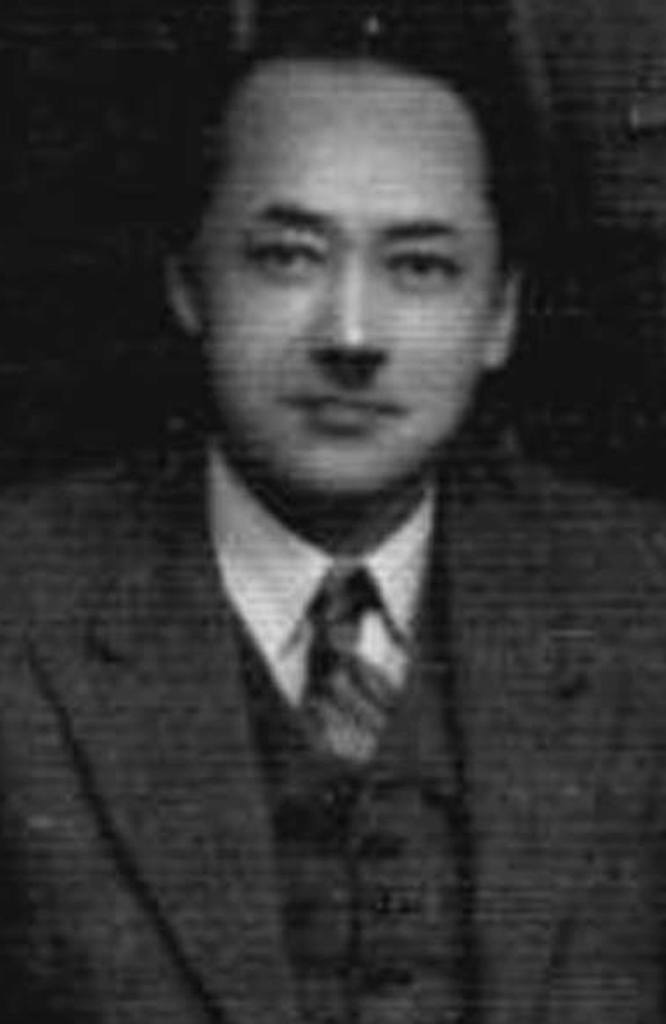
Mehmet Emin BUĞRA, 1901 yılında Doğu Türkistan’ın Hoten şehrinde saygın bir müderris ailesinde dünya’ya geldi. Yörenin sayılı din alimlerinden olan babası Pir Abdidin Hacı’yı küçük yaşta kaybetti. Dört erkek ve iki kız kardeşi ile beraber annesi Sekine Banu hanımın terbiyisi altında büyüdü. Sekine Banu hanım ise 1863 yılında Hoten bölgesinde bağımsız hoten hanlığını kurmuş olan Abdurrahman Paşa’nın 2. göbekten torunudur. 9 yaşında Hoten de ilk tahsilini yaparken 10 yaşında annesini kaybetti ve amcasının himayesine girdi. 22 yaşında ise Karakaş nahiyesindeki o devrin ünlü medreselerinde yüksek din tahsilini Arap ve Fars dillerinde tamamladı. 1922-1930 yılları arasında Hoten Karakaş nahiyelerinde tefsir ve Hadis konularında müderris olarak görev yaptı.
Yüksek ilmi ve hitabet yeteneğinden dolayı kısa zamanda bölgede ün kazandı. Uygur Türklerinde saygın ve nüfuzlu din adamlarına verilen “HAZRETİM” ünvanı ile anıldı. Günümüze kadar Mehmet Emin Buğra Doğu Türkistanda Mehemmet Emin hezretim olarak yad ediliyordu. Genç yaşta iken arapça ve farsça dillerinde şiirler yazmaya başlamıştı. O dönemlerde Doğu Türkistan’da yeni yeni gelişmeye başlayan eğitim ve öğretimde muassırlaşma faaliyetlerine aktif olarak katıldı.Hatta kendisi de Türkiyeden gelen öğretmenlerden bir süre muasır ilim terbiyesi almıştı. Görevini Hoten’den Karakaş’a nakledilişini anlatırken Mehmet Emin BU¦RA eğitimdeki bu muassırlaşma taraftanlığından dolayı dönemin mutaasıp müderrislerinin büyük muhalefetine uğradığından bahsediyor..

Karakaş Nahiyesine yerleştikten sonra Mehmet Emin BU¦RA genç Müderris ve talebeleri örgütleyip vatanımızımı işgal eden Çin Hakimiyeti’nindehşet verici zuşüm ve baskılarına karşı çareler aradı. Çin İstilacıları’nın zulmü had safhada idi. Uygur Türkleri en basit insan haklarından dahi mahrum edilmişlerdi. Aslında çok mağdur durum olan çiftçiler ve esnaflar ağır vergilerden başka Çin ordusuna ve Beglere( çin yanlısı Bürokratlar’a ) “Alvan Selik” adıyla harçlık ödemek mecburiyetindeydiler. Bu haksızlığa karşı yükselen sesler hemen kanlı bir şekilde susturuluyordu. Bunlardan bir iki tane örnek vermek istiyorum. Kuzey Doğu Türkistan’ın Süydung Nahiyesinde Çinliler “Karasipeçler” isyanını bahane ederek, elinde silah tutabilecek olan erkeklerin baş parmağını kestiler ( o devirde tüfekler pistonlu olup ateşlemek için başparmak ile piston çakılıyordu).Hoten’in Lop Nahisindeki Çin ordusuna harçlığı zamanında ödemedikleri için halı dokuyan esnafların sağ eli dirseklerinden kesilmiştir. Çin idareciler Doğu Türkistan Halkını 20. asrın başında yaşamalrına rağmen, Otraçağın karanlık devrinde idare ediyorlardı. Kısaca, durum Mehmet Emin Buğra’nın anlattığı gibi “ Yurt veyran (viran) Halk perşan (perişan)”idi.
Bunları Mehmet Emin BU¦RA bir hatırasında şöyle dile getiriyordu.”Sağımı ve solumu fark edecek bir idrake sahip olduğumdan beri Çinli yöneticilerin halkıma yaptıkları zulüm, haksızlık ve horlamalarını görüp yüreğim sızlıyordu. Tecrübe maddi güç bakımından yoksun ve beni bu konuda eğtitecek kişinin olmayışı beni daha da üzüyordu. Çin zülmüne karşı nefret hissi, milletimin ve yurdumun haline olan endişem gittikçe artıyordu. Bu hissiyetın tesiriyle milletimin tarihini öğrenmek, dünya milletlerinin eski ve yeni tarih hayatlarını öğrenip araştırmanın önemini kavramaya başladım. Maalesef muhitimde beni bu konularda yetiştirecek kimse yoktu. Ancak kendi kendimi yetiştirmek zorunda kaldım.”
Görüyoruz ki Mehmet Emin BU¦RA işe önce bilimsel araştırma ile başlamıştır. Bunun için muhitendeki kısıtlı imkanlardan başka Hoten’den Hindistan’a gidip-gelen tüccarlar ve Hacılarla amcasının evinde sohbet toplantıları düzenleyip bilgi topluyordu. Ayrıca bunlar kanalıyla yurt dışından Türkçe, Farsça ve Arapça gazete, dergi ve kitaplar getirip inceliyordu. Bununla da yetinmeden, 1929 yılında Mehmet Emin BU¦RA Doğu Türkistan’ın önemli şehirlerini gezip o yerlerdeki Çin Hükümetinin’nin askeri gücünü ve yöre halkının psikolojik ahvali gibi stratejik durumları araştırdı.Hatıratında bu gezisini anlatırken şöyle diyor;
“Tanıştığım münevverlerle konuştum.Kalplerini dertle dolu buldum, amma ameli harekete hazırım diyen bir tek kişiye, Gulca Kadısı Sabit Damollam’a rastgeldim.O’nunla birkaç gece konuştum”
Bu görüşmeler sonunda, Mehmet Emin BU¦RA ve Sabit DAMOLLA şu kanaata varmışlardı.
1- Siyasi ve barışçıl yöntemlerle iştilacıların, hakimiyet başından uzaklaştırılmalarının mümkün olmadığına.
2- Bunun için ancak tüm Doğu Türkistan sathında Silahlı Milli Kurtuluş Hareketinin başlatılmasına
3- Öncelikle değişik yörelerde Silahlı Milli Gizli Teşkilatlarını kurulmasına
4-Ayaklanmanın Hoten’den başlamasına
Ayrıca, ikiside bu harekat başlarken Çin’den korkulacak bir durum olmadığını, ancak SSCB’nin muhtemel bit müdahalesinden endişeli olduklarını dile getirmişlerdi.
1930 yılının sonlarına doğru Hoten’de Mehmet Emin BU¦RA önderliğinde Milli İnkılap Teşkilat kuruldu. Teşkilatın amacı, üye toplamak, para ve silah tedarik etmekti. Kısa süre içinde 300’ü aşkın üye ve 50’ye yakın eski tüfeğe sahip oldular. 1931 yılının birinci ayında Sabit DAMOLLA Hindistan,Türkiye ve Hicaz gezisinden Hoten’e geldi. Tabiki, yurt dışında yaptığı bu gezisinden çok önemli bilgi ve tecrübelerle dönmüştü. Kendisi de adı geçen gizli teşkilata katıldı.
Mehmet Emin BU¦RA önderliğindeki mücahitler, tahminen bir yıl süren gizli faaliyetlerden sonra 20 şubat 1932 yılında Karkaş nahiyesinde Muvakkat Hoten Hükümeti’nin teşkilini kararlaştırdı. Hükümet reisi Karkaş Kadısı Mehmet Niyaz ALEM, Sabit DAMOLLA başbakan ve Mehmet Emin BU¦RA Başkomutan olarak seçildi.
Silahlı ayaklanmanın önceden belirlenen tarihi Çinliler tarafından fark edilence ayaklanma 22 şubat 1933 günü acele toplanan 60 mücahidin katılımı ile Karkaştan başladı. O gün Karkaş fetholundu. Kısa süre içinde Mehmet Emin BU¦RA önderliğinde mücahidler batıda Kaşgar’ın Yenihisar nahiyesinden doğuda Çin’in Dunghuang eyalet sınırına kadar olan bölgeyi Çin istilasından kurtarıp hürriyetine kavuşturdular.
12 kasım 1934 tarihinde Kaşgar’da kurulan Doğu Türkistan İslam Cumhuriyetinin tesisine büyük katkıda bulundu. Yeni kurulan Cumhuriyete ekonomik ve askeri alanlarda yardımlarda bulundu. Kaşgar’da kurulan Hoten Hükümeti İrtibat Dairesi kanalıyla 3 seferde 4 bin ser (1 ser = 34,75 gr) altın yardımda bulunuldu. Doğu Türkistan İslam Cumhuriyeti başbakanı Sabit Abdulbaki DAMOLLA emrine gönderilen ordunun komutanları olan kardeşleri Nurahmet ve Abdullah BU¦RA’lar Yenihisar muhaberesinde şehit düştüler.
Tunganların ve Rus kuklası Sin-ši-Sey’in saldırılarına yenik düşen Mehmet Emin BU¦RA 1934 yılında Hindistan’a hicret etti. Bu arada Hindistan ve Afganistan’ın Doğu Türkistan’a sınırı olan Pamir ve Vahan yörelerinde silahlı toparlanma ve yurda dönüş faaliyetlerinde bulundu. Bununla Doğu Türkistan’ın Afganistan ve Keşmir sınırlarına yakın dağlık bölgelerdeki yörelerde gerilla savaşı taktiği ile bir kısım toprağa sahip olduktan sonra dünya kamuoyunun dikkatini çekmek ve yeniden Doğu Türkistan Bağımsızlık mücadelesini başlatmak için çalıştı.
Batı Türkistan’ı istila eden Ruslar ve Hindistan’da alevlenmekte olan bağımsızlık harekatından çok tedirgin olan İngilizler sınır bölgelerindeki bu Milli Bağımsızlık harekatı kıvılcımından yani Mehmet Emin BU¦RA’nın silahlı bir bağımsızlık harekatından çok endişeli idiler. Bu iki emperyalist devlet buna izin vermiyor ve Afganistan Hükümeti nezdinde Mehmet Emin BU¦RA’nın bu faaliyetlerinin durdurulması için baskı yapıyorlardı. Mehmet Emin BU¦RA bölgedeki aktif faaliyetlerini durdurdu ve Afganistan’a sığınmak zorunda kaldı.
Afganistan’da 1942 yılına kadar Doğu Türkistan tarihi üzerinde bilimsel araştırma faaliyetlerinde bulundu ve tarihi eseri “šarki Türkistan Tarihi”ni yazdı. Ayrıca Arapça, Farsça Uygurca şiirler mecmuası “Kasaidi Vataniye”yi yazdı. Bu esnada Kabildeki Türkiye Büyükelçiliğinde bulunan Memduh ševket ESENDAL ile tanıştı. O zattan manevi yardımlar gördü.
Mehmet Emin BU¦RA geçmişteki mücadelelerinde, muassır bilimlerde eğitilmiş gençlerden oluşan kadro eksikliğinin farkına varmıştı. Onun için Doğu Türkistan’lı gençlerin bir kısmını Afganistan’da modern okullarda okuttu. Bunların bazıları Türkiye’ye gelip Askeri Akademilerde okudu. Bunlardan bu gün aramızda bulunanlar Dayım Emekli Generel Mehmet Rıza BEKİN ve ağabeyim Mehmet Yunus BU¦RA, Emekli Binbaşı Mehmet Niyaz ağabeyimiz sağlık nedeni ile anma toplantımıza gelemedi.
Bakıyoruz ki Mehmet Emin BU¦RA bu dönemde hiçbir zaman inzivaya çekilmemiştir. Aksine mücadelesini kalemiyle başarılı bir surette devam ettirmiştir. Dört senelik çileli yoğun çalışmalardan sonra emsalsiz eseri “Doğu Türkistan Tarihi”ni Milletine armağan olarak bırakmıştır. Bu gün aramızda (Mühaciretteki yurttaşları kastediyorum) bir kısmımızın bu eserin önemini tam olarak kavrayamadığımız kanısındayım bu eser üzerindeki yorumlarını özellikle dile getirmek istiryorum.
İsmail Hikmet bey 1942 yılı Kabil’de yazdığı takrizinde şöyle diyordu;
“Vatan için can atan bu kahraman bıkmamış, usanmamış. Aynı aşk ve heyecanla çalışan, çabalayan yokluklar ve yoksulluklar içinde bıraktığı kılıcıyla kalemini kesmiş, vatanı için yeni bir istiklal mücadelesine girmiş ve bu zaferin bir abidesini dikmiş.İşte bu abide bu šarki Türkistan Tarihi’dir.
“Müstemlekçi Çinlileri böylesine tedirgin eden bu tarih, milli tarihçimiz tarafından yazılan ilk mükemmel Uygur Tarihi’dir.Dolayısıyla bir sonraki yazılan Doğu Türkistan Tarih’lerinin öncüsü olarak kalmıştır.Çin Müstemlekçilerin yetiştirdiği kukla tarihçilerin sahte tarihlerine reddiye verebilmemiz için güçlü bir silahtır”.
Kaleme alınışından Elli beş sene geçmesine rağmen, Mehmet Emin Buğra’nın bu eserini önce Çin Komünist Hükümetleri kendi iktidarları için bir tehlike olarak değerlendirmektedirler.Nitekim Haziran 1991 tarihinde Çin Komünist Partisi’nin İdeoloji Eğitim sorumlusu olan Çiyen Boçün, bir makalesinde şöyle diyordu;
šinjang da (Doğu Türkistan da demek istiyor) aydın ve diğer genç kesimde Türk Milliyetçiliği’nin hortlamasında Mehmet Emin Buğra’nın 1930 yıllarındaki Doğu Türkistan Bağımsızlık Ayaklanması’nın bıraktığı etkiler ve sonra O’nun yazdığı Doğu Türkistan Tarihi adlı kitabı esas ideolojik rol oynamaktadır.Bu šinjang da Türk Milliyetçiği’nin gün geçtikçe yayılmasından büyük tehlike arz etmektedir.šinjang’daki Parti Yöneticileri bu tehlikenin önemini ve ciddiyetini kavramak zorundadırlar.
2.Dünya Savaşı esnasında Doğu Türkistan’ın durumunda önemli değişmeler oldu Mehmet Emin Buğra bu vaziyette mücadelesinin, Kalem Küreşi diye tanımladığı politik ve diyalog yoluyla yürütülmesi zamanının geldiği kanısına vardı. Tabiatıyla bu mücadelenin muhatabı Çin Hükümeti olacaktı. 1940 yılında İsa Yusuf Alptekin Çin Müslümanları Dostluk heyeti başkanı olarak Afganistan’a gelmişti.Mehmet Emin Buğra bu fırsattan yararlanarak İsa Yusuf Alptekin ile görüşerek bu konuda fikir birliğine vardı ve Çin Hükümeti ile diyalog kurma yollarını araştırdılar.Mehmet Emin Buğra bu çalışmalarını hatırasında şöyle anlatıyor;
‚İsa Bey eliyle Çankayşek ve diğer önemli şahıslara mektup yazdım.Çin Hükümetinden benim Hindistan’a geçip orada Çin ve Türkistan’ın müşterek menfaatları için çalışmamın uygun görüldüğünü bildiren bir yanıt mektubu aldım.“Mehmet Emin Buğra bu yoldaki çalışmalarını daha etkin bir şekilde sürdürebilmek için Afganistan’dan 1942 yılında Hindistan’a geldi.
Bu sefer Çin’in Hindistan’daki konsolosu Çin Hükümeti’nin Mehmet Emin Buğra’nın Hindistan’da kalmasını uygun görmediğini bildiriyor ve Çin’e gitmesinde ısrar ediyor.Mehmet Emin Buğra Çin’e gitmeyi red edip Pişaver’e döner dönmez,babamla birlikte tutuklanıp Pişaver merkezi cezaevinde 6 ay göz hapsine alındı.Ancak Çin’e gitmek şartıyla 8 Ocak 1943’te serbest bırakılmıştır.
Babam ise Çin’e gitmeyi reddedip 5 yıl Hindistan’da göz hapsinde tutuldu.1945 yılına kadar Mehmet Emin Buğra,Çin’in merkezi olan NANCİN’DE istilacı Çin Hükümran ile yüz yüze mücadele faaliyetlerinde bulundu.Siyasi ve sosyal teşkilatlarda,Doğu Türkistan’ın Milli Bağımsızlık davasını anlattı.Öteden beri Çin’de bulunan mücadele arkadaşları Dr.Mesut BAYKOZİ, İsa ALPTEKİN, ve Kadir Efendi ile beraber Yurttaşlar Cemiyeti adı altında bir teşkilat kurdu.Çin kamuoyuna Doğu Türkistan meselesini tanıtmak,Milliyetçi Çin Partisi içindeki aşırı Çin Milliyetçilerine karşı cephe almak için Çin basın ve yayınında makaleler yazdı.Çok yankı uyandıran makalelerden biri ise,13 Ekim 1944 tarihinde Nancin’de Çin’ce olarak yayınlanan Hükümet Gazetesi Dagung Bao’da yayınlanan’šinjiang’değil ‘’Doğu Türkistan ve Doğu Türkistanlılar Türk“başlığı altında,Çinli ünlü tarihçi Li-Dun-Fang’ın Doğu Türkistan’ın Çin’in bir parçası olduğuna dair yazdığı makalelere reddiye olarak yayınladığı makaleleridir.Mehmet Emin Bugra’nın bilimsel ve tamamen Çin tarihi kaynaklarına dayanan delillerle verdiği reddiye karşısında Li-Dun-Fang susmak zorunda kaldı,ve yenilgiyi kabullendi.
Bu ve benzeri çalışmaları, Çin parlementosu’nda Çin’in büyük lideri šun-Yat-Sın’ın oğlu Dr.Sun-Fu gibi parlementerlerden oluşan Doğu Türkistan lehine oluşan bir lobinin oluşmasına katkı sağladı. Çin’in ünlü bilim adamlarından tarihçi Cinbaozan,yazar Gomoro ve Macungyin’ler Mehmet Emin Buğra’nın evine kadar gelerek onu tebrik etmiştir.
1943’de Çin Anayasası oluşturulması için kurulan komisyona arkadaşlarıyla beraber Doğu Türkistan meselesini içeren bir taslak önerisi sundu.Bu taslağın önemli maddelerinden birisi ise Anayasada yazılan šincanğ adının Doğu Türkistan olarak değiştirilmesi ve Doğu Türkistan milletinin Türk olduğu gibi konuların Anayasa’da açıkça belirtilmesi istenmekte idi.
4 Mart 1945’te tek parti sistemindeki Çin’in İktidar Partisi genel kurulunda Çin Devlet Başkanının Doğu Türkistan aleyhindeki kararı dolayısıyla Mecliste bulunan Doğu Türkistan Vekilleri toplantıyı terk etme kararı alırlar.Ancak son anda arkadaşlarının fikirlerini değiştirip Mehmet Emin Buğra’yı yalnız bırakmalarına rağmen O,devlet başkanı Çan-Gay-Çek’in de hazır bulunduğu meclis genel kurulunu tek başına terk eder.Bu Çin’de o zamana kadar bir örneği daha görülmemiş bir olay olmuştu.Mehmet Emin Buğra bu olayı ‘’Mücadele Hatıralarım“adlı eserinde şöyle dile getiriyor.
Toplantı başladı,ben meclis başkanı kürsüsünün önüne geldim,toplantı salonuna bir baktım ve dosdoğru yürüyerek meclisi terk ettim.Bütün vekiller bana hayranlıkla bakakaldılar.Bu bir boykot ilanına benzer bir davranış oldu.Benim gibi tek bir adamın meclisi terk edişine kimse önemseyemebilirdi. Ama ben vatam için bir şeref gösterisi yapmayı uygun gördüğümden dolayı akıbetinin ne olacağını düşünmeden bu hareketi yaptım.“
Mehmet Emin Buğra’nın yukarıda bahsedilen faaliyetleri neticesinde Çin merkez Hükümeti bazı konularda geri adım atmaya mecbur oldu.1944 yılının sonu Mehmet Emin Buğra Doğu Türkistan’a geldi.Doğu Türkistan’da durum hiçte içacı değildi.Milliyetçi Çin Merkezi Hükümeti Doğu Türkistan siyasetinde çifte standart tutumunu sergiliyordu.sözde başka ,uygulamada ise başka idi.sözü verilen reformlar kağıt üstünde kalmıştır.Çin yönetimi Doğu Türkistan halkına ikinci sınıf vatandaş muamelesi yapıyordu. Doğu Türkistan milli ekonomiyatı yağmalanıyordu.Mehmet Emin Buğra hükümetin bu tutumlarına karşı faaliyet başlattı. Önce halkı, özellikle gençleri milli uyanışa yönlendirmeye çalıştı. Çin’den dönen mücadele arkadaşı İsa Alptekin ile beraber Altay dergisine ve Erk gazetesine makaleler yazdı. Milleti bu konuda bilinçlendirme çalışmalarını daha büyük alana yaydı. Bu çalışmaları kısa süre içinde meyve vermeye başladı. Mehmet Emin Buğra Doğu Türkistan’da bir siyasi parti kurmanın zamanı geldiği kanaatine varmıştı. Bunun için Doğu Türkistan milliyetçi parti kurma çalışmalarının ilk safhasını tamamladı. Bu sefer Çin hükümeti ve Rus konsolosluğundan büyük tepki ve engellerle karşılaştı. Hatta Çin gizli servisince takip edilmeye başlandı. Hoten’de seçimleri takip etmek için çıktığı bir gezi sırasında Mehmet Emin Buğra’ya Çin polisi tarafından planlanan bir suikast ortaya çıkarıldı.Keriye Nahiyesinde Mehmet Emin Buğra’yı karşılamaya gelen kalabalık bir halk topluluğuna Çin askerlerinin ateş açmasının neticesinde yedi kişi hayatını kaybetti.
Mehmet Emin Buğra Doğu Türkistan’da kurulan eyalet hükümetinde bayındırlık nazırlığına atandı. Aynı zamanda Ürümçi üniversitesinde Fahri rektör ve profesörlük ünvanı ile çalışmalarda bulundu ve bilimsel konferanslar düzenledi. Üniversite tarihinde ilk defa olarak atom enerjisi konulu konferansı Mehmet Emin Buğra vermişti. 29 aralık 1948 tarihinde eyalet hükümetine muavin reis olarak tayin edildi. 12 Kasım 1949 tarihinde Doğu Türkistan koministler tarafından işgal edilince İsa Yusuf Alptekin bey ile beraber ailesi ve bir kısım mücadele arkadaşlarını alarak ikinci defa Hindistan’a hicret etti. Hatırasında bu hadiseleri anlatırken konuyu şöyle noktalıyor:
“Önümüzde sadece iki yol kalmıştır.(1) Osman Batur’la iş birliği yaparak koministlere karşı bir silahlı cephe almak (2) Geçici olarak yurt dışına çekilerek mümkün olduğu kadar siyasi hareket yürütmek.
Birinci yolun bir inkilapçı için en onurlu bir yol olduğunu takdir etmekle beraber bu yolun vatan için yararlı bir sonuç getirmeyeceği kanısındaydık. Çünkü 5-10 bin silahlı kişinin gerilla savaşı ile modern silahlarla donanmış Çin ve Rus ordusuna uzun bir süre mukavemet edemezdik. Düşmana karşı Gerilla savaşı ancak dıştan gelen silahlı desteğiyle mümkün olacaktı. Doğu Türkistan’ın coğrafi konumu bunun ilk bakışta mümkün olmayacağını gösteriyordu.
İkinci yol bize ağır bir vicdan azabı veriyordu. 30 senelik inkılap ve siyasi hayatındaki tecrübe ve asrımızda dünyada meydana gelen değişimlerden bana gelen ilhamlarla vatanımın geleceği için önümde büyük fırsatlar doğacağına inanmaktaydım. Vatan için canını verebilmek ne kadar şerefli bir vicdan vazifesi ise bir büyük ümit yolunda ameli çalışmalar için gerekli şahısların hayatta kalması da o kadar önemlidir.
 Tengritagh Akademiyesi